In This Article
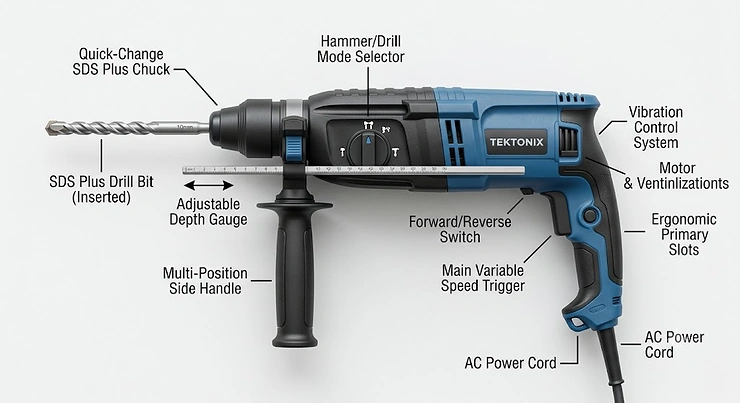
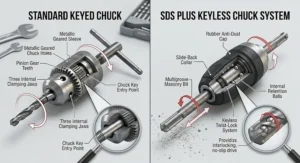
A SDS plus drill is the tool that turns “I’ll get round to it” into “done before lunch.” If you’ve ever wrestled a cheap combi drill into a brick wall and watched the bit smoke, spin uselessly, then die, you already know why this category exists. An SDS plus drill uses a spring-loaded, tool-free chuck that lets the bit “float” slightly and takes the full force of a piston-driven hammer mechanism directly, rather than through a standard three-jaw chuck. That single engineering trick is why it drills concrete and brick faster, with less arm-numbing effort, than an ordinary hammer drill ever could.
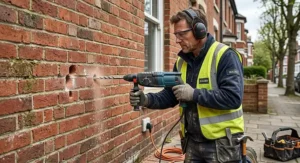
This guide is built for a British audience shopping on amazon.co.uk, so every product below is real, checked against current listings, and priced only in ranges (never exact figures, since those shift weekly). We’ll walk through seven genuine SDS plus drill options spanning budget, mid-range and premium, unpack what the spec sheets actually mean once you’re stood on a ladder with dust in your eyes, and cover the practical stuff — chisel function, hammer-only mode, cordless versus corded, and how to avoid the classic first-time buyer mistakes. Whether you’re mounting a satellite dish bracket or re-plastering a whole hallway, there’s a sensible pick here for you.
Quick Comparison Table: SDS Plus Drills at a Glance
| Product | Power Source | Impact Energy | Weight | Best For |
|---|---|---|---|---|
| Bosch GBH 2-26 F | Corded (230V) | 2.7 J | 2.7 kg | Best budget corded all-rounder |
| Silverline 633821 | Corded (230V) | Entry-level | 2.9 kg | Cheapest way into SDS |
| Ryobi R18SDS-0 | Cordless 18V (bare) | Moderate | 2.4 kg | Ryobi ONE+ battery owners |
| Einhell Herocco | Cordless 18V (bare) | 2.2 J | 2.6 kg | Chiselling and 4-function versatility |
| DeWalt D25133K | Corded (230V) | 2.6 J | 2.6 kg | Trade-grade corded reliability |
| Makita DHR242Z | Cordless 18V (bare) | 2.0 J | 3.3 kg | Best all-round cordless balance |
| Bosch GBH 18V-26 | Cordless 18V (bare) | 2.6 J | 3.3 kg | Most powerful cordless option |
Looking at this spread, the pattern is clear: corded models still win on raw, sustained power per pound spent, while cordless options trade a bit of muscle for freedom from trailing leads — genuinely useful if you’re working up a ladder or in a garden wall with no socket nearby. Weight matters more than most buyers expect, since anything over 3kg becomes noticeably tiring during overhead drilling sessions lasting more than twenty minutes. If brick and blockwork are your main target, prioritise joules of impact energy over rpm; if you’re mostly drilling smaller fixing holes, a lighter, lower-impact model like the Ryobi R18SDS-0 will feel far less like hard work.
💬 Ready to see today’s prices? Tap through to check current availability before they change.
Top 7 SDS Plus Drills: Expert Analysis
1. Bosch GBH 2-26 F — best budget corded all-rounder
The Bosch GBH 2-26 F has been a trade-counter staple for years, and it’s not hard to see why once you look past the unglamorous grey-and-blue casing. Its 830W motor pushes out 2.7 joules of impact energy, which on paper doesn’t sound dramatic, but in practice means it’ll chew through a standard 100mm brick wall for a socket back-box without you leaning on it like you’re trying to push a car. The auxiliary handle rotates a full 360°, and the depth stop is metal rather than the flimsy plastic you’ll find on cheaper imports.
Reviewers consistently report that this model shrugs off years of daily site use, with the main gripe being the corded design limiting where you can comfortably work. Based on the spec comparison against similarly priced rivals, the vibration-damping system here is genuinely a step up, which matters more than most buyers realise once you’re drilling overhead for twenty minutes straight.
Pros:
- ✅ Reliable 2.7J hammer action for its price bracket
- ✅ Metal depth stop and sturdy 360° side handle
- ✅ Widely available spare parts and accessories
Cons:
- ❌ Corded only — no cordless variant in this exact spec
- ❌ No integrated dust extraction port
Typically priced in the £130-£170 range at the time of research, this is arguably the best value entry point if you don’t mind a lead trailing behind you — a small compromise for genuinely professional-grade drilling power.
2. Silverline 633821 — cheapest way into SDS ownership
If your SDS plus drill is destined for the shed and only comes out twice a year to hang a shelf or fit a curtain pole into masonry, the Silverline 633821 exists precisely for you. It ships with a case, a handful of masonry bits, a flat chisel and a point chisel — everything a total beginner needs without a second purchase. Three straightforward modes (drill-only, hammer-only, hammer-drill) cover the basics without overwhelming anyone who’s never handled a rotary hammer before.
What most buyers overlook about budget SDS drills is that the underlying chuck mechanism does the heavy lifting — even an inexpensive model still uses the genuine spring-loaded SDS system, so it will out-perform a standard hammer drill on brick regardless of the brand badge. Aggregated review sentiment across UK retailers is mixed but broadly positive for occasional use: buyers frequently praise the included accessory kit and low price, while some note the motor feels strained on continuous, heavy-duty jobs.
Pros:
- ✅ Complete starter kit with bits, chisels and case included
- ✅ Genuinely low entry price for real SDS performance
- ✅ Simple three-mode selector, beginner-friendly
Cons:
- ❌ Not built for daily trade-level workloads
- ❌ Motor can feel underpowered on dense engineering brick
Expect this one to sit comfortably under £60 in most listings, making it one of the lowest-risk ways to try SDS drilling before committing to a pricier model.
3. Ryobi R18SDS-0 — best for existing Ryobi ONE+ owners
Battery ecosystems are the quiet decider in most cordless tool purchases, and the Ryobi R18SDS-0 leans hard into that logic. Sold as a bare tool (no battery or charger), it’s designed to slot straight into Ryobi’s enormous 18V ONE+ range, meaning if you already own a Ryobi drill, jigsaw, or garden tool, this becomes the cheapest SDS plus drill you’ll ever buy. The L-shaped body keeps the centre of gravity close to your hand, which genuinely helps when you’re drilling into a wall at an awkward angle above a doorframe.
Based on the spec comparison, this isn’t the most powerful drill on this list — it’s aimed squarely at homeowners doing occasional masonry work, not tradespeople drilling all day. Reviewers on Amazon UK consistently highlight the value of the shared-battery system and describe the build quality as solid for the price, while a recurring theme is that serious daily use benefits from pairing it with a higher-capacity battery than the entry-level ones Ryobi bundles elsewhere.
Pros:
- ✅ Uses the shared Ryobi ONE+ 18V battery platform
- ✅ Compact, well-balanced L-shaped body design
- ✅ Built-in LED work light for dim spaces
Cons:
- ❌ Bare tool — battery and charger sold separately
- ❌ Not the most powerful choice for heavy-duty work
Bare-tool pricing typically sits around £55-£90, though a kit with battery and charger will push the total closer to £110-£150 depending on the battery capacity chosen.
4. Einhell Herocco Brushless SDS Plus — best chiselling and 4-function versatility
German brand Einhell has been quietly building a serious cordless following through its Power X-Change 18V battery platform, and the Einhell Herocco Brushless SDS Plus is arguably its standout SDS tool. The brushless motor delivers around 5,500 blows per minute and 2.2 joules of impact energy, but the real headline is the four-function selector rather than the usual three: drill-only, hammer-drill, chisel-with-lock, and chisel-without-lock.
That extra chisel-lock mode is what most buyers overlook when comparing spec sheets side by side — it lets you rotate and lock a flat or point chisel at a precise angle before you start chipping away plaster or breaking tile, which is genuinely useful and a feature the cheaper three-mode drills on this list simply can’t offer. Reviewers frequently mention the thick, soft-grip front handle as a standout comfort feature during longer chiselling sessions, though the Power X-Change battery ecosystem is smaller than Bosch’s or Makita’s, so cross-tool compatibility is more limited if you’re starting from scratch.
Pros:
- ✅ Genuine four-function mode including lockable chisel angle
- ✅ Brushless motor for longer runtime and durability
- ✅ Comes in a proper hard carry case
Cons:
- ❌ Power X-Change battery range is smaller than Bosch or Makita
- ❌ Bare-tool pricing still requires a separate battery purchase
Bare-tool prices tend to sit in the £150-£190 range, with battery kits pushing towards the £220-£260 mark depending on capacity — solid value for anyone planning regular chiselling work, not just drilling.
5. DeWalt D25133K SDS Plus — trade-grade corded reliability
DeWalt’s reputation among tradespeople is built on tools that survive being dropped off scaffolding, and the DeWalt D25133K fits that mould. Its 800W motor delivers up to 1,500rpm and 2.6 joules of impact per blow, with DeWalt quoting maximum drilling capacities of roughly 26mm in concrete and 13mm in metal. The rubberised grip noticeably cuts down transmitted vibration compared with older-generation SDS drills, something you’ll appreciate on your third or fourth hole of the day.
Here’s what to weigh with this one: it’s corded, so you lose portability, but you gain genuinely unlimited runtime and a lighter overall package than most cordless equivalents, since there’s no battery weighing down the tool. Reviewers consistently describe the mode-selector switch as satisfyingly positive and precise — a small detail, but one that matters when you’re switching between drill and hammer modes dozens of times a shift.
Pros:
- ✅ Robust 800W motor built for daily trade use
- ✅ Comfortable, low-vibration rubberised grip
- ✅ Comes complete in a sturdy carry case with accessories
Cons:
- ❌ Corded design limits mobility on larger sites
- ❌ Heavier in the hand than some cordless rivals despite no battery
Expect pricing in the £150-£190 range, making this a genuine professional tool priced only slightly above hobbyist alternatives — a strong value case if you’ll use it weekly rather than yearly.
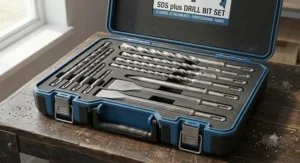
6. Makita DHR242Z 18V LXT — best all-round cordless balance
Ask ten UK tradespeople which cordless SDS plus drill they’d buy with their own money, and a surprising number will say the Makita DHR242Z. At 3.3kg without a battery, it’s not the lightest tool here, but that weight buys genuine drilling authority: a brushless motor producing 2.0 joules of impact energy, enough to comfortably handle fixings into brick and concrete up to around 24mm diameter without labouring the motor.
What the spec sheet won’t tell you, but reviewers note repeatedly, is how well-balanced this tool feels in extended overhead use — the weight sits centrally rather than out toward the chuck, so ladder work over long stretches is noticeably less fatiguing than with front-heavy alternatives. Three selectable modes (rotation only, hammer-drill, hammer-only) cover everything from driving screws in wood to light demolition work, and it slots into Makita’s enormous 18V LXT battery family, arguably the widest cordless ecosystem on the UK market.
Pros:
- ✅ Excellent balance between power and cordless portability
- ✅ Slots into Makita’s huge 18V LXT battery range
- ✅ Genuinely comfortable for extended overhead drilling
Cons:
- ❌ Bare tool — no battery, charger or case included
- ❌ 3.3kg body feels noticeable during single-handed use
Bare-tool listings typically run £150-£190, while a kit bundled with the MakPac case and a battery can climb toward the £250-£320 mark — a worthwhile jump if you’re building a Makita tool collection from scratch.
7. Bosch GBH 18V-26 — most powerful cordless SDS plus drill
When cordless convenience needs to match corded muscle, the Bosch GBH 18V-26 is the model most frequently cited as the strongest in its class, delivering roughly 2.6 joules of impact energy — genuinely competitive with corded rivals rather than a watered-down cordless compromise. It’s part of Bosch’s 18V Professional System, so it shares batteries with an entire range of Bosch site tools, from grinders to torches.
Based on the spec comparison against every other cordless model on this list, this is the one built for someone who’s already decided cordless is non-negotiable but refuses to accept reduced performance in exchange. Reviewers consistently praise the depth stop, auxiliary handle and included L-BOXX case as genuinely professional touches, though a common complaint in user reviews is that, like most premium cordless tools, the battery and charger are sold separately and add meaningfully to the real-world cost.
Pros:
- ✅ Class-leading 2.6J impact energy for a cordless model
- ✅ Fits the wide Bosch 18V Professional battery system
- ✅ Comes with L-BOXX case, auxiliary handle and depth stop
Cons:
- ❌ Premium pricing, especially once batteries are added
- ❌ Heavier than mid-range cordless alternatives at 3.3kg
Bare-tool pricing generally sits in the £280-£350 range, with battery-inclusive kits often exceeding £400 — a serious investment, but one that reflects genuinely trade-level cordless performance.
Full Spec, Price & Value Comparison
| Product | Modes | Impact Energy | Battery Included | Typical Price Range |
|---|---|---|---|---|
| Bosch GBH 2-26 F | 3 | 2.7 J | N/A (corded) | £130-£170 |
| Silverline 633821 | 3 | Entry-level | N/A (corded) | Under £60 |
| Ryobi R18SDS-0 | 3-4 | Moderate | No (bare tool) | £55-£90 |
| Einhell Herocco | 4 | 2.2 J | No (bare tool) | £150-£190 |
| DeWalt D25133K | 3 | 2.6 J | N/A (corded) | £150-£190 |
| Makita DHR242Z | 3 | 2.0 J | No (bare tool) | £150-£190 |
| Bosch GBH 18V-26 | 3 | 2.6 J | No (bare tool) | £280-£350 |
Once you line them all up like this, the value story becomes obvious: the corded options deliver the most impact energy per pound spent, while the cordless models charge a premium for freedom of movement rather than raw performance. If you already own batteries for a particular brand’s ecosystem, that single factor should probably override every other line in this table, since a bare-tool price becomes irrelevant when you’re not also buying a £60-£90 battery to go with it.
Practical Usage Guide: Getting the Most From Your SDS Plus Drill
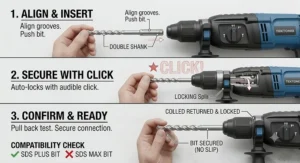
The first thirty days with a new SDS plus drill are where most avoidable mistakes happen. Start by fitting the correct bit fully — you should hear and feel a distinct click as the SDS shank locks into the chuck, and giving it a gentle tug afterwards confirms it’s seated properly rather than sitting loose and about to jam mid-hole. Skipping this step is the single most common cause of first-week frustration, since a half-seated bit will chatter, wander off-mark, or drop out entirely under hammer action.
For maintenance, a light smear of SDS-specific grease on the bit shank every few uses keeps the chuck mechanism moving freely — most kits, including the Silverline 633821, come with a small tub for exactly this purpose. Avoid using general-purpose grease, as it can gum up with masonry dust rather than lubricating properly. Every twenty or so holes, pull the drill back briefly to let dust clear the flutes; ploughing straight through without pauses is what burns out motors prematurely and is a mistake even experienced DIYers make when they’re in a hurry.
A common early error is selecting the wrong mode for the material. Using hammer-drill mode on timber or metal doesn’t just waste effort — it can crack the material or blunt a bit meant for softer surfaces. Match the mode to the job every single time, and you’ll get years more life from both the tool and your bit collection.
Real-World Scenarios: Which SDS Plus Drill Suits You?
Picture three very different people staring at this same product page. First, there’s Priya, a first-time homeowner in a 1930s semi who needs to fit two curtain poles and a TV bracket into solid brick walls, maybe twice a year going forward. For her, the Silverline 633821 or a bare Ryobi R18SDS-0 (if she already owns Ryobi garden tools) makes far more financial sense than a £300 professional tool that will spend 363 days a year in a drawer.
Then there’s Marcus, a jobbing electrician rewiring three or four houses a month, drilling through brick, block and the occasional lintel almost daily. Runtime, durability and consistent impact energy matter more to him than upfront cost, which points squarely at the DeWalt D25133K or Bosch GBH 2-26 F — corded tools that never need charging mid-job and are built to survive a van full of other equipment banging against them.
Finally, there’s Aisha, a plasterer who needs to chase out old plaster and chisel around damaged brickwork before repairing it, working across multiple sites where trailing a cable isn’t always practical. The Einhell Herocco, with its lockable chisel-only mode, or the Bosch GBH 18V-26, with genuinely trade-level cordless power, both suit her far better than a basic three-mode budget drill ever could.
Problem → Solution: Common SDS Plus Drilling Issues
Problem: the drill bit keeps slipping or spinning without biting into the wall. This usually means you’re pressing hammer-only mode into masonry that needs rotation too, or the bit itself has gone blunt from repeated use on engineering brick. Switch to hammer-drill mode and, if the bit shows visible wear on its carbide tip, replace it — even the best drill in the world can’t compensate for a worn bit.
Problem: excessive dust clouding your work area. Fit a dust extraction attachment where the drill supports one, or simply pause every few centimetres of depth to let the flutes clear naturally. Several of our featured picks, including the DeWalt D25133K, work well with add-on dust shrouds sold separately.
Problem: the drill feels painfully heavy after twenty minutes overhead. This is a genuine ergonomics issue rather than something you can simply push through — repeated overhead vibration exposure is exactly what the Health and Safety Executive’s hand-arm vibration guidance warns can lead to long-term nerve and blood-vessel damage with regular use. If overhead work is frequent, prioritise a lighter model like the Ryobi R18SDS-0 and take proper breaks rather than fighting through the fatigue.
Problem: you’re not sure whether to buy corded or cordless. Consider your actual job locations first, then revisit the comparison table above — the answer is rarely as simple as “cordless is always better.”
How to Choose an SDS Plus Drill: 6-Step Framework
- Define your typical material first. Solid brick, engineering brick, and reinforced concrete each demand different impact energy — check the joule rating before anything else on the spec sheet.
- Decide corded or cordless based on where you actually work, not on what feels more modern; a trailing lead is irrelevant if you always work near a socket.
- Weigh the tool in your mind, not just on paper. Anything above 3kg becomes genuinely fatiguing for overhead sessions longer than fifteen minutes.
- Check mode count. Three modes cover most DIY needs; a fourth, lockable chisel mode (like the Einhell Herocco offers) only matters if you’ll genuinely chisel regularly.
- Factor in your existing battery ecosystem before comparing bare-tool prices — a cheaper-looking cordless drill can end up costing more once you add a battery from scratch.
- Read aggregated review sentiment, not star ratings alone. A 4.5-star average tells you little; look for recurring, specific complaints (motor strain, chuck wear) rather than one-off gripes.
Common Mistakes When Buying an SDS Plus Drill
The single biggest mistake buyers make is assuming more watts or higher voltage automatically means more drilling power. Impact energy, measured in joules, is the figure that actually predicts performance in masonry — a corded 800W drill with a strong hammer mechanism will often out-drill a higher-voltage cordless model with a weaker one. Ignoring this is how people end up disappointed despite technically “upgrading.”
Another frequent error is buying a bare cordless tool without checking battery costs first. A bare-tool listing can look like a bargain until you realise a compatible 4.0Ah battery and charger add another £60-£100 on top — sometimes more than the tool itself. Finally, plenty of buyers skip reading aggregated review sentiment altogether and choose purely on price, then discover too late that a budget model genuinely can’t sustain the workload they had in mind. Matching tool to task, honestly assessed, avoids nearly every regret on this list.
✨ Don’t Miss These Exclusive Deals!
🔍 Take your masonry projects to the next level with these carefully selected SDS plus drills. Click through to check current pricing and availability before you commit. The right tool here will save you hours of frustration on every future job.
SDS Plus Drill vs Standard Combi Drill
The confusion between an SDS plus drill and a standard combi (hammer) drill is one of the most common in DIY shopping, and it’s worth settling properly. A standard combi drill grips bits in a three-jaw chuck and generates hammer action through two ridged discs knocking against each other — functional for the occasional wall plug in soft brick, but genuinely weak against dense masonry or concrete. An SDS plus drill instead uses a piston-driven mechanism that strikes the bit shank directly, transferring far more energy per blow with far less strain on your arms.
| Factor | SDS Plus Drill | Standard Combi Drill |
|---|---|---|
| Masonry performance | Excellent — built for it | Weak to moderate |
| Bit changes | Tool-free, seconds | Requires chuck key or manual tightening |
| Everyday drilling (wood/metal) | Possible with SDS chuck adapter | Native strength |
| Typical price | £60-£350 | £30-£200 |
The analysis here is straightforward: if masonry drilling is even a semi-regular task, a combi drill will frustrate you within the first few holes, while an SDS plus drill handles it comfortably. Conversely, if your work is 90% wood and light metal with occasional wall plugs, a combi drill remains the more versatile everyday tool, and adding an SDS chuck adapter to a combi is rarely worth the compromise in either direction.
Cordless SDS Plus Drill vs Corded: Which Suits You?
Choosing a cordless SDS plus drill over a corded one isn’t purely a power decision anymore — modern brushless motors, like the one inside the Einhell Herocco, have closed much of the historic performance gap. The real deciding factors are practical: how often you’ll work somewhere without a nearby socket, how long your typical drilling sessions run, and whether you already own compatible batteries from another tool in the same range.
Reviewers consistently note that cordless SDS plus drills genuinely shine on jobs involving multiple locations across a property — loft access points, garden walls, garage conversions — where trailing an extension lead becomes its own hassle. On the other hand, for a single, sustained job like drilling a full row of fixing holes along one wall, a corded model like the Bosch GBH 2-26 F never needs a battery swap and typically costs less for equivalent power. If you’re still undecided, ask yourself honestly how many separate locations your typical project spans; two or fewer usually favours corded, three or more usually favours cordless.
Best SDS Plus Drill for Brick: Masonry Performance Explained
Brick and blockwork performance comes down almost entirely to impact energy and bit quality working together — the drill supplies the force, but a worn or cheap bit will still struggle regardless of how powerful the motor is. Among our seven picks, the Bosch GBH 2-26 F and DeWalt D25133K stand out for sustained masonry performance thanks to their 2.6-2.7J corded output, while the Bosch GBH 18V-26 matches that figure without a cable attached.
On the spec sheet, engineering brick and dense concrete block genuinely separate strong drills from mediocre ones; softer common brick is far more forgiving and most models on this list, including budget options like the Silverline 633821, will handle it without drama. Reviewers frequently mention that using genuine SDS masonry bits, rather than cheaper unbranded alternatives, makes a noticeably bigger difference to drilling speed than most people expect — a decent drill paired with a poor bit will still disappoint. If brick is genuinely your main use case day to day, prioritise the joule rating above every other spec on the page.
Chisel Function Explained: When and How to Use It
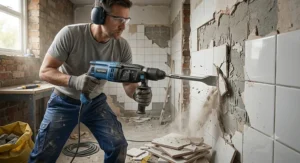
Not every SDS plus drill needs a chisel function, but for anyone doing renovation work — chasing cable channels, breaking out old tile, removing render — it transforms the tool from a driller into a genuine mini demolition tool. In chisel-only mode, rotation is disabled entirely and the piston mechanism drives the bit purely back and forth, letting you work a flat or point chisel bit through material with none of the twisting force a standard rotation would add.
The Einhell Herocco stands out here specifically because of its lockable chisel angle — rather than the chisel spinning freely in the chuck (as it does on most three-mode drills), you can rotate it to your preferred working angle and lock it in place before you begin. What most buyers overlook is that this single feature genuinely changes how comfortable extended chiselling work feels, since you’re not constantly fighting the tool to keep the chisel edge oriented correctly. If chiselling is only an occasional need, any three-mode SDS plus drill with a basic hammer-only setting, like the Bosch GBH 2-26 F, will still manage light work perfectly well.
Hammer-Only Mode: What It’s For and When to Use It
Hammer-only mode disables rotation entirely, leaving pure percussive force — this is the setting you’ll use for light chiselling on drills that lack a dedicated chisel mode, or occasionally for breaking up small sections of tile or render. It’s a genuinely underused feature among casual buyers, many of whom never touch it after their first week, yet it’s one of the more versatile modes once you understand its purpose.
The key thing to grasp is that hammer-only mode is not interchangeable with hammer-drill mode for actual hole drilling — using it that way with a standard round-shank bit will do nothing useful, since there’s no rotation to cut through material. On models like the Silverline 633821 and Bosch GBH 2-26 F, hammer-only sits as the middle setting on a simple three-position dial, making it easy to select by feel even through work gloves, which matters more than it sounds once you’re mid-job and don’t want to stop and check.
Safety, Regulations & Compliance Guide
Before drilling into any wall, always establish what’s behind it. Cable and pipe detectors are inexpensive and genuinely essential — drilling into a live cable is both a fire risk and a serious shock hazard, and even experienced tradespeople get caught out skipping this step on unfamiliar properties. Beyond that immediate risk, regular users should be aware that hand-arm vibration exposure from powered tools is a recognised occupational health concern in the UK, with the Health and Safety Executive noting that repeated exposure can cause lasting nerve, blood vessel and joint damage collectively known as hand-arm vibration syndrome.
For anyone using an SDS plus drill professionally rather than occasionally, that means genuinely limiting continuous drilling sessions, using the anti-vibration handles most modern drills include, and taking proper breaks rather than pushing through a long run of holes in one sitting. Always wear safety glasses and a dust mask when drilling masonry, since the fine silica dust produced is a recognised respiratory hazard over repeated exposure — a cheap paper mask genuinely isn’t sufficient for regular use, and a proper FFP3-rated mask is worth the small extra cost.
Frequently Asked Questions
❓ What's the difference between SDS and SDS plus?
❓ Can I use an SDS plus drill for normal wood drilling?
❓ Is a cordless SDS plus drill powerful enough for concrete?
❓ How do I know which SDS drill bit size to buy?
❓ Do SDS plus drills need special maintenance?
Conclusion
Choosing the right SDS plus drill really comes down to being honest about how you’ll actually use it, not how impressive the spec sheet looks in the shop. Occasional DIYers are almost always better served by an affordable, genuinely capable option like the Silverline 633821 or a bare Ryobi R18SDS-0, while tradespeople drilling daily should lean toward the sustained power and durability of the Bosch GBH 2-26 F or DeWalt D25133K. If chiselling features regularly in your work, the Einhell Herocco‘s lockable chisel mode is genuinely hard to beat, and anyone who’s decided cordless is non-negotiable but still wants trade-level muscle should look seriously at the Bosch GBH 18V-26 or Makita DHR242Z.
Whichever you choose, remember that price ranges shift constantly on Amazon, so always check current listings before buying, and prioritise the joule rating and mode count over marketing language on the box. A well-matched SDS plus drill, chosen honestly against your actual jobs rather than an idealised version of them, will earn its keep for years.
✨ Ready to Get Drilling?
🔍 Compare today’s availability on any of these seven SDS plus drills and pick the one that matches your next project. A confident choice now means fewer frustrating trips back to the shop later.
Recommended for You
- SDS Plus vs SDS Max: 7 Best Rotary Hammers UK 2026
- Best Right Angle Drill 2026: 7 Top Picks Tested for Tight Spaces
- Electric Screwdriver vs Manual Screwdriver: 7 Best Picks (2026)
Disclaimer: This article contains affiliate links. As an Amazon Associate, I earn from qualifying purchases. If you purchase products through these links, we may earn a small commission at no additional cost to you.
✨🤗 Found this helpful? Share it with your friends! 💬
