In This Article
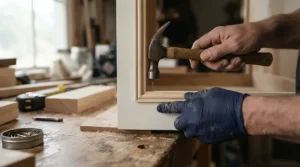
Beading is the jewellery of joinery. It’s the slim quadrant on a skirting board, the scotia tucked under a worktop, the glazing bead around a door panel, the fiddly trim that makes a room look finished rather than merely built. It’s also brutally unforgiving. Tap a nail into 9 mm of pine with a hammer and you’ll split it, dent it, or bend the pin. Then you’ll have to start again.
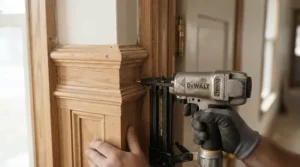
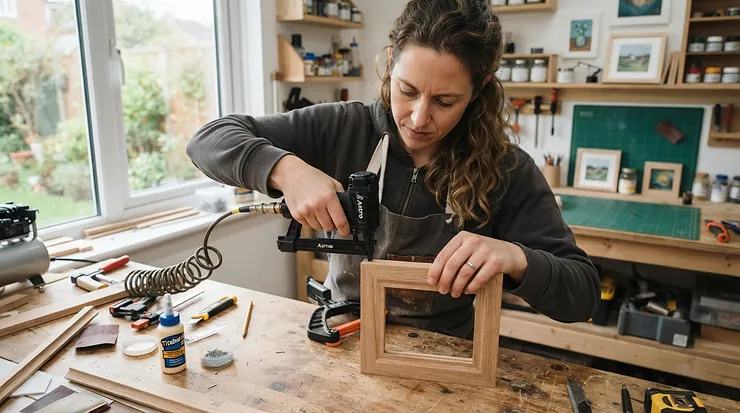
A brad nailer for beading removes that drama. It fires a thin 18-gauge brad (roughly 1.2 mm across) in one clean hit, so the moulding stays crack-free, the hole stays tiny, and your free hand stays free to hold the strip in place. For anyone tackling panelling, picture rails or a kitchen refit, a brad nailer for beading is the tool that turns a wobbly weekend into a tidy one.
But the market is crowded and confusing, and the stakes are higher than the price tags suggest. Do you want a tool that comes with its own battery? Is a budget brand good enough for light trim? And does a brad nailer for beading need to be a premium model at all?
This guide answers those questions with real specifications, aggregated review sentiment and straight-talking analysis. We cover seven genuine UK-available options, from compact cordless pros to wallet-friendly hobby tools. We also look at battery-included kits and what budget brand quality really means in 2026.
What Is a Brad Nailer for Beading?
A brad nailer for beading is a compact nail gun that drives thin 18-gauge brads, usually 15-50 mm long, into delicate mouldings and beads. The slim fixings leave almost invisible holes and rarely split the wood. It works by compressed air, a battery-driven air spring or a flywheel mechanism.
That definition hides a useful truth. Beading is thin, so you rarely need long nails. Most bead work needs 20-35 mm brads, which means even entry-level machines with short nail ranges can cope. If you’d like the wider background, Wikipedia’s overview of the nail gun explains the main driving mechanisms. For this job, what matters most is controlled depth, clean nail heads and a nose small enough to sit snugly on a narrow profile.
Quick Comparison Table: Brad Nailer for Beading Options at a Glance
| Product | Power | Battery in the box? | Price range (at time of research) | Best For |
|---|---|---|---|---|
| Milwaukee M18 FN18GS | 18V cordless | Kit version (2 × 2.0Ah listed) | Mid-£400s for the kit | Daily professional use |
| DeWalt DCN680 | 18V cordless | Usually bare; bundles vary | Around £300-£350 bare | Existing DeWalt owners |
| Makita DBN500 | 18V LXT cordless | Bare common; kits vary | Around £450-£520 bare | Makita-platform tradespeople |
| Milwaukee M12 FCN18GS | 12V cordless | Kit version available | Around £350-£420 for the kit | Tight spaces, fitted furniture |
| Ryobi R18GN18 | 18V ONE+ cordless | Bare (check starter kits) | Around £100-£140 bare | Keen DIYers on a budget |
| Einhell TE-CN 18 Li | 18V Power X-Change | Bare common | Under £100 bare | Light trim, occasional use |
| Makita AF506 | Pneumatic | Not applicable | Under £120 plus a compressor | Workshop users with air |
The table shows a clear split. The Milwaukee M18 FN18GS and Milwaukee M12 FCN18GS are the two models where a battery-included kit is easy to find and genuinely sensible. The Ryobi R18GN18 and Einhell TE-CN 18 Li are where budget logic wins, provided you already own a compatible battery. Meanwhile the Makita AF506 is the cheapest route to a crisp pneumatic result if a compressor already sits in your garage.
If your decision hinges on cost, remember that bare-tool prices can look flattering until you add a battery and charger. We unpack that maths later.
💬 Just one click — help others make better buying decisions too!😊
Top 7 Brad Nailer for Beading Options: Expert Analysis
1. Milwaukee M18 FN18GS — pro-grade power in a ready-to-work kit
The Milwaukee M18 FN18GS is the sort of brad nailer for beading you buy once and stop thinking about. The Fuel-branded brushless motor is built for all-day use rather than the occasional skirting board.
On paper this is an 18V straight brad nailer with a drive that comfortably sinks brads into softwood and MDF beading. The practical meaning is simple. You shouldn’t see sulking, half-driven nails when you move from pine to a denser oak bead, a weakness that cheaper machines sometimes show. The kit listing pairs it with two 2.0Ah batteries, so you can swap one while the other charges.
Here’s the honest analytical take. Beading rarely needs this much grunt, so it’s overkill for a single bedroom. It earns its keep for joiners, fitters and anyone who nails trim most weeks.
Aggregated review commentary on the M18 Fuel line is consistent. Reviewers describe it as the choice when battery life and drive consistency can’t be variables. Some note the extra weight versus compact tools on long overhead runs.
Pros:
- ✅ Strong, consistent drive across softwood and hardwood
- ✅ Kit version includes two batteries
- ✅ Backed by a deep 18V tool platform
Cons:
- ❌ Heavier than compact 12V alternatives
- ❌ Overkill for occasional bead work
Expect a price in the mid-£400s range for the kit. It’s a fair value verdict for professionals, but a tough sell for a one-off project.
2. DeWalt DCN680 — the benchmark for cordless nailing without compromise
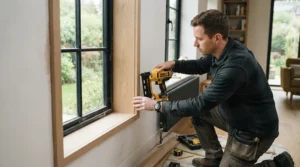
The DeWalt DCN680 is the model most other cordless 18-gauge nailers get measured against. Its reputation rests on repeatable depth and a long list of satisfied trade users.
Published specifications cover brads from about 5/8 in to 2⅛ in (roughly 16-54 mm), which comfortably spans every bead profile you’re likely to meet. The brushless motor should deliver strong runtime, and the tool-free depth adjustment lets you dial in a nail that sits just below the surface. That matters on beading, where a proud nail head wrecks the finish before the paint even goes on.
The analysis is straightforward. This is the logical choice if you already own DeWalt 18V batteries, because the bare-tool price becomes very sensible. If you don’t, it rarely ranks as a bargain once the battery and charger are added. The best battery-included kits from rivals can look cheaper by comparison, so check bundle listings carefully.
Reviewers frequently praise its consistency and quick, jam-free firing. A recurring niggle is that the depth gauge can be hard to read in dim light, a small annoyance in cupboards and loft conversions.
Pros:
- ✅ Wide nail range handles every beading job
- ✅ Tool-free depth adjustment
- ✅ Strong reputation for reliable firing
Cons:
- ❌ Depth scale awkward to read in low light
- ❌ Poor value if you need a battery too
Bare-tool pricing sits around £300-£350. A strong buy for existing platform users, a considered one for everyone else.
3. Makita DBN500 — built-in compressor that behaves like an air tool
The Makita DBN500 takes a distinctive route. It has a built-in air compression mechanism, so it aims to feel like a pneumatic nailer without a hose.
That design matters on beading. A nailer that delivers air-nailer-like action gives you a crisp, controlled hit rather than a heavy thump. Delicate profiles are less likely to shift while the nail fires. The LXT 18V platform is also one of the widest in the trade, so a Makita owner gets effortless battery sharing across drills, saws and lights.
Our analysis: this is a tool for people already living in the Makita ecosystem. It looks chunky next to slimmer rivals, according to commentary on its launch, and bare-tool pricing in UK trade catalogues sits at the premium end. If you’re not already committed to Makita batteries, the value case weakens.
Reviewer commentary focuses on its air-tool feel and consistent depth, while noting its bulk. We couldn’t verify a large pool of independent UK owner reviews, so treat sentiment here as tentative.
Pros:
- ✅ Air-tool-like drive without a hose
- ✅ Huge 18V LXT battery ecosystem
- ✅ Consistent depth control for fine trim
Cons:
- ❌ Chunkier than slimmer cordless rivals
- ❌ Premium price, usually bare
Expect roughly £450-£520 bare. The verdict is a fine tool for Makita loyalists and an expensive entry point for everyone else.
4. Milwaukee M12 FCN18GS — compact enough for tight corners and cabinet work
The Milwaukee M12 FCN18GS proves that a brad nailer for beading doesn’t need to be a brute. It’s the smaller, lighter sibling to the M18 model.
The 12V Fuel platform slashes weight, which is a bigger deal than it sounds. Hold a nailer above your head to tack beading under a shelf and every gram becomes an opinion. The compact body also reaches awkward spots, such as inside wardrobes, around built-in units and along tight coving. Because kits including a battery are readily listed, you can be working within minutes of unboxing.
The analytical take: for fitted furniture, kitchen refits and panelling, this might be the most sensible pro-level choice. You give up some raw drive compared with an 18V tool, so very dense hardwoods may demand a shorter nail or a pre-drilled hole.
US-market commentary on the equivalent compact Milwaukee describes it as ideal for cabinet installs and tight corners, and reviewers like the lighter feel. Check UK listings for the exact nail-length range before buying.
Pros:
- ✅ Light and compact for overhead and tight work
- ✅ Kit versions include a battery
- ✅ Professional build quality
Cons:
- ❌ Less raw drive than 18V rivals
- ❌ Platform differs from Milwaukee 18V batteries
Kit pricing sits around £350-£420. It’s strong value for fitters, though pricey for casual DIY.
5. Ryobi R18GN18 — AirStrike convenience at a friendly price
The Ryobi R18GN18 is the budget-friendly entry into proper cordless brad nailing. It fires 18-gauge brads from 15 mm to 50 mm, which covers essentially every beading task.
Ryobi’s AirStrike technology compresses a small charge of air with each shot, so you don’t wait for a motor to spin up. That’s helpful when you’re tacking a bead every few inches, because you can work at a natural rhythm. It runs on the 18V ONE+ platform, so existing Ryobi owners can share batteries with drills, sanders and garden tools.
Here’s the analysis. For painted pine and MDF beading, which is most domestic work, it should do the job nicely. US-market commentary on Ryobi’s AirStrike line says depth consistency on harder woods can be less precise than on premium nailers. If you plan to nail oak mouldings often, consider spending more.
It’s sold bare in the listing we found, so check whether a starter kit with battery is available at the time you buy.
Pros:
- ✅ Affordable cordless entry point
- ✅ Nail range covers 15-50 mm
- ✅ Shares ONE+ batteries
Cons:
- ❌ Less precise depth in dense hardwood
- ❌ Often sold without a battery
Around £100-£140 bare. A strong value verdict for DIYers already holding Ryobi batteries.
6. Einhell TE-CN 18 Li — the budget-brand experiment that sort of works
The Einhell TE-CN 18 Li is the cheapest cordless route to trim nailing, and it’s honest about being a hobby tool. It’s a 2-in-1 nailer and stapler with a limited nail range.
Retail specifications describe nails from 15 mm to 32 mm, a slender 1 mm thick, and roughly 20 impacts per minute. The magazine holds around 100 nails. For beading, that range is workable, because most bead work uses nails in the 20-30 mm bracket. It’s also a gentle reminder that a brad nailer for beading doesn’t need to fire 50 mm nails every day.
The honest take: it suits light work such as picture-frame beading, craft projects and the odd skirting repair. It’s not a daily-use tool. The Power X-Change battery system is relatively affordable, which helps overall cost.
A small pool of retailer reviews paints a mixed but fair picture. One buyer described it as a cheap trim nailer but noted that the last couple of millimetres sometimes needed a hammer. That’s the real-world definition of budget brand quality: perfectly useful, occasionally fiddly.
Pros:
- ✅ Lowest cordless entry price
- ✅ Doubles as a light-duty stapler
- ✅ Adjustable depth control
Cons:
- ❌ Nails sometimes need finishing with a hammer
- ❌ Short 32 mm nail range
Under £100 bare. Excellent value for occasional use, but not for tradespeople.
7. Makita AF506 — the cheap, lightweight pneumatic option
The Makita AF506 is the quiet achiever of this list. It’s a pneumatic brad nailer weighing around 1.3 kg, which is notably lighter than any cordless rival here.
Because there’s no battery or motor in the body, it’s ideal for long sessions of fine work. Beading is a prime example, since your wrist stays fresh after a hundred nails. Air power also means instant firing and crisp depth control, a strength of pneumatic tools in general. The trade-off is obvious: you need a compressor and hose, and both affect your total outlay.
Here’s the honest analysis. If you already own a small compressor, this is possibly the best-value way to get a professional-feeling brad nailer for beading. If not, you’re adding a significant extra spend, plus a trailing hose that’s irritating on a staircase.
Price-comparison data shows modest review counts, so we can’t confirm a deep UK review pool. Use it as a signal rather than a verdict.
Pros:
- ✅ Very light at around 1.3 kg
- ✅ Instant, crisp firing
- ✅ Low price for a well-known brand
Cons:
- ❌ Needs compressor and hose
- ❌ Hose limits mobility on stairs
Under £120 for the tool. Superb value if air supply already exists, and less compelling if it doesn’t.
Setting Up and Using a Brad Nailer for Beading: A Practical Guide
Most Amazon listings stop at the specifications. Here’s what actually goes into a clean finish.
Start with scrap. Take an offcut of the same bead and substrate. Fire three brads and tune the depth until each head sits just below the surface. Beading is thin, so a quarter-turn on the dial matters.
Choose the right length. As a rule of thumb, aim for the moulding thickness plus at least 15-20 mm of bite into the substrate. A 12 mm bead on a solid frame is happy with a 30 mm brad. Anything much longer invites blow-outs.
Mind your spacing. Place the first nail roughly 30 mm from each end, then every 250-300 mm along the length. Angle the nail slightly rather than driving it dead square, because it grips better.
Protect the ends. Hardwood beading splits near the tips. Either drill a tiny pilot hole or use a shorter nail there.
Set the trigger to sequential. Most nailers offer a single-shot mode, which is calmer and safer than rapid contact firing.
Finish properly. Fill holes with wax or flexible filler, sand lightly and paint. A tiny 18-gauge hole all but vanishes under two coats.
✨ Ready to Pick Your Nailer?
🔍 Take your trim work to the next level with the carefully selected tools above. Click on any highlighted product name to check current pricing and availability. Whether you choose a compact cordless or a lightweight pneumatic, your beading will look sharper, tidier and far more professional!
Real-World Scenarios: Three Buyers, Three Picks
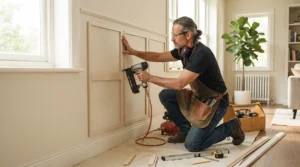
Scenario one: the first-time renovator. Picture a homeowner panelling a hallway with a modest budget of £100-£150, and no existing cordless tools. The Einhell TE-CN 18 Li is the thrifty route if you don’t mind a hammer for stubborn nails. The Ryobi R18GN18 costs a little more but offers a bigger nail range and more cordless polish. Because both are usually bare, add a battery to your budget.
Scenario two: the self-employed fitter. A kitchen fitter spends several days a month tacking beading, scribes and trim. They need reliability and fast kit-to-job time. Here, the Milwaukee M18 FN18GS kit or Makita DBN500 makes sense, depending on which battery platform lives in the van. For lighter, overhead-heavy days, the Milwaukee M12 FCN18GS earns a place.
Scenario three: the garage hobbyist. A woodworker builds picture frames and small boxes, and already owns a small compressor. The Makita AF506 is a delight here. It’s light, accurate and cheap, and the hose is no hardship at a workbench.
Notice what each scenario shares. The best brad nailer for beading isn’t the most expensive. It’s the one that matches your battery platform, your frequency of use and your tolerance for fiddly adjustment.
Problem and Solution: Fixing the Most Common Beading Headaches
Problem: the bead splits at the ends. Pre-drill a tiny pilot, or switch to a shorter brad near the tips. A thinner nail from a Makita AF506 or lighter-drive Ryobi R18GN18 can also help, because brute force isn’t what thin beading needs.
Problem: nail heads sit proud. Lower the depth setting a notch and test on scrap. If the tool still struggles, check the battery. Low charge is a surprisingly common culprit with cordless machines.
Problem: the nail skews out of the side. The bead is probably too thin for the nail length. Drop to a shorter brad and angle the shot slightly towards the thicker section.
Problem: the nailer jams. Remove the battery or disconnect the air line first, then clear the channel. Most modern models, including the DeWalt DCN680, offer tool-free access.
Problem: the battery sulks in a cold garage. Lithium packs lose punch in the cold. Keep spares indoors and swap them over.
How to Choose a Brad Nailer for Beading
- Decide cordless or pneumatic. Cordless frees you from hoses, but pneumatic tools are lighter and cheaper if a compressor already exists.
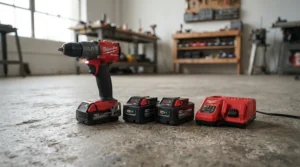
- Check your battery platform first. If you already own 18V batteries from one brand, buy a bare tool from the same brand and save significantly.
- Consider weight. Beading often means holding the tool at awkward angles, so a lighter body reduces fatigue over a day of work.
- Confirm nail range. Most beading needs 20-35 mm brads, so you don’t need a 50 mm maximum unless you also fit skirting or architrave.
- Look for tool-free depth adjustment. It’s the difference between a neat finish and a drawer full of filler.
- Prefer a sequential trigger mode. It’s safer and more accurate on delicate trim.
- Weigh warranty and spares. A recognised brand makes batteries, nails and repairs easier to find.
Battery-Included Kits: When They Make Sense
Battery-included kits look pricey beside a bare tool, but the maths is rarely that simple. A bare Ryobi R18GN18 looks like a bargain until you realise you need a battery and charger, which can add a significant chunk to the total.
| Situation | Buy a kit | Buy bare |
|---|---|---|
| Starting a brand-new tool collection | ✅ Needed anyway | ❌ Adds hidden cost |
| Already own compatible batteries | ❌ Duplicate packs | ✅ Best value |
| Frequent all-day use | ✅ Spare battery helps | ✅ If you own spares |
The pattern is clear. If you’re starting from zero, a kit such as the Milwaukee M18 FN18GS or Milwaukee M12 FCN18GS is genuinely sensible, because you pay once for the whole setup. If you already own compatible batteries, a bare DeWalt DCN680 or Makita DBN500 is better value.
One caution. Kit contents vary by seller and region, so always check the listing for battery capacity and charger inclusion before buying. Smaller 2.0Ah packs are fine for beading, which uses little power, but they would struggle on heavier framing work.
Budget Brand Quality: What You Actually Get
Budget brand quality is a spectrum rather than a single label. At one end sit trusted names such as Ryobi and Einhell, which offer proper warranties, UK customer service and compatible battery systems. At the other end sit anonymous online brands with suspiciously low prices and thin paperwork.
The Einhell TE-CN 18 Li illustrates the sensible end of the budget spectrum. It’s cheap, it works for light jobs, and a brand-backed warranty offers real peace of mind. The Ryobi R18GN18 sits a notch higher, offering better build and a broader nail range.
The danger lies in unknown imports. UK authorities have flagged unsafe nail guns sold through online marketplaces. One OPSS safety report, for example, described a pneumatic nail gun with no mechanism to prevent unintentional firing and a failure to meet the Supply of Machinery (Safety) Regulations 2008. You can browse current notices on the government’s product recalls and alerts page.
The sensible rules are simple. Buy a recognised brand, check for CE or UKCA marking, and be wary of prices far below comparable tools.
Brad Nailer for Beading vs Pin Nailer vs Hammer
| Method | Hole size | Holding power | Best For |
|---|---|---|---|
| Brad nailer for beading | Small, easy to fill | Strong | General beading and trim |
| Pin nailer | Almost invisible | Light | Ultra-delicate mouldings |
| Hammer and panel pins | Variable | Moderate | One-off repairs |
A brad nailer for beading sits in the sweet spot. It holds firmly enough for skirting, architrave and panelling, yet leaves holes you can fill in seconds. A pin nailer wins on invisibility but offers little grip, so it’s often used alongside glue. A hammer remains perfectly valid for a single repair, though it’s slow and risky on thin stock.
For most people tackling more than one room, a brad nailer for beading pays back its cost in time and finish quality. If you work with extremely fine mouldings regularly, consider adding a pin nailer later. Be cautious around glazing beads in particular, because nailing near glass needs care and sometimes a gentler method.
Common Mistakes When Buying a Brad Nailer for Beading
Buying on nail range alone. Bigger isn’t better for beading. Weight, balance and depth control matter far more than a 50 mm maximum.
Ignoring battery platforms. A bargain tool on the wrong battery system becomes expensive fast. Always count the battery and charger.
Skipping the scrap test. Nearly every poor finish comes from a depth setting nobody checked.
Trusting unknown brands. Savings vanish if the tool is unsafe or unsupported. A brand with spares and UK service is worth a modest premium.
Forgetting the nails. Brads are a recurring cost. Decide on a brand and length early, and keep a few boxes in different sizes.
Using the wrong trigger mode. Contact firing on beading invites accidents and skewed nails. Stick to sequential mode.
Long-Term Cost and Maintenance
The upfront price is only half the story. Think in cost per job rather than cost per tool.
| Product | Typical outlay (range) | Platform lock-in | Value verdict |
|---|---|---|---|
| Milwaukee M18 FN18GS | Mid-£400s kit | High | Excellent for pros |
| DeWalt DCN680 | £300-£350 bare | High | Great if you own batteries |
| Makita DBN500 | £450-£520 bare | High | Fine for Makita users |
| Milwaukee M12 FCN18GS | £350-£420 kit | Medium | Strong for fitters |
| Ryobi R18GN18 | £100-£140 bare | Medium | Best budget cordless |
| Einhell TE-CN 18 Li | Under £100 bare | Medium | Light-duty value |
| Makita AF506 | Under £120 plus compressor | Low | Cheap if you own air |
Imagine a tool costing around £100 saves roughly an hour of hammering and filling per room. After five rooms it has paid for itself in time alone, which is why even budget picks make financial sense. Premium tools justify their cost through reliability rather than raw savings.
Maintenance is minimal. Keep batteries cool and dry, clear dust from the nose after each session, and follow the manufacturer’s lubrication guidance for pneumatic models. Replacing worn driver blades or seals is cheap on trusted brands and awkward on obscure ones, which is another quiet argument for buying a recognised name.
Safety and Regulations for Nail Gun Users
Beading may feel gentle, but the tool is not. Brad nailers are essentially small firearms, and injuries are depressingly common. The Health and Safety Executive’s nail gun guidance notes that incidents feature heavily in woodworking accident statistics. It also warns that safety features are sometimes defeated, accidentally or intentionally, and that you should remove the battery or disconnect the air line and clear nails before maintenance.
Research backs the sequential-trigger advice from earlier. NIOSH and OSHA findings report that the risk of injury is twice as high with a multi-shot contact trigger as with a single-shot sequential one.
Practical rules:
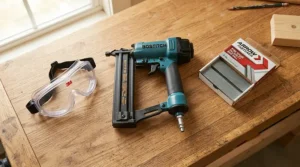
- Wear eye protection every time.
- Keep your free hand clear of the nose.
- Never point the tool at anyone.
- Disconnect the power before clearing jams.
- Never modify or bypass safety features.
In the UK, look for CE or UKCA marking, and check that the product has proper manuals and warnings. If anything looks vague, unmarked or oddly cheap, walk away.
Frequently Asked Questions
❓ Is a cordless brad nailer for beading better than a pneumatic one?
❓ Are battery-included kits cheaper than buying a bare tool and battery separately?
❓ What length brads work best for thin beading?
❓ Can a budget brand nailer handle oak or other hardwood beading?
❓ How can I check a cheap online nailer is safe to buy?
Conclusion
The best brad nailer for beading is the one that matches your batteries, your budget and your workload. For daily professional work, the Milwaukee M18 FN18GS kit and Makita DBN500 deliver power and reliability. For existing platform owners, the DeWalt DCN680 is a benchmark. Fitters working in tight spaces will love the Milwaukee M12 FCN18GS.
If money is tight, the Ryobi R18GN18 and Einhell TE-CN 18 Li offer a sensible way into cordless nailing, especially for light work. And if you already own a compressor, the Makita AF506 is a delightfully light, affordable pneumatic option.
Remember the three big lessons. First, battery-included kits are worth it when you’re starting from scratch. Second, budget brand quality is fine when the brand is recognised and the tool matches the job. Third, safety isn’t optional, so use sequential mode, wear eye protection and buy marked, supported products.
Prices change constantly, so check current listings before you buy. A good brad nailer for beading turns tricky trim into the most satisfying part of any project.
✨ Ready to upgrade your trim work?
🔨 Click any highlighted product name above to check current pricing and availability, and give your next beading job the clean finish it deserves! 🏡
Recommended for You
- Cordless Brad Nailer: 7 Best Proven Picks For UK Hobbyists (2026)
- Second Fix Nailer Vs Brad Nailer: 7 Proven Picks (2026)
- Second Fix Nailers: 7 Best Picks & Costly Mistakes To Avoid (2026)
Disclaimer: This article contains affiliate links. As an Amazon Associate, I earn from qualifying purchases. If you purchase products through these links, we may earn a small commission at no additional cost to you.
✨ Found this helpful? Share it with your friends! 💬🤗
