
In This Article
Buy the wrong angle grinder once and you’ll remember it forever — either because it stalled halfway through a bracket you were cutting, or because your wrist was still buzzing three hours later. A 125mm angle grinder is a hand-held power tool that spins a 125mm (5-inch) abrasive disc at high speed to cut, grind, or polish metal, stone, and masonry; it sits one size up from the more common 115mm grinder and is a favourite among engineers, welders, and serious DIYers who want a bit more depth of cut without stepping up to a bulky 230mm machine. On paper, the difference between a 115mm and a 125mm model looks trivial — 10mm of disc diameter, who cares? In practice, it changes what the tool can actually do for you, and that’s exactly what this guide digs into.
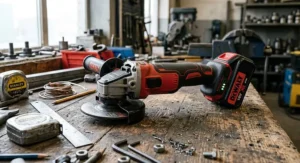
We’ve researched seven real 125mm angle grinders currently listed on Amazon UK, spanning budget cordless kits through to premium variable-speed corded workhorses, and paired that with genuine specification analysis and aggregated review sentiment rather than recycled marketing copy. You’ll also find a proper look at hand-arm vibration exposure, because the HSE’s guidance on hand-arm vibration is not just box-ticking — grinders are one of the more common culprits behind long-term hand injuries in trade and DIY use alike. Whether you’re kitting out a home workshop or replacing a tool that’s finally given up the ghost, by the end of this you’ll know exactly which of the seven suits your actual work, not just your budget.
Quick Comparison Table
For readers in a hurry, here’s the shortlist. Full specs and honest analysis for all seven follow further down.
| Product | Power Source | Motor / Speed | Best For |
|---|---|---|---|
| Bosch Professional GWS 12-125 | Corded, 1,200W | 11,000 rpm | All-round budget workshop use |
| Makita GA5030R | Corded, 720W | 11,000 rpm | Lightweight everyday cutting |
| Metabo WEV 15-125 Quick HT | Corded, 1,550W | 2,800–9,600 rpm (variable) | Stone prep and precision control |
| Makita DGA519Z | Cordless, 18V | Brushless, X-Lock | Premium cordless site work |
This shortlist deliberately mixes power sources and price tiers rather than just ranking by raw wattage, because the “best” 125mm angle grinder genuinely depends on how you’ll use it. If you’re grinding welds on a bench for an hour at a stretch, the corded Metabo WEV 15-125 Quick HT‘s variable speed dial earns its higher price. If you’re darting between jobs on a roof or scaffold, the cordless Makita DGA519Z wins purely on the freedom from a trailing cable. Note that none of these figures are exact retail prices — Amazon pricing shifts constantly, so always check the current listing before assuming a budget or premium tier.
💬 Just one click — help others make better buying decisions too!😊
Top 7 125mm Angle Grinders: Expert Analysis
Below is the full breakdown of seven genuine, currently available 125mm angle grinders on Amazon UK, covering budget, mid-range, and premium options across both corded and cordless designs.
1. Bosch Professional GWS 12-125 — most compact grip in its class
The GWS 12-125 is built around Bosch’s slimmer “GWS 12” body, which trims down the grip diameter compared with older Bosch grinders and makes a genuine difference over a long session. Its 1,200W motor spins the disc up to 11,000rpm through an M14 spindle thread, which is the standard fitting most 125mm discs and accessories are designed around, so compatibility is rarely an issue. Restart protection means the tool won’t fire back up on its own after a power cut — a small detail that matters more than it sounds once you’ve had a grinder unexpectedly whirr to life in your hand. Based on the spec comparison with Bosch’s own step-up model, the GWS 14-125 S, this one sacrifices variable speed and kickback control electronics in exchange for a lower price and a genuinely lighter feel, which suits buyers doing general metalwork rather than continuous professional cutting. Reviewers consistently note that the compact grip reduces hand fatigue on overhead or awkward-angle work, and the anti-rotation guard is frequently mentioned as a sensible safety inclusion rather than a marketing bullet point. What most buyers overlook is that this model’s declared vibration level, around 6.9 m/s², sits close to the HSE’s typical range for modern small angle grinders — worth factoring into your daily usage limits if you’re using it professionally.
Pros:
- ✅ Slim, ergonomic grip reduces fatigue on long jobs
- ✅ Restart protection prevents accidental startup
- ✅ M14 spindle keeps disc and accessory choice wide open
Cons:
- ❌ No variable speed control for delicate materials
- ❌ Vibration output sits at the higher end for its class
Bare-unit pricing typically sits in the £70–£90 range on Amazon UK at the time of research, and given the reliability reputation Bosch Professional carries, it represents solid value for anyone who wants a dependable everyday grinder without paying for features they won’t use.
2. Makita GA5030R — lightest true 125mm workhorse
At just 1.8kg, the GA5030R is one of the lighter genuinely 125mm-capable grinders on the market, and Makita achieves this without dropping to a toy-like power output — its 720W motor still hits 11,000rpm no-load. The labyrinth construction around the motor housing keeps dust and metal swarf out of the bearings, which in practice translates to a longer service life when you’re grinding rusty steel or cutting masonry, both of which throw a lot of abrasive debris back at the tool. Makita’s SJS II (Super Joint System) vibration-reduction mechanism inside the gear housing is a genuine engineering feature rather than marketing fluff — it absorbs some of the shock transmitted back through the spindle during grinding, which is precisely the kind of detail that never shows up on an Amazon spec sheet. Based on the aggregated feedback from long-term users, this model is frequently praised for starting reliably after years of site use, though a handful of reviewers note the 2.5m cable is on the shorter side for larger workshops. This is the grinder to pick if hand fatigue, not raw grinding speed, is your main concern — hobbyists doing detail metalwork or anyone with existing wrist strain will feel the weight difference immediately compared with heavier 1,400W-plus models.
Pros:
- ✅ Genuinely light at 1.8kg for reduced arm fatigue
- ✅ Dust-sealed labyrinth construction extends bearing life
- ✅ Anti-restart function built in as standard
Cons:
- ❌ 720W is modest next to premium 1,400W+ rivals
- ❌ Standard cable length may feel short in larger spaces
Expect a price in the £55–£75 range for the bare tool, making the Makita GA5030R one of the most accessible entry points into a trusted trade brand.
3. DeWalt DWE4233 — most raw corded power
Where the previous two models play it sensible, the DWE4233 goes for outright muscle: a 1,400W motor gives it a clear power advantage over the sub-1,000W corded options on this list, which shows up most obviously when cutting through thicker stock or working continuously rather than in short bursts. Here’s what to weigh: more power isn’t automatically “better” for every job — on thin sheet metal or delicate grinding, that extra torque can actually make the tool harder to control precisely, so this model rewards buyers who are regularly working with 4mm-plus steel or masonry rather than fine detail work. DeWalt fits the 125mm disc guard as standard but the housing is compatible with 115mm discs too, giving you a bit of flexibility if you occasionally need the smaller size for a tighter cut. What the spec sheet won’t tell you, but user reports suggest, is that the extra power draws noticeably more current, so if you’re on an older domestic ring circuit alongside other tools, it’s worth being mindful of what else is plugged in. Trade reviewers tend to rate this model highly for continuous-duty applications like rebar cutting and weld dressing, precisely the kind of workload where a 720W grinder would start to labour.
Pros:
- ✅ 1,400W motor handles thicker material with ease
- ✅ Guard also accepts 115mm discs for flexibility
- ✅ Well suited to continuous, high-demand cutting work
Cons:
- ❌ Extra torque needs a firmer grip on fine work
- ❌ Higher current draw on shared domestic circuits
Priced typically in the £90–£120 range, the DeWalt DWE4233 is squarely aimed at buyers who grind or cut daily rather than occasionally.
4. Metabo WEV 15-125 Quick HT — best variable-speed control for stone
This is the premium option on our list, and the price reflects a genuinely different feature set rather than just a brand premium. The 1,550W motor pairs with Metabo’s VTC (Vario-Tacho-Constamatic) electronics, giving a variable speed range from roughly 2,800 to 9,600rpm controlled via a thumbwheel — in practice this means you can dial the disc speed right down for polishing marble or delicate stonework, then wind it back up for aggressive metal grinding, all on the same tool. The M-Quick tool-free disc-change system is a genuine time-saver if you’re swapping between cutting and grinding discs repeatedly through a job, removing the fiddly spanner-and-flange routine that every other grinder on this list still requires. Based on the spec comparison, the standout safety feature here is the S-automatic mechanical safety clutch, which disengages the drive if the disc suddenly jams — a real-world kickback risk reduction that basic grinders simply don’t offer. Reviewers who work with natural stone and engineered worktops in particular flag the constant-speed-under-load electronics as the reason they’ll pay the premium, since cheaper variable-speed grinders tend to bog down noticeably when the disc meets resistance.
Pros:
- ✅ True variable speed with load-compensating electronics
- ✅ Tool-free M-Quick disc changes save real time
- ✅ Mechanical safety clutch reduces kickback risk
Cons:
- ❌ Considerably pricier than the other corded options here
- ❌ Overkill for occasional light DIY grinding
Expect this model to sit in the £140–£180 range, positioning it firmly as an investment tool for stone workers, fabricators, or serious hobbyists rather than a first-time buyer’s grinder.
5. Makita DGA519Z — best premium cordless with X-Lock
The DGA519Z represents Makita’s move into the X-Lock disc-mounting standard, which replaces the traditional threaded spindle-and-flange setup with a tool-free clamping mechanism shared across the wider X-Lock ecosystem (including some Bosch accessories). What that means practically is disc changes measured in seconds rather than the usual minute-plus fumble with a spanner, which adds up fast if you’re switching between grinding and cutting discs several times a day. Running on Makita’s 18V LXT battery platform, it’s sold as a bare tool (batteries and charger not included), which keeps the upfront cost down for anyone already invested in Makita’s cordless ecosystem but adds real cost for a first-time buyer starting from scratch. Based on the spec sheet, the brushless motor is the headline advantage over Makita’s older brushed cordless grinders — brushless motors run cooler, last longer, and squeeze more runtime from the same battery, since there’s no friction loss from carbon brushes. What most buyers overlook about battery-only tools like this is the true cost: factor in at least one 4.0Ah-plus battery and a charger, and the real spend is considerably higher than the bare-tool price suggests.
Pros:
- ✅ X-Lock system makes disc changes genuinely fast
- ✅ Brushless motor improves runtime and durability
- ✅ No trailing cable for site and roof work
Cons:
- ❌ Sold bare — batteries and charger cost extra
- ❌ X-Lock discs are a newer, slightly pricier format
Bare-tool pricing sits around £110–£140, but budget for batteries separately if you’re not already on Makita’s 18V platform — the true landed cost is a meaningful jump above that headline figure.

6. DeWalt DCG405 — best feature-rich cordless kit
Sitting on DeWalt’s 18V XR platform, the DCG405 is the most feature-loaded cordless grinder on this list. It includes an electronic brake that stops the disc within roughly two seconds of releasing the trigger — genuinely useful during frequent disc changes or when working in confined spaces where a freely spinning disc is a real hazard. The brushless motor keeps power delivery consistent as the battery discharges, which is a common weak point on cheaper cordless grinders that noticeably lose oomph as the charge drops. Based on the spec comparison against the Makita DGA519Z, the 125mm disc capacity here matches Makita’s offering, but the electronic brake and existing DeWalt XR battery compatibility for tradespeople already on that platform are what tips the decision for many buyers. Reviewers consistently rate the balance and ergonomics highly, noting it feels closer to a corded grinder in the hand than many cordless rivals, which matters over a full day’s use. Aggregated feedback does flag that, as with any XR tool, battery cost is the real investment — the tool itself is competitively priced, but a 5.0Ah battery and fast charger add a genuine chunk to the total spend.
Pros:
- ✅ Electronic brake stops the disc almost instantly
- ✅ Power stays consistent as the battery depletes
- ✅ Comfortable, corded-like balance for extended use
Cons:
- ❌ Battery and charger typically sold separately
- ❌ Heavier in the hand than the Makita X-Lock model
Bare-tool prices are broadly similar to the Makita at around £110–£140, so the deciding factor for most buyers will be which battery ecosystem — DeWalt XR or Makita LXT — they already own.
7. NANWEI 125mm Cordless Brushless — best value cordless bundle
Unlike the two bare-tool cordless options above, the NANWEI grinder is sold as a complete kit — two 4.0Ah 20V batteries, a charger, and four cutting/grinding discs included — which fundamentally changes the value calculation for a first-time buyer. The brushless motor claims a maximum of roughly 9,800rpm across three variable speed settings, giving a reasonable spread between controlled grinding and faster cutting without the premium electronics found on the Metabo. On paper this means you’re getting most of the practical benefits of a brushless cordless system — better runtime, less heat, longer motor life — at a fraction of the price of the established-brand bare-tool options. Honesty matters here: independent, verified long-term durability data on newer entrant brands like this is genuinely thinner than for Makita, DeWalt, or Bosch, so if you can’t verify a specific claim about longevity, treat it as unverified rather than assumed. What the aggregated Amazon customer feedback does consistently flag is strong value for occasional or light DIY use, alongside some reports of accessory quality — discs and guards — being noticeably below trade-brand standard, which is common at this price point across the whole 125mm angle grinder for metalwork category, not just this one model.
Pros:
- ✅ Complete kit — batteries, charger, and discs included
- ✅ Three-speed brushless motor at a budget price
- ✅ Genuinely accessible entry point into cordless grinding
Cons:
- ❌ Long-term durability data is less established than trade brands
- ❌ Included discs are generally lower quality than trade options
At around £60–£90 for the full kit, the NANWEI 125mm Cordless Brushless is the clear pick for anyone testing the water with cordless grinding before committing to a pricier ecosystem.
Top 7 Models: Full Comparison
| Product | Power / Speed | Disc Capacity | Notable Feature | Best For |
|---|---|---|---|---|
| Bosch Professional GWS 12-125 | 1,200W, 11,000rpm | 125mm | Restart protection | Everyday workshop use |
| Makita GA5030R | 720W, 11,000rpm | 125mm | SJS II vibration reduction | Lightweight, low-fatigue jobs |
| DeWalt DWE4233 | 1,400W corded | 125mm (fits 115mm) | High torque | Continuous heavy cutting |
| Metabo WEV 15-125 Quick HT | 1,550W, 2,800–9,600rpm | 125mm | Tool-free M-Quick discs | Stone prep, variable speed |
| Makita DGA519Z | 18V brushless | 125mm | X-Lock disc mounting | Fast disc changes, cordless |
| DeWalt DCG405 | 18V XR brushless | 125mm | Electronic brake | Feature-rich cordless kit |
| NANWEI Cordless 125mm | 20V, up to 9,800rpm | 125mm | Full kit included | Budget cordless bundle |
Looking at the table above, the Bosch Professional GWS 12-125 and Makita GA5030R deliver the best value for anyone doing general workshop tasks under £90, while the Metabo WEV 15-125 Quick HT‘s variable-speed electronics justify its higher price if stone or precision work is a regular part of your workload. Buyers weighing cordless options should note that the NANWEI 125mm Cordless Brushless undercuts both the Makita DGA519Z and DeWalt DCG405 substantially once you account for the fact those two are sold bare — but the trade-off is a step down in build consistency and accessory quality.
Practical Usage Guide: Setting Up and Maintaining Your 125mm Angle Grinder
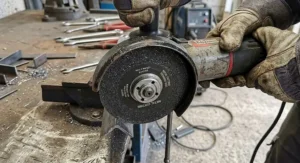
Getting the basics right in the first month matters more than most buyers realise. Before first use, fit the correct disc for the job — grinding discs and cutting discs are not interchangeable, and using one for the other’s purpose is a common source of disc failure. Tighten the flange nut with the supplied spanner rather than by hand; a loose disc is one of the most common causes of vibration complaints in the first few weeks of ownership. Always fit the side handle, even for quick jobs — it’s tempting to skip it, but it’s your main defence against kickback pulling the tool sideways.
For ongoing maintenance, keep the air intake vents clear of built-up metal dust, particularly on corded models with brushed motors, since clogged vents are a leading cause of premature motor failure. Check the guard position after every disc change — it should sit between you and the disc, not be left wherever it landed last time. If you’re using a cordless model, avoid leaving batteries on charge indefinitely; most lithium-ion packs prefer a partial-charge storage state if the tool won’t be used for a few weeks. A common first-30-days mistake is over-tightening the guard adjustment ring, which can strip the thread on cheaper grinders — hand-tight plus a quarter turn is usually sufficient.
Real-World Scenarios: Which 125mm Angle Grinder Suits You?
Consider three genuinely different buyers. First, a hobbyist restoring a classic car in a home garage, cutting rusted brackets and grinding welds a few hours a week — the Makita GA5030R or Bosch Professional GWS 12-125 suits this profile well, since the lighter weight and lower price reflect genuinely occasional use, and neither model’s slightly higher vibration output is a concern at low weekly hours. Second, a self-employed fabricator working on-site daily, cutting steel angle and box section for several hours at a stretch — here the DeWalt DWE4233‘s extra power or the cordless DeWalt DCG405‘s electronic brake and XR battery compatibility make more sense, since continuous daily use justifies the higher spend and the safety brake reduces downtime between cuts. Third, a stonemason or kitchen worktop fitter doing precision grinding and polishing on natural stone — this is squarely the Metabo WEV 15-125 Quick HT‘s territory, where variable speed and load-compensating electronics aren’t a luxury but a genuine functional requirement for the material.

Problem → Solution: Common 125mm Angle Grinder Issues
Problem: The disc wobbles or vibrates excessively. This is almost always a flange or disc-seating issue rather than a fault with the tool itself — check the disc sits flush against the inner flange with no debris trapped underneath, and confirm the outer flange nut is torqued correctly. Problem: The motor bogs down under load. On corded models this often points to an underpowered tool for the material — stepping up from a 720W to a 1,400W-plus model, like moving from the Makita GA5030R to the DeWalt DWE4233, solves this for thicker stock. Problem: Cordless runtime feels short. Battery degradation is normal over time, but if a newer battery shows the same issue, check you’re not running the tool at maximum speed for tasks that would suit a lower setting on variable-speed models like the Metabo. Problem: Excessive hand fatigue after short sessions. This is usually a combination of grip size and vibration — models with dedicated vibration-reduction engineering, such as Makita’s SJS II system, address this directly, alongside simply taking more frequent breaks per HSE guidance.
115mm vs 125mm Angle Grinder: Disc Size Versatility Explained
The 115mm vs 125mm angle grinder question comes up constantly, and the honest answer is that the difference is smaller than the marketing suggests but not negligible. A 115mm grinder typically cuts to a depth of around 28mm, while a 125mm model reaches roughly 35mm — a modest jump, but one that matters the moment you’re working with box section, thicker angle iron, or layered materials where a shallow cut simply won’t get through in one pass. Disc size versatility is the real advantage of stepping up to 125mm: most 125mm-guarded grinders can still accept 115mm discs with the right guard adjustment, giving you access to both sizes from one tool, whereas a dedicated 115mm grinder can never fit the larger disc. Weight and grip size differences between the two are genuinely minor on modern grinders — several manufacturers, including Makita, use near-identical bodies for both sizes — so there’s rarely a strong ergonomic reason to choose 115mm over 125mm once you’re buying new.
| Factor | 115mm Grinder | 125mm Grinder |
|---|---|---|
| Typical cut depth | ~28mm | ~35mm |
| Disc compatibility | 115mm only | 115mm and 125mm |
| Typical weight difference | Marginally lighter | Marginally heavier |
| Best For | Sheet metal, tile, light trade work | Thicker stock, general versatility |
As the table shows, the case for 125mm as a default purchase is strong precisely because of that disc compatibility row — you lose almost nothing by buying up, but you gain real flexibility for future jobs you haven’t planned yet. The main scenario where 115mm still makes sense is confined, repetitive detail work where every gram of weight and every millimetre of grip size counts, such as fine tile cutting in tight spaces.
125mm Angle Grinder for Metalwork
For metalwork specifically, disc size interacts directly with material thickness in a way that’s easy to underestimate until you’re mid-job. A 115mm angle grinder for metalwork copes fine with sheet steel, thin box section, and light fabrication, but once you’re routinely cutting angle iron over 4mm or working rebar, the extra 35mm cutting depth of a 125mm model removes the need for awkward multi-pass cuts. Power matters just as much as disc size here: the DeWalt DWE4233‘s 1,400W motor or the Metabo WEV 15-125 Quick HT‘s 1,550W variable-speed unit will maintain cutting speed through thicker steel where a 720W grinder like the Makita GA5030R would need to be worked more slowly to avoid stalling. Reviewers working in fabrication and welding shops consistently flag two things as underrated for metalwork specifically: a reliable restart-protection feature (present on every model in this guide) and a spindle lock for fast, one-handed disc changes between grinding welds and cutting stock — a detail that saves real time across a working day rather than a single job.
Metalwork Discs Explained: Grinding vs Cutting
Understanding metalwork disc types is arguably more important to your results than which grinder you buy, since the wrong disc will underperform even on the best tool. Grinding discs are thicker, typically 6mm, and designed to be used at an angle against the material to remove metal, smooth welds, or clean up edges — they’re not designed to be pushed straight into a cut. Cutting discs, by contrast, are thin — often 1–3mm — and designed to be used perpendicular to the material, slicing straight through rather than grinding along a surface. Grinding vs cutting discs is not just a semantic distinction: using a cutting disc for grinding work puts sideways stress on a disc engineered only for straight-line forces, and this is one of the more common causes of disc shattering, which the HSE’s guidance on abrasive wheel safety specifically flags as a serious injury risk. Flap discs sit in a third category, combining multiple small abrasive flaps for surface finishing and blending rather than aggressive material removal, and are worth adding to your kit if you’re doing weld finishing on visible metalwork.
| Disc Type | Thickness | Correct Use | Wrong Use Risk |
|---|---|---|---|
| Grinding disc | ~6mm | Angled surface grinding, weld cleanup | Cracks if used for straight cutting |
| Cutting disc | 1–3mm | Perpendicular straight cuts | Shatters under sideways/grinding load |
| Flap disc | Variable | Surface finishing, blending | Inefficient for heavy stock removal |
The practical takeaway from this table is straightforward: keep both disc types in your kit rather than trying to make one do the other’s job, and always check the disc’s rated maximum RPM against your grinder’s no-load speed before fitting it — mismatched ratings are a genuine, avoidable safety risk rather than a theoretical one.
How to Choose a 125mm Angle Grinder
What is the best way to choose a 125mm angle grinder? Match power source, wattage, and safety features to your actual workload rather than buying on price or brand recognition alone — here’s how, step by step:
- Decide corded or cordless first. Corded suits fixed workshop use and continuous heavy cutting; cordless suits site work, roofs, and jobs without easy power access.
- Match wattage to material thickness. Under 1,000W is fine for sheet metal and light grinding; 1,400W-plus is worth it for regular thick steel or masonry.
- Check for restart protection and a spindle lock. These aren’t optional extras — they’re baseline safety and convenience features on every model worth buying.
- Consider variable speed if you’ll work stone or delicate materials. Fixed-speed grinders are fine for metal but struggle with material-sensitive finishing work.
- Factor in true cordless cost. Bare-tool pricing hides the real spend — add batteries and a charger before comparing against a complete kit.
- Check disc compatibility and guard adjustability. A 125mm grinder that also accepts 115mm discs gives you more long-term flexibility.
- Read aggregated review sentiment, not star ratings alone. A 4.3-star average hides a lot — look for recurring specific complaints, not just the headline number.
Common Mistakes When Buying a 125mm Angle Grinder
The single most common mistake is buying on wattage alone without checking safety features — a high-power grinder with no restart protection or spindle lock is genuinely more dangerous in inexperienced hands than a lower-powered model with better safeguards. A close second is underestimating cordless total cost: buyers regularly compare a £120 bare cordless tool against a £150 corded model and conclude the cordless option is cheaper, without factoring in the £40–£60 a decent battery adds. Another frequent error is buying a fixed-speed grinder for mixed metal and stone work, then discovering the tool is genuinely unsuitable for one of the two materials — variable speed isn’t a luxury if your workload actually spans both. Finally, plenty of buyers skip checking spindle thread compatibility (almost universally M14 on 125mm grinders, but worth confirming) before buying third-party discs, only to find a mismatch at the worst possible moment.
Safety, Regulations & PPE: What UK Buyers Need to Know
Angle grinders are among the more hazardous common power tools, and UK safety obligations reflect that. Under the Provision and Use of Work Equipment Regulations 1998, anyone using a grinder at work must be adequately trained, and the equipment itself must be suitable, well-maintained, and fitted with the correct guards — this applies whether you’re self-employed or working for someone else. For home DIY use, PUWER doesn’t legally apply, but the underlying safety logic absolutely does: eye protection conforming to BS EN 166 and, for dry cutting or grinding, a dust mask meeting BS EN 149 are non-negotiable basics, since flying abrasive particles and inhaled dust are the two most common sources of injury.
Hand-arm vibration is the less dramatic but longer-term risk. HSE research on real-use measurements puts angle grinder vibration in the region of 7–9 m/s² upper-quartile, meaning regular daily use beyond roughly 20–40 minutes can start to carry meaningful health risk without proper exposure management — take breaks, alternate tasks, and consider a lower-vibration model like the Makita GA5030R’s SJS II system if you’re using a grinder for a significant part of most working days. Noise is a further consideration few buyers think about upfront: grinders commonly produce 90–95 dB(A), loud enough that hearing protection is genuinely warranted for extended sessions, not just a nice-to-have.
Frequently Asked Questions
❓ What is a 125mm angle grinder used for?
❓ Is a 125mm angle grinder better than a 115mm one?
❓ What disc size fits most 125mm angle grinders?
❓ Are cordless 125mm angle grinders as powerful as corded ones?
❓ Do I need training to use a 125mm angle grinder legally in the UK?
Conclusion
Choosing between these seven 125mm angle grinders really comes down to being honest about how often, and on what, you’ll actually use the tool. For general workshop and DIY use, the Bosch Professional GWS 12-125 and Makita GA5030R cover the vast majority of needs without overspending. Heavy, continuous cutting work points firmly towards the DeWalt DWE4233‘s raw power, while stone and precision finishing work is genuinely better served by the Metabo WEV 15-125 Quick HT‘s variable-speed electronics — this is one case where the premium price buys a real functional difference, not just a badge. On the cordless side, the Makita DGA519Z and DeWalt DCG405 both reward buyers already invested in their respective battery ecosystems, while the NANWEI 125mm Cordless Brushless remains the sensible low-risk entry point for anyone testing whether cordless grinding suits their workflow at all. Whichever you choose, pair it with the right disc for the job, respect the vibration and noise guidance above, and it should serve you reliably for years.
Recommended for You
- Cordless Angle Grinder Under £100: 7 Best UK Picks for 2026
- Cordless Angle Grinder: 7 Best Picks Tested for UK Trades (2026)
- Reciprocating Saw For Tree Pruning: 7 Best Picks Ranked (2026)
Disclaimer: This article contains affiliate links. As an Amazon Associate, I earn from qualifying purchases. If you purchase products through these links, we may earn a small commission at no additional cost to you.
✨ Found this helpful? Share it with your friends! 💬🤗
