In This Article
Picking the right cordless combi drill sounds straightforward until you’re standing in the aisle or scrolling Amazon.co.uk at midnight, eyeballs glazing over model numbers like DCD796, DHP484, and M18 FPD2. Is more torque always better? Does brushless really matter? And why does the battery cost nearly as much as the drill?
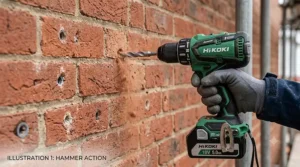
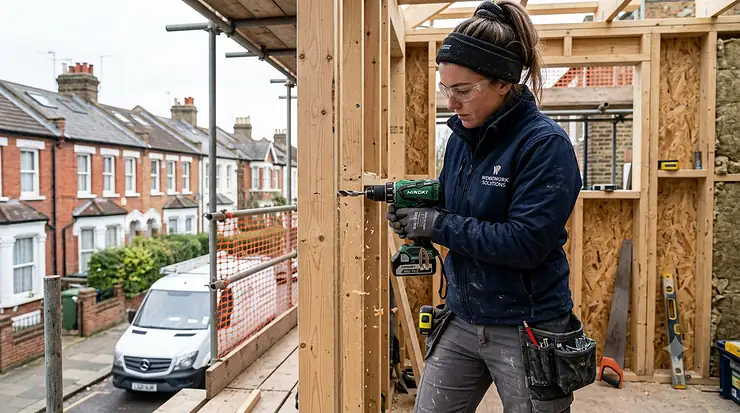
A cordless combi drill is a three-in-one tool combining rotary drilling, hammer action for masonry, and screwdriving — making it the single most versatile power tool a UK homeowner or tradesperson can own. In a country where terraced houses have solid brick walls and every second renovation job involves plugging into Victorian-era brickwork, the hammer function isn’t a nice-to-have; it’s practically essential.
In this guide, I’ve researched and reviewed seven real cordless combi drills currently available on Amazon.co.uk, covering the full range from entry-level to serious professional kit. Whether you’re building flat-pack furniture in a Stockport semi, running cable in a Sheffield terrace, or drilling rawlplugs into a stone wall in rural Wales, there’s a drill here for you. All prices are in GBP, and all models have been checked for UK availability and compatibility.
Quick Comparison Table
| Model | Voltage | Max Torque | Motor Type | Weight (bare) | Best For |
|---|---|---|---|---|---|
| DeWalt DCD796P1 | 18V | 70 Nm | Brushless | 1.5 kg | Best all-rounder |
| Makita DHP484Z | 18V | 54 Nm | Brushless | 1.7 kg | Precision & trade use |
| Milwaukee M18 FPD2-0 | 18V | 135 Nm | Brushless | 1.9 kg | Heavy-duty professionals |
| Bosch GSB 18V-55 | 18V | 55 Nm | Brushless | 1.9 kg | Clutch control & joinery |
| Ryobi RCD18-0 | 18V | 40 Nm | Brushless | 1.6 kg | Budget & ONE+ platform |
| BLACK+DECKER BCD700S1K-GB | 18V | 40 Nm | Brushed | 1.3 kg | Occasional DIY |
| Einhell TP-CD 18/60 Li-i BL | 18V | 60 Nm | Brushless | 1.7 kg | Value alternative |
What this table doesn’t quite capture is the platform decision lurking behind every purchase. The DeWalt DCD796 and Ryobi RCD18-0 are separated by more than torque figures — they represent different philosophies about how serious you’re going to be about your tool collection. The Milwaukee, meanwhile, is in a different power class entirely, which makes its premium price rather more justifiable once you understand what 135 Nm actually feels like drilling into a lintel.
💬 Just one click — help others make better buying decisions too! 😊
✨ Don’t Miss These Exclusive Deals!
🔍 Ready to find your perfect cordless combi drill? Click any highlighted product name in this guide to check current pricing and availability on Amazon.co.uk. Prices vary frequently, so it’s always worth checking for deals — Prime members often get next-day delivery at no extra cost.
Top 7 Cordless Combi Drills UK 2026 — Expert Analysis
1. DeWalt DCD796P1 18V XR Brushless Combi Drill
The DeWalt DCD796 is the drill that most UK tradespeople would recommend if you stopped them at the builders’ merchants and asked. At just 173mm in length, it’s genuinely compact — something that matters enormously when you’re drilling between joists in a loft conversion or working in the cramped void under kitchen units. The brushless motor delivers up to 70 Nm of torque with a 2-speed gearbox and 15-position torque clutch, handling everything from pilot holes in MDF to rawlplug fixings in medium-density brick.
The 70 Nm figure is worth unpacking: in practice, it means you can drive a 100mm screw into timber without breaking a sweat and drill 13mm holes in steel with reasonable effort. The hammer mode operates at up to 34,000 BPM, which handles the standard UK DIY task of fixing a curtain pole or TV bracket to a brick wall without complaint. Where it meets its limits is in dense engineering brick or anything approaching concrete — that’s SDS territory.
What most UK buyers overlook is how much the XR 18V battery platform contributes to the DCD796’s value. Owning one battery means you’re instantly compatible with dozens of DeWalt XR tools: circular saws, jigsaws, grinders, and more. The starter kit with a 5.0Ah battery and charger in a TSTAK case represents genuine value for the long-term tool-buyer. UK reviews consistently praise the build quality and runtime, with several noting it comfortably managed a full day’s work between charges.
Pros:
- ✅ Ultra-compact 173mm length — brilliant in tight spaces
- ✅ Outstanding DeWalt XR 18V ecosystem compatibility
- ✅ Brushless motor delivers excellent runtime in British damp conditions
Cons:
- ❌ 15 clutch positions is fewer than Bosch GSB equivalents — less precision for delicate screwdriving
- ❌ Kit pricing (with battery) pushes into mid-premium territory
Price range: around £130–£190 with battery kit | Verdict: The best all-round choice for most UK buyers.
2. Makita DHP484Z 18V LXT Brushless Combi Drill
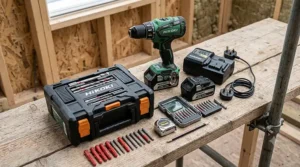
Makita has a fiercely loyal UK following, and the DHP484 is a significant reason why. The ergonomics are genuinely exceptional — it sits in the hand like it was designed by someone who’d spent years on site rather than in a design studio. At 54 Nm of torque with 21 clutch positions plus drill mode, it offers notably finer torque control than the DeWalt, which matters for kitchen fitters and joiners who spend their days driving into chipboard and laminates that will split if you’re even slightly heavy-handed.
The Extreme Protection Technology (XPT) sealing on this model deserves a mention specifically in the British context. UK construction sites are not known for their clement conditions — drizzle, mud, and damp are the default state for about eight months of the year. XPT guards against dust and moisture ingress, which adds meaningful longevity for outdoor and site work. The all-metal gearbox further reinforces durability credentials that budget alternatives simply cannot match.
The Makita LXT battery platform is one of the largest in the industry — over 270 compatible tools at last count — making it a particularly smart long-term investment. The DHP484Z is available as a bare unit (body only) for existing LXT owners, or in various kit configurations with batteries and cases. UK tradespeople including joiners, electricians, and plumbers consistently rate Makita’s consistency highly in reviews.
Pros:
- ✅ 21 clutch positions — finest screwdriving control in this comparison
- ✅ XPT moisture and dust protection — important for UK site work
- ✅ Access to the enormous Makita LXT battery platform
Cons:
- ❌ Lower peak torque (54 Nm) than DeWalt and Milwaukee equivalents
- ❌ Slightly heavier feel at 1.7 kg bare
Price range: around £75–£160 depending on kit | Verdict: The precision choice — ideal for joiners, kitchen fitters, and existing LXT owners.
3. Milwaukee M18 FPD2-0 18V FUEL Brushless Combi Drill
When sheer, unapologetic power is the requirement, the Milwaukee M18 FPD2 is the answer. An earth-shattering 135 Nm of torque puts it in an entirely different class from the competition in this list — nearly double the DeWalt and two and a half times the Ryobi. This is the tool for plumbers drilling through joists with large hole saws, electricians tackling steel back boxes, or builders who regularly work in dense concrete block and expect their drill to keep up without slowing or overheating.
Milwaukee’s POWERSTATE brushless motor technology claims up to 60% more power and significantly longer motor life than brushed alternatives. The REDLINK PLUS intelligence system actively monitors tool and battery performance, preventing overload and maintaining consistent output under sustained load. At 32,000 BPM in hammer mode, masonry work that would challenge lesser drills becomes routine.
The 5-year warranty Milwaukee offers on M18 FUEL tools is the best in the industry and worth factoring into the cost of ownership calculation. Over five years of professional daily use, tools get dropped, soaked, and pushed hard — knowing Milwaukee stands behind it for that duration changes the economics considerably. UK professional users rate Milwaukee’s after-sales support very highly, with UK-based service centres handling warranty claims efficiently.
Pros:
- ✅ 135 Nm — class-leading torque for demanding applications
- ✅ Industry-best 5-year warranty
- ✅ REDLINK PLUS overload protection for sustained heavy use
Cons:
- ❌ Premium price makes it harder to justify for occasional DIY
- ❌ Heavier at 1.9 kg bare — less comfortable for overhead or prolonged work
Price range: around £170–£250 kit options | Verdict: The professional’s choice — unmatched for heavy-duty daily trade use.
4. Bosch GSB 18V-55 Professional 18V Brushless Combi Drill
The Bosch GSB 18V-55 occupies an interesting position: it’s not the most powerful drill in this comparison, but it’s arguably the most precise. The 25-position torque clutch is a genuine differentiator — five more positions than the DeWalt and four more than the Makita — giving it exceptional control for delicate screwdriving tasks. If your work regularly involves chipboard kitchen carcasses, MDF panels, or any material that will crack or strip if you’re slightly over-torque, the Bosch clutch system is the most sympathetic in the group.
At 55 Nm, the GSB 18V-55 sits in the middle of the performance field, comfortably handling the vast majority of domestic and light trade tasks. The brushless motor delivers good runtime from Bosch’s 18V Professional battery system, and the compact 167mm head length is among the shortest in the class — genuinely useful for plumbers working in airing cupboards or electricians in junction boxes. The Electronic Cell Protection (ECP) prevents battery overloading, over-discharging, and overheating, which is particularly useful in the sustained use conditions of a busy UK building site.
Bosch’s Professional 18V range has excellent UK stockist coverage — Screwfix, Toolstation, and Amazon.co.uk all carry batteries and accessories, so sourcing replacements years down the line is unlikely to be the problem it can be with less established brands.
Pros:
- ✅ 25 clutch positions — best precision screwdriving in the group
- ✅ Very compact 167mm head length
- ✅ Wide UK stockist coverage for accessories and batteries
Cons:
- ❌ Bosch Professional 18V batteries not interchangeable with Bosch HOME tools (different system)
- ❌ Mid-range torque means it’s not ideal for very demanding masonry
Price range: around £100–£180 kit | Verdict: The precision tool for joiners, kitchen fitters, and Bosch ecosystem users.
5. Ryobi RCD18-0 18V ONE+ Brushless Combi Drill
The Ryobi RCD18-0 is the honest budget pick in this comparison — and honest is the operative word. At 40 Nm, it’s the lowest-torque drill in the group, and it’s available as a bare unit only, meaning you’ll need at least one ONE+ 18V battery and charger separately. What it offers in return is genuine brushless performance at a price point where most rivals offer brushed motors only, plus entry into the Ryobi ONE+ platform — over 100 compatible tools sharing the same batteries, including garden tools, a circular saw, jigsaw, and sander.
In practical terms, the 40 Nm ceiling shows in denser materials. Driving long screws into hardwood joists requires noticeably more effort than the DeWalt or Makita equivalents, and sustained masonry work will have the motor working audibly harder. For the standard UK DIY tasks though — flat-pack assembly, pilot holes in softwood, light rawlplug fixings in medium-density brick — it is perfectly capable and noticeably more efficient than older brushed Ryobi models.
The ONE+ battery platform is particularly well-suited to budget-conscious UK buyers who want to cover both power tools and garden tools with a single battery system. Batteries are stocked at B&Q, Screwfix, and Amazon.co.uk, making replacements easy to source. Available from Amazon.co.uk, often Prime-eligible.
Pros:
- ✅ Brushless motor at an entry-level price point
- ✅ ONE+ platform access — 100+ compatible tools
- ✅ Batteries widely available at UK high-street retailers
Cons:
- ❌ 40 Nm torque limits performance on demanding tasks
- ❌ Sold body-only — battery cost must be added
Price range: around £50–£80 bare unit | Verdict: Smart entry point for budget buyers investing in the Ryobi ONE+ ecosystem.
6. BLACK+DECKER BCD700S1K-GB 18V Hammer Drill
The BLACK+DECKER BCD700S1K-GB holds a specific and useful place in the market: it’s the drill you buy when you genuinely only need to do occasional DIY and don’t want to spend more on the tool than the job warrants. At 40 Nm with a brushed motor (the only brushed entry in this list), it’s honest about its nature — this is a lighter-use tool, and BLACK+DECKER don’t pretend otherwise.
What the BCD700S1K-GB offers that more expensive drills don’t is simplicity. The GB suffix confirms this is the UK-specific variant with a Type G three-pin plug for the charger, 230V compatibility, and UK consumer warranty terms. It comes as a complete kit with battery and charger, so there are no additional purchases required to get started — a meaningful advantage when all you need is a drill to put a few shelves up in a Victorian terraced house.
The ergonomics are comfortable for lighter users, and the 24-position clutch offers reasonable control for domestic screwdriving. Verified UK purchasers note it handles the standard range of household tasks reliably — curtain poles, garden fence screws, wall brackets for the telly. For that use case, it’s hard to fault at the price.
Pros:
- ✅ Complete kit — battery, charger, and carry case included
- ✅ UK-specific GB variant confirmed with Type G plug
- ✅ Simple, approachable for occasional DIY users
Cons:
- ❌ Brushed motor limits runtime and longevity versus brushless alternatives
- ❌ Not suited to sustained heavy use or professional applications
Price range: around £50–£80 as a kit | Verdict: The honest entry-level choice for occasional home DIY with no platform ambitions.
7. Einhell TP-CD 18/60 Li-i BL 18V Brushless Combi Drill
The Einhell TP-CD 18/60 Li-i BL is something of a sleeper pick — a German-engineered brushless combi drill that frequently gets overlooked between the headline brands but delivers 60 Nm of torque at a price that undercuts Bosch and DeWalt considerably. The Power X-Change 18V system is Einhell’s proprietary battery platform, compatible across their expanding range of tools including garden equipment, which makes it a reasonable consideration for buyers who also want to cover lawn care with the same battery.
The brushless motor is the key upgrade over cheaper Einhell brushed models — it runs cooler, delivers more consistent power under load, and will last considerably longer in sustained use. The 2-speed gearbox and 20-position torque clutch give reasonable control for both screwdriving and drilling applications. In hammer mode, 30,000 BPM handles the standard UK masonry fixing task — rawlplugs in brick, picture hooks in plaster over block — without drama.
What the Einhell lacks relative to the premium brands is the depth of battery ecosystem and the reassurance of long-established trade brand recognition. For the UK buyer who wants brushless performance but finds DeWalt or Makita kit pricing difficult to justify, the TP-CD 18/60 is a genuinely credible alternative worth considering. Available on Amazon.co.uk with Prime delivery.
Pros:
- ✅ Brushless motor at below-mid-range price point
- ✅ 60 Nm — stronger torque than budget alternatives
- ✅ Power X-Change platform covers garden tools too
Cons:
- ❌ Smaller battery ecosystem than Makita, DeWalt, or Milwaukee
- ❌ Less established UK service network for warranty claims
Price range: around £80–£130 depending on kit | Verdict: A strong brushless value pick for buyers not locked into a premium brand platform.
Getting the Most from Your Cordless Combi Drill — A UK Practical Guide
First 30 Days: Set Up Right, Save Yourself Grief Later
When a new cordless combi drill arrives, the instinct is to charge the battery, stick a bit in, and immediately start attacking the wall. Resist that urge long enough to do a few things properly.
First, run through all the clutch positions on scrap material before doing anything that matters. It sounds obvious, but every drill has a slightly different feel at each torque setting, and discovering that position 8 strips chipboard screws after you’ve assembled the kitchen unit is the kind of lesson that stays with you.
Second, store batteries at around 50–60% charge if the drill won’t be used for more than a few weeks. Lithium-ion batteries stored fully charged or fully depleted in UK garage temperatures — which can swing from −5°C in January to 30°C in a July heatwave — degrade significantly faster than batteries stored at a partial charge in a dry location indoors.
Third, keep the chuck keyless mechanism clean. In British conditions — particularly on outdoor or renovation work — grit and plaster dust work their way into the chuck mechanism over time. A quick wipe with a dry cloth after each session adds years to smooth chuck operation.
For masonry work in British housing stock (predominantly brick and block), use sharp, purpose-made masonry bits and let the drill do the work at a steady, moderate pressure. Forcing a drill into hard material in hammer mode generates heat rapidly — not good for the bit or the motor — while consistent moderate pressure is significantly more effective.
UK Climate Tip
After any outdoor use in rain or heavy damp — which is roughly six months a year in most of Britain — wipe the drill body, chuck, and battery contacts with a dry cloth before storing. The XPT sealing on Makita’s models handles moisture well, but no cordless drill is fully waterproof, and allowing water to sit on battery contacts accelerates corrosion.
Real-World Scenarios — Which UK Buyer Needs Which Drill?
The London Flat Owner: Occasional DIY in Compact Spaces
Sarah lives in a two-bedroom flat in Lewisham. She needs a drill for the classic urban homeowner tasks: shelves, picture frames, flat-pack furniture, and the occasional curtain pole into the solid brick of her Victorian conversion. Storage space is minimal — she wants one compact, capable tool that’ll live in the cupboard under the stairs without taking up much room.
Best pick: DeWalt DCD796 or BLACK+DECKER BCD700S1K-GB. The DeWalt’s 173mm compact body is outstanding for the brick-wall rawlplug jobs that are a constant feature of London housing, and if she ever wants to expand into other cordless tools, the XR platform gives her that option. If the budget is tighter, the BLACK+DECKER BCD700S1K-GB handles all of those domestic tasks reliably and comes with battery and charger included.
The Manchester Suburb DIYer: Regular Projects, Growing Tool Collection
Tariq works on his semi-detached in Didsbury regularly — decking, tiling, fence repairs, the occasional stud wall. He’s already got a jigsaw and circular saw, both on the Ryobi ONE+ platform, and he wants a combi drill that uses the same batteries.
Best pick: Ryobi RCD18-0. Battery compatibility means he buys into performance rather than paying twice for a new ecosystem. The 40 Nm limitation only really shows on large-diameter drilling and hardwood — for most renovation tasks, it’s entirely capable.
The Edinburgh Tradesperson: Daily Professional Use
Fiona is a self-employed joiner working throughout Edinburgh and the Lothians. She’s on site five days a week, tools are used hard, and downtime for repairs is money lost. She needs something robust, powerful, and backed by a warranty worth having.
Best pick: Milwaukee M18 FPD2 or Makita DHP484. For Fiona, the Milwaukee’s 5-year warranty and 135 Nm torque justify the premium price over a working lifetime. If she’s primarily doing joinery and kitchen fitting where clutch precision matters more than raw power, the Makita DHP484 with its 21-position clutch is the more refined tool for her specific workflow.
How to Choose a Cordless Combi Drill in the UK — 7 Key Criteria
Selecting the right cordless combi drill involves more than comparing torque figures on a spec sheet. Here are the seven criteria that actually matter for UK buyers, in order of importance:
- Battery platform compatibility — If you already own cordless tools, check which platform they run on before buying anything. Buying into a second platform doubles your battery costs.
- Brushless vs brushed motor — For any regular use, brushless is worth the extra money. In British damp conditions, brushless motors run cooler and last longer. Budget-only buyers can accept brushed for very occasional use.
- Torque for your materials — Most UK domestic work (brick, softwood, chipboard, plasterboard) is well-served by 50–70 Nm. Heavy professional masonry or large-diameter drilling benefits from 100 Nm+. Don’t pay for torque you won’t use.
- Body length — UK homes tend to have smaller rooms and tighter working spaces than American properties. A 167–175mm body length is significantly more practical in British lofts, cupboards, and between joists than a 200mm+ tool.
- Kit or bare unit — If you’re starting from scratch, kit pricing (drill + battery + charger) often represents better value than buying separately. Bare units suit existing platform owners perfectly.
- Clutch positions — 20–25 positions gives meaningful screwdriving control for fine materials. 15 positions is adequate for general use.
- Warranty and UK service — Check that warranty claims can be handled in the UK and that local service centres exist. Major brands (DeWalt, Makita, Bosch, Milwaukee) all have UK service infrastructure.
Common Mistakes When Buying a Cordless Combi Drill in the UK
Buying US voltage models — This is less common on Amazon.co.uk than it used to be, but worth checking: UK models require 230V chargers with Type G (three-pin) plugs. Models labelled -GB or verified as UK variants eliminate this concern. If in doubt, check the product description.
Ignoring the battery platform decision — Many buyers focus on the drill and treat the battery as an afterthought. The long-term cost and convenience of a tool collection depends far more on being in one coherent battery ecosystem than on the torque spec of any individual drill.
Overbuying on torque — A 135 Nm professional drill in the hands of a weekend DIYer is money wasted. For most UK domestic use cases, 50–70 Nm handles everything from plug holes in brick to driving long deck screws. Save the premium for the platform, not the raw power spec.
Underestimating what ‘in stock’ means — Amazon.co.uk availability status can change. Prime-eligible items dispatched from Amazon fulfilment centres are your safest bet for reliable delivery. Third-party sellers with longer dispatch times can be frustrating if you’re mid-project.
Forgetting about bit compatibility — The 13mm chuck on most drills in this list accepts standard UK bit shanks. If you have a set of older or specialist bits, check the shank diameter before committing to a new chuck size.
Cordless Combi Drill vs Dedicated SDS Drill — What British Homes Actually Need
This is one of the most common questions from UK buyers, and the answer is more nuanced than most articles admit. A cordless combi drill handles light masonry — rawlplugs in brick, fixings in block, plug holes in plaster over masonry — without difficulty. The hammer mechanism on the DCD796 or M18 FPD2 is more than adequate for everything the typical British homeowner or renovation DIYer encounters.
Where the SDS drill becomes genuinely necessary is sustained or large-diameter masonry work: drilling through a 230mm brick wall for a soil pipe, making multiple large-diameter core holes for ventilation, or working in reinforced concrete and engineering bricks. The rotary hammer mechanism of an SDS operates on a fundamentally different principle — the chisel action of the SDS bit in an SDS chuck transmits far more energy to the material, with far less effort and far less heat generation in the motor.
For anyone doing the occasional home renovation task, a cordless combi drill is sufficient and the SDS is an unnecessary additional cost. For tradespeople doing regular masonry work — electricians running cables through walls, plumbers penetrating floors and walls, builders working on new-build blockwork — an SDS drill is a separate tool that a combi drill cannot replace. According to the Health and Safety Executive (HSE), using the right tool for the task also has direct implications for vibration exposure, particularly relevant for HAVS (Hand-Arm Vibration Syndrome) compliance in professional settings.
Battery Platform Compatibility — The Decision You’re Actually Making
When you buy a cordless combi drill, you’re not just buying a drill. You’re voting for an ecosystem. This is the single most important decision in the purchase, and the one most first-time buyers underestimate.
The major UK-available platforms and their strengths:
DeWalt 18V XR — The most widely stocked professional platform at UK trade retailers (Screwfix, Toolstation, Jewson). Enormous tool range, widely available batteries, competitive pricing.
Makita 18V LXT — The largest platform in terms of number of compatible tools. Particularly strong with tradesperson-grade tools and an outstanding track record for longevity. LXT batteries are stocked at most UK tool retailers.
Milwaukee M18 — The professional tradesperson’s choice, with best-in-class warranty support and a loyal UK following among electricians, plumbers, and builders. Premium pricing reflects build quality that justifies it for daily trade use.
Ryobi ONE+ 18V — The consumer platform with the widest breadth of DIY and garden tools. The most accessible entry point for buyers who want tools and garden equipment on one battery. Batteries available at B&Q nationally.
Bosch 18V Professional — Note: this is entirely separate from the Bosch HOME (green) range. The Professional (blue) range is trade-grade; batteries are NOT interchangeable between the two. The Professional platform is solid and well-supported in the UK.
Einhell Power X-Change 18V — Growing platform that covers both power and garden tools. Less established UK service infrastructure than the majors but improving.
The Which? guide to cordless drill batteries consistently highlights platform compatibility as the most overlooked factor in buyer satisfaction surveys.
Long-Term Cost and Maintenance in the UK
A lithium-ion drill battery typically lasts between 300 and 500 charge cycles before noticeable capacity reduction sets in. For a typical UK DIY user charging a battery once a fortnight, that represents eight to twelve years of service. For a professional charging daily, it’s closer to one to three years. Budget accordingly.
Replacement battery costs in GBP vary considerably by platform:
- Premium branded 5.0Ah batteries (DeWalt, Makita, Milwaukee, Bosch Professional): typically in the £60–£120 range
- Mid-tier branded batteries (Ryobi, Einhell): typically in the £30–£60 range
This is where the total cost of ownership calculation matters for UK buyers comparing a premium brand drill at around £180 with a budget alternative at around £80. Over five years, if you’re replacing a battery every two to three years (professional use), the initial price difference narrows considerably relative to the performance and warranty difference.
On maintenance: cordless combi drills require remarkably little of it. Keep the chuck clean, store batteries partially charged in dry indoor conditions, and avoid dropping the drill onto concrete (lithium battery cells are not fond of shock). If the brushless motor makes unusual noises under light load, that’s a warranty matter — contact the UK service centre for the brand in question.
FAQ
❓ What is a cordless combi drill and do I need one for UK homes?
❓ What torque do I need in a cordless combi drill for UK DIY?
❓ Are cordless combi drills available on Amazon.co.uk with Prime delivery?
❓ Do cordless combi drills need UKCA certification in the UK?
❓ Should I buy a bare unit or a kit with battery and charger?
Conclusion
The best cordless combi drill for most UK buyers in 2026 is the DeWalt DCD796 — compact, brushless, hammer-equipped, and backed by the DeWalt XR ecosystem that most UK trade retailers stock. For existing Makita LXT users, the Makita DHP484Z is the natural platform upgrade. The Milwaukee M18 FPD2 earns its premium price for professionals who genuinely need its 135 Nm torque and 5-year warranty daily. The Bosch GSB 18V-55 wins on clutch precision. Budget buyers are well served by the Ryobi RCD18-0 and its vast ONE+ ecosystem, while the BLACK+DECKER BCD700S1K-GB suits genuine occasional DIY with no platform ambitions. The Einhell TP-CD 18/60 Li-i BL is the sleeper pick for brushless performance at below-mid-range cost.
What unites all seven is availability on Amazon.co.uk, UK compatibility, and genuine suitability for the masonry walls, damp conditions, and compact living spaces that define the British home improvement context. Buy with confidence, check the return policy (UK Consumer Contracts Regulations give you 14 days), and remember: the best drill is the one that matches your battery platform, your use case, and your budget — in that order.
✨ Don’t Miss These Exclusive Deals!
🔍 Click any highlighted product to check current pricing and real-time availability on Amazon.co.uk. Prime members get free next-day delivery on eligible items — well worth checking before you buy.
Recommended for You
- 18V Combi Drill: 7 Best Picks Tested for UK DIYers (2026)
- 7 Best Professional Combi Drill Picks for UK Tradesmen (2026)
- Budget Combi Drill: 7 Best Picks UK 2026 (Under £100)
Disclaimer: This article contains affiliate links. As an Amazon Associate, I earn from qualifying purchases. If you purchase products through these links, we may earn a small commission at no additional cost to you.
✨ Found this helpful? Share it with your mates! 💬🤗
