In This Article
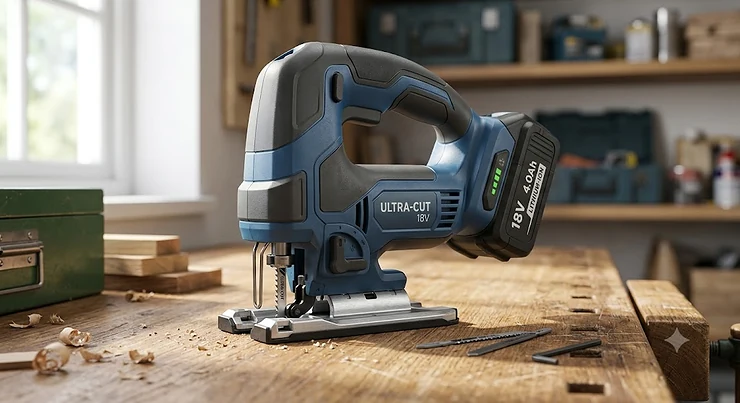
Buy the wrong jigsaw and you’ll find out the hard way — halfway through cutting a sink hole in a worktop, arm burning, blade wandering off your pencil line because the tool’s too front-heavy to hold steady with one hand. A genuinely compact cordless jigsaw solves that problem before it starts. It’s not just “a jigsaw that happens to be smaller” — it’s a specific category built around a slim barrel grip, a low overall weight, and a body short enough to poke into a cupboard, under a sink, or between joists without clouting your knuckles on the surrounding timber.
This guide covers seven real, currently available compact cordless jigsaws sold through amazon.co.uk, ranging from budget-friendly ONE+ compatible bodies to brushless professional-grade tools. We’ve dug into the actual specifications — weight with and without battery, grip circumference, stroke rate, cutting depth — and paired that with honestly reported aggregated review sentiment, because a spec sheet alone won’t tell you how a tool feels after forty minutes of overhead cutting. Whether you’re kitting out a kitchen, trimming laminate flooring, or just want one tool that lives in the van without adding noticeable heft, you’ll find a genuine match here. We’ll also dig into the practical side that most listings skip entirely: one-handed grip design, how tool weight actually plays out in real use, and cutting technique in narrow-access spots where a bulkier jigsaw simply won’t fit.
Quick Comparison Table
| Jigsaw | Weight (with battery) | Max Cut in Wood | Grip Style | Best For |
|---|---|---|---|---|
| Bosch GST 18V-LI S | 2.4 kg | 120 mm | Barrel grip | Narrow-access & one-handed control |
| Makita DJV180Z | ~2.7–3.0 kg | 135 mm | D-handle | All-round compact power |
| DeWalt DCS334N | ~2.6 kg | 135 mm | D-handle | Brushless site work |
| Milwaukee M18 BJS | 2.5 kg | 135 mm | Top handle | Daily trade durability |
| Ryobi R18JS-0 | ~2.1–2.4 kg | 101 mm | D-handle | Budget ONE+ owners |
| Black+Decker BDCJS18N | ~2.1 kg | — | D-handle | Occasional light DIY |
| Einhell TE-JS 18/80 Li | 1.81 kg | 80 mm | D-handle | Lightest on test |
Looking at the spread above, the gap between the lightest and heaviest tool here is nearly 1.2 kg once you factor in a battery — which sounds trivial until you’re holding the thing above your head for the fifth cut in a row. The Bosch GST 18V-LI S and Einhell TE-JS 18/80 Li sit at opposite ends of the price spectrum but both prioritise a slim body over raw cutting depth, while the Makita DJV180Z, DeWalt DCS334N and Milwaukee M18 BJS trade a bit of extra bulk for the 135 mm wood capacity that trade users tend to want. If cutting depth genuinely matters for your project — worktops, thick MDF, structural timber — lean towards the 135 mm group; if manoeuvrability and low fatigue matter more, the 80–120 mm tools punch well above their spec sheet.
💬 Found a jigsaw that fits your project already? Compare current prices and availability before you commit — stock and battery bundles shift often.
Top 7 Compact Cordless Jigsaws: Expert Analysis
1. Bosch GST 18V-LI S — smallest grip circumference in its class
The standout feature here isn’t the motor, it’s the handle: at just 128 mm around, the barrel grip on the Bosch GST 18V-LI S is genuinely built for hands that tire on bulkier tools. This is a Bosch Professional-tier saw, meaning the fit and finish sit a notch above hobbyist gear, and it shows in how the tool balances once a battery’s clipped in. The stroke rate runs 550–2,700 spm with a 23 mm stroke height, and Bosch’s SDS blade-release system lets you swap blades one-handed without hunting for a hex key — useful when you’re up a ladder or wedged into a cupboard.
Cutting capacity in wood tops out around 120 mm, which covers the vast majority of DIY and light trade tasks, though it falls short of the 135 mm tools if you’re regularly working thick stock. Based on the spec comparison, this is the pick for anyone whose main frustration with jigsaws has been fighting a chunky grip rather than fighting the material itself — tradespeople doing overhead work, kitchen fitters reaching under worktops, and anyone with smaller hands who’s found other 18V jigsaws awkward to control one-handed.
Reviewers consistently report that the Bosch Professional build quality holds up over years of regular use, with several long-term owners noting the tool still cuts accurately after multiple years of site work; a recurring niggle in feedback is that the blade clamp can occasionally need a clean or a light tap to stay precise after heavy use, and the motor can run warm during extended continuous cutting sessions.
Pros:
- ✅ Smallest grip circumference (128 mm) in its class
- ✅ One-handed SDS blade change, no tools needed
- ✅ Compatible across the full Bosch Professional 18V battery range
Cons:
- ❌ 120 mm wood capacity trails the 135 mm competitors
- ❌ Runs warm on extended continuous cutting sessions
Body-only pricing typically sits in the £150–£200 range depending on whether an L-BOXX and blades are bundled in — check current price and stock, as bundle inclusions vary between sellers. For the control it offers in tight spots, this earns its place as a genuine value pick for anyone prioritising grip comfort over outright cutting depth.
2. Makita DJV180Z — best all-rounder for compact power
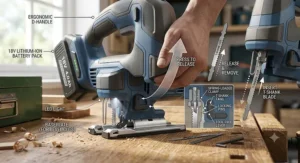
The Makita DJV180Z opens with a straightforward promise: full-size cutting capability squeezed into a genuinely compact body, and on the spec sheet it delivers — 135 mm in wood and 10 mm in steel from a tool that Makita still classes as compact and lightweight. The 2,600 spm stroke rate isn’t the fastest on this list, but paired with three orbital pendulum settings plus a straight-cut mode, it gives you real control over finish quality rather than just raw speed.
What most buyers overlook about this model is the ergonomically rubberised handle, which does a genuinely good job of soaking up vibration during long cuts — the kind of detail that matters far more after an hour of use than it does in a showroom. The tool-less blade change uses a push-in lock system rather than Bosch’s SDS lever, which some users find marginally quicker in practice. This is the jigsaw for anyone already invested in Makita’s LXT battery ecosystem, or for buyers who want one tool that handles kitchen fitting, garden decking and general joinery equally well without needing to switch to a bigger saw.
Aggregated review sentiment is strongly positive on cutting accuracy and the build quality of the rubberised grip; some buyers note the tool feels slightly heavier once a larger-capacity battery is attached compared with the very lightest models on this list, which is worth weighing if all-day carrying matters to you.
Pros:
- ✅ 135 mm wood capacity matches the premium-tier tools
- ✅ Three orbital settings plus straight-cut mode for finish control
- ✅ Large two-finger trigger works comfortably even with gloves on
Cons:
- ❌ 2,600 spm trails the fastest brushless competitors
- ❌ Feels noticeably heavier with a higher-capacity LXT battery fitted
Expect body-only prices in roughly the £120–£160 range. Given the balance of cutting depth, comfort and brand reliability, this represents strong value for buyers who want one dependable jigsaw rather than a specialist tool.
3. DeWalt DCS334N — brushless power without the bulk
DeWalt’s 18V XR jigsaw leads with its brushless motor, and the practical upshot is a genuinely fast 3,200 spm no-load stroke rate alongside a 4-position pendulum action — the highest pendulum granularity on this list. On paper this means finer control over how aggressively the blade bites, useful when you’re switching between fast rough cuts in stud timber and cleaner finish cuts in visible joinery on the same job. The 135 mm wood and 25 mm aluminium cutting capacities put it firmly in the same performance tier as Makita and Milwaukee, while DeWalt’s TSTAK case system means it slots straight into a van storage setup if you’re already running other XR tools.
Here’s what to weigh: this is a D-handle top-handle design rather than a slim barrel grip, so while it’s genuinely compact for its power class, it won’t match the Bosch GST for narrow-access manoeuvrability. Twin LEDs and a dust blower with on/off control keep the cutting line visible, and the tool-free adjustable shoe bevels to 45 degrees in both directions. What most buyers overlook about this model is how low DeWalt has positioned the motor within the housing — it noticeably improves front-to-back balance compared with older DeWalt jigsaws, which matters when you’re guiding long straight cuts freehand.
Reviewers consistently note the brushless motor’s smoothness and low vibration compared with brushed alternatives; a recurring theme in feedback is that the tool feels reassuringly weighty and well-built even without a battery attached, which some see as a durability signal and others see as extra mass to carry all day.
Pros:
- ✅ 3,200 spm brushless motor, fastest stroke rate on this list
- ✅ 4-position pendulum action for fine cutting control
- ✅ 25 mm aluminium capacity, ahead of most rivals here
Cons:
- ❌ D-handle body doesn’t match barrel-grip tools for tight-space access
- ❌ Body-only price sits at the higher end of this list
Body-only pricing generally runs around £150–£190, with kitted versions including batteries and a TSTAK case priced higher — always check current price, as DeWalt bundle contents change regularly. For tradespeople who already run 18V XR kit, this is close to a natural upgrade path.
4. Milwaukee M18 BJS — daily-use durability for trade work
Milwaukee’s M18 BJS positions itself squarely at professional daily use, and the standout feature is the FIXTEC blade clamp — a patented tool-free system Milwaukee designed specifically to survive repeated blade swaps on site without loosening over time. At 2.5 kg with battery fitted, it’s mid-pack on weight, but the five-stage pendulum action is the most granular on this entire list, giving genuinely fine control between aggressive rough cuts and clean finish work in the same tool.
Based on the spec comparison, the 2,700 spm stroke rate and 135 mm wood capacity put the M18 BJS on par with Makita and DeWalt, but Milwaukee’s REDLINK overload protection electronics add a layer of durability engineering aimed at tradespeople who genuinely abuse their tools daily rather than occasional weekend users. The detachable soft shoe protects delicate surfaces like veneered board or laminate, a small but genuinely useful inclusion often missing on budget models.
Aggregated customer sentiment consistently praises the solid, reassuringly weighty feel and the sense of a genuine metal frame beneath the plastic housing — reviewers who’ve upgraded from cheaper brands specifically call out the improved cut accuracy. A recurring theme is that the extra weight, while it aids stability, is noticeable during extended overhead work compared with the lighter tools on this list.
Pros:
- ✅ Five-stage pendulum action, the most granular control here
- ✅ FIXTEC tool-free blade clamp built for repeated daily swaps
- ✅ Detachable soft shoe protects veneered and laminate surfaces
Cons:
- ❌ Noticeably heavier feel during extended overhead cutting
- ❌ Sold body-only as standard, adding to overall kit cost
Body-only prices typically fall in the £130–£160 range. If you’re cutting daily rather than occasionally, the durability engineering here genuinely justifies the outlay over a lighter-duty budget tool.
5. Ryobi R18JS-0 ONE+ — best budget pick for existing ONE+ owners
The Ryobi R18JS-0 leads with accessibility rather than outright performance: it’s compatible with every battery across Ryobi’s sprawling 18V ONE+ ecosystem, which now spans well over a hundred tools for home, garden and DIY use. If you already own a Ryobi drill or strimmer, adding this jigsaw costs you nothing in extra batteries or chargers — a genuinely underrated value factor that raw spec sheets don’t capture.
On paper, the 1,100–3,000 spm variable speed range and 4-stage pendulum action are respectable for the price bracket, though the 101 mm wood and 6 mm steel cutting capacities trail the premium-tier tools on this list. What most buyers overlook is that this gap barely matters for the majority of home DIY tasks — shelving, garden projects, general joinery — where you’re rarely pushing past 50–60 mm cuts anyway. A built-in LED work light and tool-less blade clamp bring genuine convenience usually reserved for pricier tools.
Reviewers consistently describe the tool as light, accurate and “cheap” in the best sense — good value rather than flimsy — with the GripZone over-moulded handle called out repeatedly as more comfortable than its price suggests. A common complaint in user reviews is the bright hyper-green colour scheme dividing opinion, alongside occasional notes that adjustment levers and buttons aren’t always immediately intuitive to locate by feel.
Pros:
- ✅ Works with the entire Ryobi ONE+ battery ecosystem
- ✅ GripZone handle rated more comfortable than the price suggests
- ✅ Built-in LED light and tool-less blade clamp included as standard
Cons:
- ❌ 101 mm wood capacity trails the premium-tier tools here
- ❌ Controls and adjustment levers aren’t always intuitive by feel
Body-only pricing generally sits under £80, making it one of the most accessible entry points on this list. For existing ONE+ households, the value case here is hard to beat.
6. Black+Decker BDCJS18N — best entry-level pick for occasional DIY
Black+Decker’s BDCJS18N is designed explicitly for DIY applications rather than trade use, and it’s honest about that positioning rather than overselling itself. The compact, lightweight design keeps overall weight to roughly 2.1 kg, and the three-stage pendulum action covers the basics — fast rough cuts through to cleaner finish work — without the granularity of the five-stage systems on pricier tools here.
The tool-free blade change and clear bevel detents at 0°, 22.5° and 45° make this genuinely approachable for buyers who’ve never used a jigsaw before. What most buyers overlook about this model is how much clearer the line of sight is compared with bulkier tools, since Black+Decker has kept the housing low around the cutting area specifically for visibility — a detail that matters more for accuracy on curved cuts than raw stroke speed ever will.
Aggregated review sentiment on this model is more limited than the established professional brands here, reflecting its position as a lighter-use DIY tool rather than a trade staple — where verifiable, feedback points to solid performance on straightforward wood and plastic cutting tasks, with the caveat that it isn’t built for daily heavy-duty use. Buyers should weigh this honestly: it’s the right tool for occasional projects, not a site-ready workhorse.
Pros:
- ✅ Genuinely beginner-friendly with clear bevel detents
- ✅ Low-profile housing improves line of sight on curved cuts
- ✅ Among the most affordable body-only options on this list
Cons:
- ❌ Three-stage pendulum action offers less finish control than rivals
- ❌ Not positioned or built for daily heavy-duty trade use
Body-only prices typically fall under £60, sometimes lower in sales. For anyone tackling the occasional shelf, birdhouse or garden project rather than a full renovation, this is a sensible, low-risk starting point.
7. Einhell TE-JS 18/80 Li — lightest jigsaw on test
The Einhell TE-JS 18/80 Li’s standout feature is right there in the numbers: at 1.81 kg, it’s genuinely the lightest jigsaw covered in this guide, undercutting even the compact-focused Bosch by more than half a kilogram. That weight saving comes from a more modest 80 mm wood cutting capacity, which is the trade-off worth understanding before buying — this is a tool built around reducing arm fatigue during long sessions rather than maximising raw cutting depth.
Four pendulum settings and a 2,400 spm stroke rate are respectable for the price point, and the universal tool-free blade holder accepts both T-shank and U-shank blades, giving genuinely wide compatibility with whatever blades you already own. Einhell’s Power X-Change battery system extends across a large family of garden and DIY tools, so the value proposition compounds if you’re already using their lawn or garden kit. Based on the spec comparison, this is the pick for anyone doing repeated, shorter cutting sessions — hobbyists, garden project builders, anyone who values comfort over pushing through thick stock in one pass.
Where verifiable, aggregated review sentiment describes the TE-JS 18/80 Li as a reliable, no-frills performer for its price bracket, with the additional attachable cutting line guide praised for genuinely improving free-hand accuracy. Reviewers note the more modest 80 mm capacity means thicker structural timber isn’t really this tool’s job, and the brushed motor doesn’t match the runtime efficiency of brushless competitors.
Pros:
- ✅ Lightest jigsaw covered in this guide at 1.81 kg
- ✅ Universal blade holder accepts both T-shank and U-shank blades
- ✅ Attachable cutting line guide genuinely improves free-hand accuracy
Cons:
- ❌ 80 mm wood capacity is the lowest cutting depth on this list
- ❌ Brushed motor trails brushless rivals on runtime efficiency
Body-only pricing generally sits in the £50–£80 range, with battery-inclusive kits higher — check current price as Power X-Change bundles vary widely. For fatigue-conscious buyers doing lighter cutting work, the weight saving here is the whole story, and it’s a genuinely compelling one.
Practical Usage Guide: Setup, First Cuts and Maintenance
Getting the most from any compact cordless jigsaw starts before you ever pull the trigger. Charge your battery fully before first use, and resist the temptation to grab whatever spare blade is lying in the toolbox — matching blade type to material genuinely determines whether your first cut looks professional or splintered. A fine-tooth blade (roughly 10-14 TPI) suits clean cuts in worktops and visible joinery, while a coarser blade clears material faster in construction timber where the finish won’t be seen. Fit the anti-splinter insert if your model includes one; it’s a small piece of plastic that makes a genuinely noticeable difference on melamine and veneered boards.
For your first cuts, start with the pendulum action set to zero or its lowest setting — this keeps the blade moving in a straighter path rather than an aggressive forward arc, which is far more forgiving while you’re still learning how much pressure to apply. Let the blade do the work rather than forcing the tool through the material; pushing too hard is the single most common cause of blade snap in the first month of ownership. Common early mistakes also include cutting freehand too fast around tight curves (slow down and let the blade catch up) and forgetting to check the shoe’s bevel setting is locked back to zero after an angled cut, which throws off your next straight cut without obvious warning.
Maintenance is minimal but matters: blow out sawdust from the blade clamp and vents after every session — a buildup here is the leading cause of the “blade wobble” niggle several reviewers mention across multiple brands in this guide. Check the anti-scratch shoe cover periodically for wear, and store the tool with the battery removed if it won’t be used for several weeks, since a partially discharged li-ion cell left in a cold van or shed loses capacity faster over time.
Real-World Scenarios: Matching the Right Jigsaw to the Job
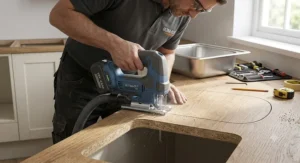
Picture a first-time renovator tackling a single kitchen worktop cut-out for a new sink, working weekends with no prior power tool experience. Budget realistically sits under £80, frequency of use is a handful of sessions per year, and the priority is safety and approachability over raw cutting depth. The Black+Decker BDCJS18N or Ryobi R18JS-0 (if already in the ONE+ ecosystem) both fit comfortably here — enough capability for a single worktop cut without paying for pendulum granularity that’ll never get used.
Now consider a tradesperson fitting kitchens three to four days a week, cutting worktops, notching around pipework, and trimming skirting on-site. Here, daily wear resistance and finish quality genuinely justify a bigger spend — the Milwaukee M18 BJS or DeWalt DCS334N make sense, with their five- and four-stage pendulum actions respectively giving the control needed to switch between rough structural cuts and visible finish work without swapping tools.
Finally, picture a keen hobbyist working in a home workshop or shed, doing scroll-style curved cuts in plywood for shelving, garden builds and small furniture projects across regular evening sessions. Comfort over a long session matters more than raw power here, which points squarely at the Einhell TE-JS 18/80 Li for its featherweight body, or the Bosch GST 18V-LI S if slightly more cutting depth and one-handed control in awkward angles is the priority.
One-Handed Grip Design: Barrel Grip vs D-Handle Explained
Grip shape is the single most overlooked factor when buying a jigsaw, and it deserves more attention than most listings give it. Barrel-grip (or “body grip”) jigsaws — like the Bosch GST 18V-LI S — position your hand directly in line with the blade, wrapped around a slim cylindrical body. This design genuinely excels for one-handed operation: because your grip sits so close to the cutting axis, you get more precise feedback about blade deflection and can guide the tool through curves with less wrist strain, particularly useful for scribing work or reaching under worktops where a bulkier handle simply won’t fit.
D-handle (or “top-handle”) jigsaws — the Makita DJV180Z, DeWalt DCS334N, Ryobi R18JS-0, Black+Decker BDCJS18N and Einhell TE-JS 18/80 Li all use this format — put your hand above and slightly behind the cutting line, gripping a pistol-style handle. This layout gives more leverage for pushing through thicker material and tends to feel more natural for anyone coming from circular saws or drills, but it’s marginally less precise for delicate one-handed curve work simply because your hand sits further from the blade’s actual path.
Here’s what to weigh: if your work involves a lot of overhead cutting, working under fixed cabinetry, or scribing along uneven walls, a barrel grip genuinely earns its premium. If you’re mostly making straight or gently curved cuts on a bench or sawhorse, a D-handle’s extra leverage will likely feel more comfortable over a full day. Neither format is objectively “better” — they solve different control problems, and the right choice depends entirely on where you’ll actually be using the tool.
Tool Weight Comparison: Bare Unit vs With Battery
| Model | Bare Unit Weight (approx.) | With Battery Fitted |
|---|---|---|
| Einhell TE-JS 18/80 Li | ~1.3 kg | 1.81 kg |
| Bosch GST 18V-LI S | ~1.5 kg | 2.4 kg |
| Ryobi R18JS-0 | ~1.6 kg | 2.1–2.4 kg |
| Black+Decker BDCJS18N | ~1.7 kg | ~2.1 kg |
| Milwaukee M18 BJS | ~1.8 kg | 2.5 kg |
| DeWalt DCS334N | ~1.9 kg | ~2.6 kg |
| Makita DJV180Z | ~2.0 kg | ~2.7–3.0 kg |
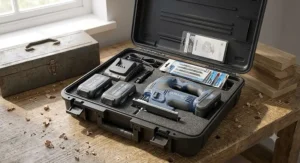
Notice how much the battery itself contributes to overall weight — often 30-40% of the tool’s total mass once fitted. This is why body-only listings can be misleading if you’re comparing purely on paper: two jigsaws with near-identical bare-unit weights can end up nearly half a kilogram apart once you factor in a 4.0Ah versus a 2.0Ah battery pack. If fatigue during overhead or extended sessions is a genuine concern, it’s worth pairing a lighter-bodied tool like the Einhell TE-JS 18/80 Li or Bosch GST 18V-LI S with a smaller-capacity battery rather than defaulting to the largest Ah pack available, accepting a shorter runtime in exchange for noticeably less strain per cut.
Narrow-Access Cutting: Tight Spaces, Sink Cut-Outs and Awkward Angles
Narrow-access cutting is where compact jigsaws genuinely separate themselves from full-size alternatives, and it’s worth understanding the mechanics of why. Overall tool length matters as much as weight here — a shorter body means less clearance needed between the blade and any obstruction behind the tool, whether that’s a cupboard back panel, a joist, or the underside of a fitted worktop. The Bosch GST 18V-LI S line is specifically engineered around this, with some variants in the range measuring as little as 260 mm in length, among the shortest in its category, purpose-built for manoeuvring in curves and tight spaces.
Grip circumference plays a second, less obvious role: a slim barrel grip lets you angle your wrist further before your knuckles hit a surrounding surface, which genuinely extends how far into a confined space you can work before needing to reposition. For kitchen sink cut-outs specifically, plan the cut from underneath where possible, support the offcut with clamps or a helper’s hand before the final pass to prevent it dropping and splintering the surrounding worktop, and use a fine-tooth blade to minimise chip-out on visible edges.
For notching around pipework or working inside stud cavities, a plunge-cut technique — tilting the jigsaw forward onto its shoe’s front edge and slowly lowering the running blade into the material — avoids needing a pilot hole, though it demands a steady hand and is best practised on scrap material first. Tools with a dust blower on/off toggle, like the DeWalt DCS334N, offer a genuine advantage here since you can disable the blower when working in an enclosed space where blown dust would otherwise obscure your view entirely.
Lightweight Cordless Jigsaw: Does Shaving Grams Actually Matter?
It’s tempting to dismiss weight differences of a few hundred grams as negligible, but the physics of extended arm work says otherwise. Holding roughly 2.4 kg at arm’s length or overhead for a sustained period generates meaningfully more strain on the shoulder and forearm than holding 1.8 kg — and that difference compounds across a full day of intermittent cutting, particularly for anyone with existing wrist or shoulder issues, or simply smaller-framed users who find heavier power tools tiring regardless of build quality.
The Einhell TE-JS 18/80 Li, at 1.81 kg with battery fitted, demonstrates the trade-off clearly: Einhell achieved that low weight partly by capping wood cutting capacity at 80 mm rather than chasing the 135 mm figure found on heavier premium tools. What most buyers overlook is that this trade-off is entirely sensible for a huge share of real DIY work — most home projects rarely call for cuts anywhere near 100mm+ depth, and prioritising a lighter tool for the 80% of lighter tasks makes more practical sense than buying maximum capacity “just in case.”
Reviewers consistently note that a genuinely lightweight jigsaw reduces the temptation to rush or brace awkwardly during overhead cuts, which in turn improves accuracy rather than hindering it — a lighter tool is easier to hold steady, not just easier to hold for longer. If your typical projects rarely exceed shelving, garden builds, or general joinery thickness, a lightweight-focused tool is very unlikely to leave you wanting for more capacity, while genuinely saving your arm on every single session.
✨ Don’t Miss These Exclusive Deals!
🔍 Take Your Next DIY Project to the Next Level
Click through to check current pricing and availability on any of the compact cordless jigsaws featured above. The right tool for your grip, your project size and your storage space is only a couple of clicks away — and getting it right the first time saves you both money and frustration down the line.
How to Choose a Compact Cordless Jigsaw
Choosing the right compact cordless jigsaw comes down to matching a handful of practical criteria to your actual projects, rather than chasing the highest spec numbers on the box.
- Decide on grip style first. If you’ll be working overhead, under cabinetry, or scribing curves, prioritise a barrel grip. If most cuts happen on a bench or sawhorse, a D-handle’s extra leverage tends to feel more natural.
- Match weight to session length. Short, occasional cuts tolerate a heavier tool fine; regular extended sessions genuinely benefit from the lighter end of this list.
- Check cutting capacity against your actual materials. Don’t pay for 135 mm capacity if you’ll never cut anything thicker than 60–70 mm — that spec premium buys you nothing in practice.
- Consider your existing battery ecosystem. If you already own 18V tools from a given brand, buying body-only within that same platform saves genuine money over time.
- Look at pendulum settings realistically. More stages give finer control between rough and finish cuts, but a basic three- or four-stage system covers the vast majority of DIY work perfectly well.
- Factor in blade compatibility. Universal T-shank compatibility (found across most models here) means you’re never locked into buying proprietary blades at inflated prices.
- Weigh brushless against price. Brushless motors run cooler and last longer, which matters more for daily trade use than for occasional weekend projects where the price premium may not be worth it.
Common Mistakes When Buying a Compact Cordless Jigsaw
The most common mistake is buying based on stroke speed alone, treating a higher spm figure as automatically “better” without considering that pendulum action and blade choice affect cut quality just as much as raw speed. A second frequent error is underestimating battery costs — body-only tools look cheap until you realise a decent-capacity battery and charger can cost more than the tool itself if you’re starting from scratch outside an existing ecosystem.
Buyers also regularly overlook grip style entirely, defaulting to whatever’s cheapest without considering whether a D-handle or barrel grip actually suits their typical working position — a mismatch here is a common source of buyer’s remorse that no spec sheet warns you about. Ignoring weight until after purchase is another repeat mistake; a tool that felt fine held for thirty seconds in a shop can feel very different after twenty minutes of genuine overhead cutting. Finally, some buyers assume all jigsaws in a brand’s range share the same cutting capacity — always check the specific model number, since near-identical-looking jigsaws within the same brand can differ meaningfully on wood and metal cutting depth.
Compact Cordless Jigsaw vs Corded Jigsaw
| Factor | Compact Cordless Jigsaw | Corded Jigsaw |
|---|---|---|
| Portability | Excellent, no cable or socket needed | Limited by cable length and socket access |
| Sustained cutting power | Very good, limited by battery charge | Unlimited runtime |
| Weight | Lighter body, battery adds mass | Often lighter overall, no battery |
| Upfront cost | Higher if starting a new battery platform | Generally cheaper as a standalone purchase |
| Best for | Site work, awkward spaces, occasional use | Workshop-based, continuous heavy use |
The cordless advantage is straightforward: no trailing cable to snag mid-cut, no hunting for the nearest socket, and genuine freedom to work overhead, outdoors, or in spaces where running an extension lead simply isn’t practical. That said, corded jigsaws still hold a real edge for anyone doing continuous, extended cutting in a fixed workshop location — unlimited runtime and typically a lower upfront price if you’re not already invested in a battery ecosystem. For most UK DIY and light trade users, the flexibility of cordless outweighs the runtime limitation, particularly given that modern brushless 18V motors now genuinely match corded cutting performance rather than compromising on power to save weight.
What to Expect: Real-World Performance
Spec sheets tell you what a jigsaw can theoretically do; real-world use tells a slightly different story. Expect the first few cuts with any new jigsaw to feel less controlled than the demo videos suggest — tracking a pencil line accurately takes a bit of practice regardless of which model you buy, and rushing the first attempt is the most common cause of a wandering cut. Vibration is more noticeable in cheaper brushed motors than in brushless models, and it compounds with fatigue over a longer session — something worth genuinely weighing if you’re prone to hand or wrist discomfort.
Battery runtime in practice tends to sit lower than marketing figures suggest, particularly when cutting denser material like hardwood or when using aggressive pendulum settings that draw more current per stroke. As a rough guide, expect a mid-capacity 4.0Ah battery to deliver somewhere in the region of one to two hours of intermittent cutting on softwood, considerably less on continuous cuts through denser stock — carrying a spare battery is a sensible habit for any full day of work. Dust extraction via a simple blower keeps the cutting line visible but doesn’t eliminate mess the way a vacuum attachment would; if you’re working indoors on a finished space, factor in cleanup time or consider a model compatible with a dust extraction adapter.
Long-Term Cost & Maintenance
The upfront price of a jigsaw body is only part of the real cost of ownership. Blades wear out and need regular replacement — a pack of quality T-shank blades typically covers a good number of cuts before needing a swap, and buying a mixed pack (fine, coarse, and bi-metal for steel) upfront avoids repeat trips mid-project. Batteries represent the largest long-term cost variable: li-ion packs generally hold up well for several hundred charge cycles under normal use, but heat, deep discharge, and cold storage all shorten realistic lifespan, so a modest investment in proper storage habits pays for itself.
Buying into an established battery ecosystem — Bosch Professional, Makita LXT, DeWalt XR, Milwaukee M18, Ryobi ONE+ or Einhell Power X-Change — genuinely reduces long-term cost if you plan to add more cordless tools over time, since a single battery and charger investment serves the whole platform rather than needing duplicate chargers for every new tool. Maintenance costs stay low if you follow basic care: clearing dust from vents, checking the blade clamp periodically, and avoiding forcing the blade through material it’s not rated for, which is the single most common cause of premature motor wear across every brand covered in this guide.
Safety, Regulations and Battery Compliance
Jigsaws are hand-held power tools, and prolonged use exposes you to hand-arm vibration, which the Health and Safety Executive provides detailed guidance on managing, including recommended trigger-time limits and warning signs like tingling or numbness in the fingers. If you’re using a jigsaw regularly for trade purposes rather than occasional DIY, it’s worth familiarising yourself with this guidance, taking regular breaks, and choosing lighter, lower-vibration tools where practical for extended sessions.
On the regulatory side, power tools legally sold in Great Britain must carry either a CE or UKCA conformity marking, confirming the product meets UK electrical safety requirements — worth a quick visual check on any tool, particularly if buying second-hand or from an unfamiliar seller. When a battery or tool eventually reaches end of life, UK regulations require it to be recycled properly rather than binned with general waste, and most retailers offer a take-back scheme under the WEEE Regulations — check with the retailer or your local recycling centre for the nearest collection point. Beyond regulation, basic PPE — safety glasses and hearing protection for extended sessions — remains sensible practice regardless of how compact or “DIY-friendly” a given tool is marketed as.

FAQ
❓ What is a compact cordless jigsaw?
❓ How much does a decent compact cordless jigsaw cost?
❓ Are cordless jigsaws as powerful as corded ones?
❓ What's the difference between a barrel grip and a D-handle jigsaw?
❓ How long does a cordless jigsaw battery last per charge?
Conclusion
There’s no single “best” compact cordless jigsaw here — there’s a best match for your specific work. If narrow-access cutting and one-handed control top your list, the Bosch GST 18V-LI S earns its premium through genuinely thoughtful grip engineering. If you want dependable all-round capability without overthinking it, the Makita DJV180Z covers the widest range of tasks confidently. Tradespeople cutting daily should look hard at the Milwaukee M18 BJS or DeWalt DCS334N for their durability and finer pendulum control, while budget-conscious buyers already in an existing battery ecosystem will find genuine value in the Ryobi R18JS-0.
For anyone prioritising fatigue-free extended sessions above raw cutting depth, the Einhell TE-JS 18/80 Li‘s featherweight body is hard to beat, and the Black+Decker BDCJS18N remains a sensible, low-risk entry point for occasional home projects. Whichever you choose, match grip style and weight to how you’ll actually use the tool rather than chasing the highest spec numbers on the box — that’s genuinely the difference between a jigsaw that sits in a drawer after one project and one that becomes a reliable part of your toolkit for years.
Recommended for You
- Cordless Jigsaw For Metal Cutting: 7 Top Picks Tested for 2026
- Pendulum Jigsaw for Curved Cuts: 7 Best Picks (2026 Guide)
- Best Cordless Jigsaw UK 2026: 7 Top Picks Reviewed
Disclaimer: This article contains affiliate links. As an Amazon Associate, I earn from qualifying purchases. If you purchase products through these links, we may earn a small commission at no additional cost to you.
✨ Found this helpful? Share it with your friends! 💬🤗
