In This Article
Right, let’s be honest about something first: your first sander is never going to be your last sander. That’s not a sales pitch, it’s just how this hobby works. But choosing the right cordless sander for beginners now saves you from the classic mistake — buying something either so gutless it takes three hours to strip a coffee table, or so industrial it fights you every step of the way. A cordless sander is a battery-powered power tool that uses a vibrating or spinning pad to smooth wood, paint, or metal without the drag of a mains cable, which is exactly why it’s the natural starting point for anyone tackling their first furniture upcycle or a weekend of DIY around the house.
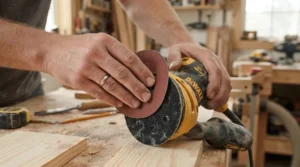
In 2026, the UK market for these tools has genuinely matured. Brushless motors, once a “pro tool only” feature, have trickled down into sub-£150 bodies, and dust extraction — long an afterthought — is now something manufacturers actually design around, partly because wood dust exposure is a recognised health hazard even in a home workshop, not just a factory floor. That matters more than most beginner buying guides let on.
This piece pulls together seven real, currently available cordless sanders spanning budget palm sanders through to brushless trade-grade tools, based on genuine specifications and aggregated review sentiment rather than marketing copy. We’ll also cover the three things beginners actually trip up on: dust extraction systems, sanding pad attachment types, and grit progression — because a sander is only as good as your technique with it. Whether you’re refinishing a single chair or kitting out a proper home workshop, there’s a sensible starting point below.
Quick Comparison Table
| Sander | Type | Speed / Orbit | Best For | Price Range |
|---|---|---|---|---|
| Einhell TE-OS 18/113 Li-Solo | Palm/detail | 22,000 opm, 1.8mm | Absolute beginners on a tight budget | Under £70 |
| Ryobi ONE+ RPS18-0 | Palm/corner | 22,000 opm, 1.8mm | Anyone already on the Ryobi ONE+ platform | Under £50 |
| Black+Decker BDCROS18 | Random orbital (kit) | 12,000 rpm, 1.3mm | First-timers who want everything in one box | £70-£95 range |
| Bosch PSM 18 LI | Multi-sander | 22,000 opm, 1.6mm | Corners, mouldings and mixed surfaces | £85-£140 range |
| Makita DBO180Z | Random orbital | 7,000-11,000 opm, 2.8mm | Consistent, swirl-free finishes | £80-£120 range |
| DeWalt DCW210N-XJ | Random orbital, brushless | 8,000-12,000 opm, 2.6mm | Longer runtime and less fatigue | £95-£150 range |
| Milwaukee M18 BOS125 | Random orbital | 14,000-24,000 opm, 2.4mm | Buyers wanting to future-proof into a trade platform | £85-£160 range (body only) |
Looking at the spread above, the cheapest two options — the Einhell TE-OS 18/113 Li-Solo and Ryobi ONE+ RPS18-0 — are both palm-style detail sanders rather than true random orbital sanders, so they’re brilliant for corners and small furniture but not the tool you’d reach for to resurface a whole tabletop. The Black+Decker BDCROS18 earns its spot as the best all-in-one kit because it’s the only sub-£100 option here that includes a battery and charger as standard. Meanwhile, the DeWalt DCW210N-XJ and Milwaukee M18 BOS125 sit at the top for a reason: brushless motors and wider variable-speed ranges genuinely do translate into a smoother finish and less fatigue over a long sanding session, even if a beginner won’t notice the difference on their very first project.
💬 Just one click — help others make better buying decisions too!😊
Top 7 Cordless Sanders for Beginners: Expert Analysis
1. Einhell TE-OS 18/113 Li-Solo — lightest and cheapest true starter option
The standout here is the price of entry: at under £70 for the body, this is about as cheap as a genuinely usable cordless sander for beginners gets in the UK. Weighing just over a kilogram, its small 113 x 101mm pad and soft-grip palm design make it easy for a first-timer to control without the tool “walking” across the workpiece the way heavier sanders can.
Running at 22,000 orbits per minute with a 1.8mm sanding stroke, the Einhell is tuned for fast material removal on small, flat surfaces rather than big open panels — in practice that means paint stripping, sanding skirting boards, or prepping a small shelf, not resurfacing a dining table. It comes as a bare “Li-Solo” unit, so you’ll need one of Einhell’s Power X-Change batteries and a charger, which is worth budgeting for separately if this is your very first cordless tool.
Based on the spec sheet and the wider Power X-Change ecosystem it belongs to, this is a smart pick for someone who already owns — or plans to buy — other Einhell garden or workshop tools, since the battery works across the whole range. Reviewers of Einhell’s Power X-Change tools consistently note that the batteries hold charge well between uses, though the sander’s brushed motor and lack of variable speed control mean it’s a one-trick tool rather than a do-everything machine.
Pros:
- ✅ Genuinely affordable entry point into cordless sanding
- ✅ Lightweight, palm-friendly design suits nervous first-timers
- ✅ Battery shared across the wider Einhell Power X-Change range
Cons:
- ❌ Sold body-only, so battery and charger cost extra
- ❌ Single speed setting limits control on delicate surfaces
At around £45-£65 for the bare tool, the value case really only stacks up if you already own a compatible battery — buy it as a fresh standalone kit and you’re closer to £100 once you add power.

2. Ryobi ONE+ RPS18-0 — best for joining a huge existing battery ecosystem
The bold move Ryobi made years ago — building one battery platform across more than 150 tools — is still the standout advantage today. If a household already has a Ryobi ONE+ drill, strimmer, or vacuum knocking about, the RPS18-0 essentially becomes a “free” sander in terms of power supply.
Specs-wise it mirrors the Einhell closely: a triangular 100 x 140mm pad, 1.8mm orbital sanding motion, and an 11,000rpm no-load speed producing 22,000 orbits per minute. That triangular tip is the real differentiator for beginners — it’s specifically shaped to get right up against a skirting board or into a window frame corner where a round or square pad simply can’t reach.
What most first-time buyers overlook about detail sanders like this one is that they’re not meant to replace a random orbital sander; they’re a companion tool for the 10% of any job that’s fiddly corners and edges. Aggregated customer feedback on Ryobi’s ONE+ palm sanders frequently praises how compact and manageable they feel in one hand, while a recurring theme in the mixed reviews is that the sanding pad itself feels a touch small for anyone tackling larger furniture pieces regularly.
Pros:
- ✅ Compatible with over 150 tools on the Ryobi ONE+ battery system
- ✅ Triangular pad excels at corners and tight mouldings
- ✅ Quick-fit hook-and-loop paper changes save time mid-job
Cons:
- ❌ Small pad size makes it slow on large flat surfaces
- ❌ Sold as a bare unit, so battery cost is separate
Priced under £50 for the body alone, it’s one of the cheapest ways into cordless sanding if the ONE+ battery question is already answered.
3. Black+Decker BDCROS18 — the most complete starter kit for total beginners
Here’s what most beginner guides won’t tell you: buying a sander body-only and then discovering you need a £40-£60 battery and charger on top is the single most common budgeting mistake newcomers make. The Black+Decker BDCROS18 solves that outright by bundling a battery and charger into the kit from the start, which is exactly why it earns the “most complete starter kit” tag here.
Technically, it’s a proper random orbital sander rather than a palm/detail tool, running at 12,000rpm no-load with a 125mm pad and a 1.3mm orbit diameter. The mesh sanding sheets included are rated to last roughly four times longer than standard paper because dust passes straight through the mesh instead of clogging the grit — a small design touch that matters a lot when you’re still learning not to press too hard.
On paper this means a beginner gets a genuinely capable all-rounder for furniture, doors, and general flat-surface work straight out of the box, with no separate purchases required before first use. Real-world sentiment on this model is consistent: users repeatedly single out the swirl-free finish on softwoods as a highlight, while the honest trade-off reported across multiple sources is a fairly short runtime from the bundled 1.5Ah battery, meaning a bigger job may need a mid-session recharge.
Pros:
- ✅ Complete kit — battery, charger and dust bag all included
- ✅ Mesh sanding sheets last roughly 4x longer than standard paper
- ✅ Genuine random orbital action suited to full furniture pieces
Cons:
- ❌ 1.5Ah battery gives noticeably short runtime per charge
- ❌ Single speed setting offers less finesse than pricier rivals
Kits typically sit in the £70-£95 range depending on retailer promotions, which represents solid value once you factor in not needing to buy a battery separately.
4. Bosch PSM 18 LI — best multi-surface detail sander for mixed projects
Bosch’s “Power for All” battery platform is the quiet genius of this pick — the same 18V battery running the PSM 18 LI also powers drills, jigsaws, and garden tools from Bosch and a growing list of partner brands, which is a serious consideration for a beginner who expects to add more cordless tools over time.
The PSM 18 LI runs at 22,000 orbits per minute with a 1.6mm orbit diameter, but its real party trick is the SDS tool-free attachment system, which lets you swap between a triangular delta head and a rectangular sanding plate in seconds without an Allen key. That rotatable triangular tip means you get more life out of each sanding sheet by using the full edge rather than wearing out one corner. The built-in microfilter dust box also does a genuinely good job of pulling fine dust away from the surface rather than just catching what falls off it.
Here’s what the spec sheet won’t tell you directly: this versatility comes at the cost of raw material-removal speed compared with a dedicated random orbital sander, so it’s better suited to detail work, furniture restoration, and corners than to flattening a large rough panel. Reviewers of Bosch’s detail and multi-sanders consistently highlight the dust control as a standout, while a commonly repeated criticism is that the sanding pads themselves are a Bosch-specific shape, so third-party sheets can be harder to source than for more common shapes.
Pros:
- ✅ Tool-free SDS system swaps sanding heads in seconds
- ✅ Strong microfilter dust extraction keeps the workspace clean
- ✅ Battery shared across Bosch’s wide Power for All tool range
Cons:
- ❌ Slower material removal than a dedicated orbital sander
- ❌ Bosch-shaped sanding sheets cost more than generic ones
Kits with a 2.5Ah battery and charger land in the £85-£140 range depending on retailer, while bare bodies can be found nearer £45-£65 for existing Power for All owners.
5. Makita DBO180Z — best for a consistent, swirl-free finish
Makita built its reputation on doing the unglamorous things properly, and the DBO180Z is a good example: a compact body with a genuinely low centre of gravity, which in practice means it doesn’t tip or wobble mid-stroke the way some taller sanders do in a beginner’s hand.
Its three-speed push-button switch — 7,000, 9,500, and 11,000 orbits per minute — is the standout feature for someone still learning grit progression, because you can drop to the lowest speed on a fine-finishing pass to avoid burning the surface or leaving swirl marks. The 2.8mm orbit diameter is larger than most of the palm sanders on this list, which translates into faster stock removal once you move up to a coarser grit for rougher jobs.
Based on the spec comparison with the Bosch and Black+Decker models above, the Makita’s dedicated dust extractor connection point is worth noting — rather than relying solely on a small onboard bag, it’s designed to be hooked up to a proper vacuum or dust extractor, which is the more effective of the two dust extraction systems available to home users. Aggregated reviewer sentiment is strongly positive on build quality and control, with the most commonly repeated criticism being that it’s sold body-only, so the total cost climbs once a battery and charger are added.
Pros:
- ✅ Three-speed control ideal for learning grit progression
- ✅ Low centre of gravity keeps the tool stable in one hand
- ✅ Proper dust extractor connection for cleaner long sessions
Cons:
- ❌ Sold as a bare tool — battery and charger cost extra
- ❌ No carry case included with the body-only version
Body-only pricing typically falls in the £80-£120 range across major UK retailers, with Makita’s 18V batteries and chargers priced separately if you’re starting from scratch.
6. DeWalt DCW210N-XJ — best for longer sessions without fatigue
The brushless motor is the headline feature here, and it’s not just a marketing term. Brushless motors run cooler, waste less energy as heat, and typically deliver more runtime per battery charge than the brushed motors found in the Einhell, Ryobi, and Black+Decker models above — which matters a great deal once a beginner graduates from a single chair to a full round of furniture.
The DCW210N-XJ’s variable speed dial spans 8,000 to 12,000 orbits per minute with a 2.6mm orbit, giving noticeably finer control than the fixed-speed budget options on this list. Its textured, non-slip grip and counterbalanced design are aimed squarely at reducing vibration fatigue, and the dust port connects directly to DeWalt’s AirLock extraction system as well as a standard shop vac hose.
What most buyers overlook about brushless tools at this price point is that the real-world benefit isn’t raw power — it’s consistency. A brushed motor’s performance tends to dip as the battery drains; a brushless one holds a steadier speed for longer, which is exactly the kind of predictability a beginner benefits from while still learning how much pressure to apply. Genuine user reviews are notably enthusiastic here, several noting the sander effectively “pays for itself” once amortised against sandpaper savings over multiple projects, while the main honest drawback flagged across sources is the higher upfront cost of the brushless body compared with brushed alternatives.
Pros:
- ✅ Brushless motor holds consistent speed as the battery drains
- ✅ Wide variable-speed dial suits both rough and fine work
- ✅ Compatible with DeWalt’s AirLock dust extraction system
Cons:
- ❌ Noticeably pricier than brushed budget alternatives
- ❌ Sold body-only, so battery/charger are an added cost
Expect to pay somewhere in the £95-£150 range for the bare tool, with DeWalt XR batteries adding a further chunk if this is a first cordless purchase.
7. Milwaukee M18 BOS125 — best premium pick for future-proofing
If there’s one product on this list that a beginner might “grow into” rather than out of, it’s this one. The Milwaukee M18 BOS125 sits on the M18 platform — a battery system built primarily for trade users — which means the ceiling on what you can eventually add to your toolkit (drills, impact drivers, vacuums, site radios) is considerably higher than the more DIY-focused ecosystems above.
Performance-wise, the six-speed dial spanning 14,000 to 24,000 orbits per minute is the widest range in this comparison, and the 2.4mm orbit diameter strikes a sensible middle ground between fast stock removal and finish quality. REDLINK overload protection between the tool and battery is a genuine engineering benefit rather than fluff — it’s designed to protect both the motor and the cells from damage if you push the tool too hard, which is a reassuring safety net for someone still learning their sander’s limits.
Here’s what buying a Milwaukee body-only tends to mean in practice: the up-front cost of the sander itself is often reasonable, but batteries and chargers on the M18 platform are priced at trade level, so the true cost of entry is higher than the headline body price suggests. Reviewers who’ve used the M18 BOS125 across various sanding tasks consistently rate the six-speed control and dust box filtration highly, with the most common caveat being that the investment only makes long-term sense if you’re planning to build out a wider Milwaukee M18 collection rather than buying this as a one-off tool.
Pros:
- ✅ Widest speed range on this list for fine control
- ✅ REDLINK protection guards motor and battery from overload
- ✅ Gateway into Milwaukee’s extensive M18 trade tool platform
Cons:
- ❌ M18 batteries and chargers are priced at trade level
- ❌ Complete kits with batteries push well past budget-beginner territory
Body-only pricing generally sits in the £85-£160 range, while complete kits bundled with batteries and a charger can comfortably exceed £220, so this is very much the “buy once, buy into the ecosystem” option rather than the cheapest way to get sanding.
Full Spec Comparison: All 7 Sanders Side by Side
| Sander | Pad Size | Orbit Diameter | Speed | Weight (approx.) | Best For |
|---|---|---|---|---|---|
| Einhell TE-OS 18/113 Li-Solo | 113 x 101mm | 1.8mm | 22,000 opm (fixed) | 1.03kg | Corners, small jobs |
| Ryobi ONE+ RPS18-0 | 100 x 140mm | 1.8mm | 22,000 opm (fixed) | 0.7kg (body) | ONE+ ecosystem owners |
| Black+Decker BDCROS18 | 125mm | 1.3mm | 12,000 rpm (fixed) | ~1.3kg | All-in-one starter kit |
| Bosch PSM 18 LI | 102 x 102mm | 1.6mm | 22,000 opm (fixed) | ~1.0kg | Mixed detail/corner work |
| Makita DBO180Z | 125mm | 2.8mm | 7,000-11,000 opm (3-speed) | 1.7kg | Swirl-free flat finishes |
| DeWalt DCW210N-XJ | 125mm | 2.6mm | 8,000-12,000 opm (variable) | 0.9kg (body) | Longer, low-fatigue sessions |
| Milwaukee M18 BOS125 | 125mm | 2.4mm | 14,000-24,000 opm (6-speed) | 1.6kg | Trade-platform future-proofing |
Stepping back from the individual entries, a clear pattern emerges: the two palm-style sanders (Einhell TE-OS 18/113 Li-Solo and Ryobi ONE+ RPS18-0) trade pad size for manoeuvrability in corners, while the four random orbital sanders trade that manoeuvrability for faster, more even coverage on open surfaces. If your first project is genuinely a small item — a picture frame, a birdhouse, a single drawer front — a detail sander earns its keep; for anything bigger than a bedside table, a random orbital sander like the Makita DBO180Z or DeWalt DCW210N-XJ will save you real time.
✨ Don’t Miss These Exclusive Deals!
🔍 Take your sanding projects to the next level with these carefully selected picks. Click on any highlighted item to check current pricing and availability — the right tool now saves you money on sandpaper and frustration later!

Sanding Pad Attachment Systems Explained
This is one of those details that never makes it onto a spec sheet, yet it quietly determines how much you’ll enjoy owning your sander. Almost every modern cordless sander uses one of two sanding pad attachment methods: hook-and-loop (Velcro-style) or clamp/clip systems, and a few — like the Bosch PSM 18 LI‘s SDS system — combine tool-free head swaps with hook-and-loop paper on top.
Hook-and-loop is by far the most beginner-friendly sanding pad attachment on this list, appearing on the Black+Decker BDCROS18, Makita DBO180Z, DeWalt DCW210N-XJ, and Milwaukee M18 BOS125. You simply press the new sheet onto the pad and peel it off when it’s spent — no punches to line up, no clips to snap shut. The catch is that cheap third-party paper sometimes doesn’t grip as firmly, so it’s worth sticking with a reputable brand until you know your sander’s pad tolerances.
Clamp systems, more common on older sheet sanders, physically pinch standard sandpaper sheets at each end. They’re cheaper to run since you can cut generic sandpaper rolls to size, but fitting one wrong — with wrinkles or slack — will tear the paper within seconds of switching the sander on. None of the seven sanders featured here use a pure clamp system, which reflects how thoroughly hook-and-loop has taken over the cordless market.
Pros:
- ✅ Hook-and-loop changes take seconds with no tools needed
- ✅ Reduces waste since you can remove a sheet before it’s fully worn
Cons:
- ❌ Branded replacement sheets cost more than generic clamp paper
Dust Extraction Systems for Beginners: Setup & Maintenance
If there’s one upgrade a first-time sander owner underestimates, it’s dust extraction systems. Every sander on this list ships with either a dust bag, a microfilter box, or a port for an external vacuum — and the difference between using it properly and ignoring it is the difference between a tidy workspace and a fine layer of dust settling on every surface in the room for days afterward.
Setting up dust extraction properly takes about thirty seconds: clip the bag or filter box onto the sander’s extraction port, and empty it after every session rather than waiting until it’s overflowing, since a full bag dramatically reduces suction and lets more fine dust escape into the air. For the Makita DBO180Z and DeWalt DCW210N-XJ, which both support direct connection to a workshop vacuum or extractor, upgrading from the bundled bag to a proper vacuum hose noticeably improves both dust control and finish quality, because a cleaner pad surface cuts more evenly.
A common mistake in the first 30 days of ownership is sanding indoors with the windows shut and no extraction fitted at all — understandable when you’re excited to get started, but worth avoiding given that even everyday household woodworking generates dust that’s best kept out of your lungs over repeated exposure. A basic FFP2 or FFP3 dust mask alongside your sander’s built-in extraction covers most home-DIY scenarios sensibly.
Pros:
- ✅ Keeps fine dust out of your lungs and off nearby surfaces
- ✅ Clean pads and papers cut faster and leave a smoother finish
Cons:
- ❌ Onboard dust bags need emptying every session to stay effective
Grit Progression: A Beginner’s Sanding Roadmap
Grit progression trips up more beginners than any hardware choice on this list — buy the best sander in the world and skip a grit progression step, and you’ll still see scratch marks in your finished piece. The rule of thumb is simple: never jump more than two grit steps at once, and always sand in the direction of the wood grain wherever possible.
- Start at 60-80 grit for stripping old paint, varnish, or genuinely rough, splintered wood.
- Move to 120 grit once the surface feels roughly even — this removes the coarse scratches left by the first pass.
- Progress to 180-220 grit for general smoothing before staining or painting most furniture.
- Finish at 240-320 grit only if you want a glass-smooth, showroom-style result, typically for tabletops or heirloom pieces.
- Wipe the surface with a slightly damp cloth between grits to raise the wood’s grain and reveal any missed scratches before moving on.
Each of the sanders in this guide handles grit progression slightly differently. Fixed-speed models like the Einhell TE-OS 18/113 Li-Solo and Black+Decker BDCROS18 work perfectly well through the full grit range but offer no speed adjustment, so you compensate with lighter pressure at finer grits instead. Variable and multi-speed models — the Makita DBO180Z, DeWalt DCW210N-XJ, and Milwaukee M18 BOS125 — let you drop the orbit speed for the final fine-grit pass, which meaningfully reduces the risk of swirl marks or burn marks on softer woods.
Pros:
- ✅ Following a proper grit progression prevents visible scratch marks
- ✅ Variable-speed sanders make fine-grit finishing noticeably easier
Cons:
- ❌ Skipping grits to save time is the single most common beginner error
Real-World Scenarios: Which Sander Suits Your Project?
Scenario one: the flat-share upcycler. Budget is tight, storage space is tighter, and the project list is a secondhand chest of drawers and a couple of picture frames. Here, the Ryobi ONE+ RPS18-0 or Einhell TE-OS 18/113 Li-Solo makes sense — low upfront cost, compact enough to store in a kitchen drawer, and perfectly suited to small, corner-heavy pieces.
Scenario two: the first-time furniture flipper. Someone buying tired furniture from marketplace listings to sand, paint, and resell needs a tool that can handle full tabletops and cabinet doors without dying halfway through a session. The Black+Decker BDCROS18 kit or Makita DBO180Z covers this well — genuine random orbital coverage, without the trade-level price tag of the Milwaukee or DeWalt.
Scenario three: the household about to build a proper toolkit. If sanding is the first of several cordless tools you plan to buy over the next year or two — say, alongside a drill and a jigsaw — it’s worth thinking about battery ecosystem before tool specs. The Bosch PSM 18 LI‘s Power for All platform or the DeWalt DCW210N-XJ‘s XR system both make sense here, since every future battery-powered tool you add shares the same charger and batteries.
How to Choose a Cordless Sander for Beginners
- Decide between a detail sander and a random orbital sander first. Detail sanders like the Ryobi ONE+ RPS18-0 suit corners and small pieces; random orbital sanders like the Makita DBO180Z suit flat panels and tabletops.
- Check whether the battery is included. Bare “body only” tools such as the DeWalt DCW210N-XJ look cheaper on the shelf but need a separate battery and charger, often adding £40-£80 to the real cost.
- Think about your existing battery ecosystem. If you already own tools from Ryobi, Bosch, DeWalt, or Milwaukee, buying a sander on the same platform saves money immediately.
- Prioritise dust extraction if you’ll be sanding indoors. A model with a proper vacuum-hose connection, not just a small bag, is worth paying slightly more for.
- Weigh the tool before you commit, if possible. Anything over roughly 1.7kg becomes noticeably tiring to hold overhead or at arm’s length for long stretches.
- Look for variable speed if your projects will vary. A single fixed speed is fine for one job type, but most beginners end up sanding a wider mix of materials than they expect.
- Budget for consumables, not just the tool. Sanding sheets across a full grit progression, plus a dust mask, typically add another £15-£25 to your first-project costs.
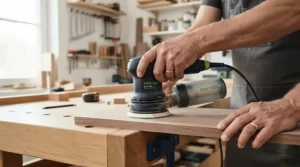
Common Mistakes When Buying a Cordless Sander for Beginners
The single most repeated mistake is buying a bare tool without checking whether a battery is included, then being surprised at checkout when the “cheap” sander needs another £50-£70 of power supply on top. Always read the listing title carefully — “Solo,” “Body Only,” “N-XJ,” and “Bare Unit” are all UK retail shorthand for “no battery included.”
A close second is choosing based on brand name alone rather than tool type. A premium random orbital sander like the Milwaukee M18 BOS125 is genuinely poor at getting into tight corners compared with a cheap detail sander like the Einhell TE-OS 18/113 Li-Solo — spending more doesn’t automatically buy you more versatility. Finally, plenty of beginners underestimate consumables spend, forgetting that sandpaper, dust bags, and eventually a spare battery all add to the true cost of ownership well beyond the sander’s sticker price.
Cordless Sander vs Corded Sander: Which Should Beginners Choose?
| Factor | Cordless Sander | Corded Sander |
|---|---|---|
| Power consistency | Can dip slightly as battery drains (less so with brushless motors) | Constant mains power, no dip |
| Portability | Excellent — no trailing cable or extension leads | Limited by cable length and socket access |
| Upfront cost | Often higher once battery/charger included | Usually cheaper per tool |
| Best for | Furniture, small jobs, working outdoors or up ladders | Long workshop sessions, heavy daily use |
For most beginners, cordless wins on convenience alone — no fighting an extension lead around a garden shed or up a stepladder, and modern batteries like those on the DeWalt DCW210N-XJ and Makita DBO180Z genuinely last through a typical weekend project. Corded sanders still make sense for someone setting up a dedicated home workshop where the sander lives permanently near a socket, since you avoid battery costs entirely and never lose power mid-sand. As a rule, if your sanding happens in short, varied bursts around the house or garden, cordless is the more sensible choice; if it’s a daily, hours-long habit in one fixed spot, corded remains the more economical long-term option, a distinction backed up by independent UK product testing of both sander types.
What to Expect: Real-World Performance for First-Time Users
Specs on a box rarely translate directly into what a first sanding session actually feels like. In practice, expect your first few minutes with any of these tools to involve some trial and error with pressure — nearly every beginner presses too hard initially, which slows the sander down, clogs the paper faster, and risks gouging softer woods. Let the sander’s own weight and orbit action do the work; you’re guiding it, not forcing it.
Battery life in real use tends to undershoot the manufacturer’s theoretical maximum, particularly on fixed-speed budget models — expect somewhere between 20 and 40 minutes of continuous sanding from a small 1.5-2.0Ah battery, depending on the wood’s hardness and how much pressure you apply. Variable-speed, brushless options like the DeWalt DCW210N-XJ stretch that runtime meaningfully further at equivalent battery capacity. Noise levels across this comparison sit in a broadly similar 70-83 decibel range, loud enough that ear protection is sensible for longer sessions but not so loud it needs specialist hearing protection for occasional home use.
Long-Term Cost & Maintenance of a Cordless Sander
| Cost Factor | Typical Annual Spend (Hobbyist Use) | Notes |
|---|---|---|
| Sanding sheets (mixed grits) | £15-£30 | Higher with coarser grits or frequent paint stripping |
| Replacement battery (if needed) | £35-£90 | Varies hugely by platform — check ecosystem cost before buying |
| Dust bags/filters | £5-£15 | Reusable microfilter boxes last years with occasional cleaning |
| Servicing/repairs | Usually £0 in year one | Most brands here offer 2-3 year guarantees when registered |
The comparison above makes one thing obvious: the sander itself is rarely the biggest long-term cost — it’s the battery platform. Buying into an ecosystem where batteries are cheap and widely available, such as Ryobi’s ONE+ range, keeps ongoing costs down if a battery ever needs replacing or you want a spare. Registering your tool promptly matters too, since several of these brands, including Einhell and Bosch, extend their standard guarantee by an extra year for owners who register within 30 days of purchase — a genuinely free way to protect your investment with almost no effort.
Safety, Dust Regulations & Compliance for Home Sanding
Home DIY sanding isn’t subject to the same formal Control of Substances Hazardous to Health (COSHH) rules that apply to commercial workshops, but the underlying health risk from fine wood dust doesn’t disappear just because you’re sanding in a garage rather than a factory. The guidance from the UK’s Health and Safety Executive on wood dust makes clear that both hardwood and softwood dust can affect the airways over repeated exposure, which is exactly why the dust extraction systems built into every sander on this list are worth using properly rather than treating as an optional extra.
On the compliance side, any cordless sander sold legally in the UK will carry a UKCA or CE conformity mark confirming it meets the relevant electrical and mechanical safety standards — worth a quick visual check on unfamiliar or marketplace-only brands, since genuine UK product safety marking is a reasonable proxy for a tool that’s been properly tested. Practically speaking, for home use: wear a basic dust mask for anything beyond a few minutes of sanding, keep the work area ventilated, and empty dust bags outdoors rather than shaking them out over your workbench.
FAQ
❓ Do I need a battery included when buying a cordless sander for beginners?
❓ What's the best grit to start sanding old furniture with?
❓ Is a random orbital sander better than a detail sander for beginners?
❓ How long does a cordless sander battery last per charge?
❓ Can I use any sandpaper with any cordless sander?
Conclusion
Choosing a cordless sander for beginners really comes down to answering two honest questions: what are you actually going to sand first, and do you already own a battery platform worth building on? If the answer to the first question is “small stuff and corners,” the Einhell TE-OS 18/113 Li-Solo or Ryobi ONE+ RPS18-0 will serve you well without overspending. If it’s “proper furniture pieces,” the Black+Decker BDCROS18 kit offers the most complete out-of-the-box package for the money, while the Makita DBO180Z and DeWalt DCW210N-XJ reward the slightly higher spend with genuinely better control and finish quality.
For anyone thinking beyond this single purchase — building toward a proper home workshop over the next year or two — the Bosch PSM 18 LI and Milwaukee M18 BOS125 both offer a sensible route into wider battery ecosystems, even if neither is the cheapest sander on this list today. Whichever you choose, remember that the sander is only half the equation: proper grit progression, a bit of patience with dust extraction, and letting the tool’s own weight do the work will do more for your finished project than any single spec on a box ever will.
✨ Ready to get sanding?
Compare current prices on today’s picks and pick the one that matches your very next project — your future self (and your furniture) will thank you. 🛠️
Recommended for You
- Angle Grinder For Rust Removal: 7 Top Picks UK (2026)
- 230mm Angle Grinder for Heavy-Duty Grinding: 7 Best Picks (2026)
- Cordless Angle Grinder for Cutting Tiles: 7 Best Picks (2026)
Disclaimer: This article contains affiliate links. As an Amazon Associate, I earn from qualifying purchases. If you purchase products through these links, we may earn a small commission at no additional cost to you.
✨ Found this helpful? Share it with your friends! 💬🤗
