
In This Article
Hammering a 50mm pin into fresh MDF skirting is a bit like defusing a bomb with a mallet. One bad swing and you’ve got a dented board, a bruised thumb and a thoroughly spoiled Saturday. That is exactly the job second fix nailers were built to end.

Second fix nailers are the fine-finishing cousins of the heavy framing gun. They fire slim 16 or 18 gauge brads that sink just below the surface, ready for filler and paint. Hanging architrave, fitting skirting, boxing in pipework or tacking beading round a new kitchen? A hammer and nail punch take minutes per joint. The right tool takes a second.
The catch is choice. Cordless brushless models, gas-assisted guns and old-school pneumatics all fight for the same shelf. Prices swing wildly too, from a budget second fix nailer at roughly £85 to premium kit north of £450. Entry-level pricing tells you where to start, not where to stop, because the battery or compressor you pair with the gun can double the bill.
This guide compares seven real second fix nailers across budget, mid-range and premium tiers. It draws on manufacturer specifications, UK retailer data and aggregated review themes. Every spec is translated into what it means on a wet weekend with a staircase to finish. You’ll also find a realistic DIY project cost breakdown, advice on homeowner tool kits, and a straight answer on whether a second fix nailer for DIY use is worth buying or hiring. All prices are ranges captured at the time of research, so check current price before you buy.
Quick Comparison: Second Fix Nailers at a Glance
Short on time? This table sorts the seven second fix nailers in this guide from cheapest to priciest. It shows the power source and gauge, which decide what each tool can realistically fix. Prices are UK retail ranges at the time of research and may vary.
| Product | Power | Gauge | Price range | Best For |
|---|---|---|---|---|
| Makita AF506 | Pneumatic | 18ga straight | £85-£110 (tool only) | Owners of a compressor |
| Ryobi R18GN18 | 18V ONE+ cordless | 18ga straight | £100-£190 | DIYers already on ONE+ |
| Erbauer ERI967NAL | 18V EXT brushless | 18ga straight | Around £200 with battery | Cordless on a tight budget |
| Stanley FatMax V20 SFMCN616 | 18V V20 cordless | 16ga | £170-£210 (body only) | Existing V20 owners |
| DeWalt DCN660 | 18V XR brushless | 16ga angled | £260-£470 (bare to kit) | Hardwood and heavy trim |
| Milwaukee M18 FN16GA | 18V FUEL brushless | 16ga angled | £280-£370 (body only) | M18 users and joiners |
| Paslode IM65 F16 | Gas plus Li-ion | 16ga straight | From the mid-£400s | Daily trade use |
Looking at the table, the Makita AF506 and Ryobi R18GN18 set the floor for entry-level pricing, but only the Ryobi removes the compressor from the equation. If you need reach for chunky hardwood trims, the 63-64mm capability of the DeWalt DCN660 and Milwaukee M18 FN16GA justifies their higher price tags. Anyone hunting a budget second fix nailer should note that the 18 gauge models trade holding power for smaller, easier-to-hide holes.
💬 Just one click — help others make better buying decisions too!😊
What Are Second Fix Nailers?
Second fix nailers are finishing nail guns that fire thin 16 or 18 gauge brads to attach visible interior woodwork after plastering and structural carpentry are done. Think skirting boards, architraves, door linings, window boards and beading. Their slim fixings leave small holes that filler hides easily.
The name comes from the building sequence. First fix covers the hidden structure: studs, joists and rafters, fixed with chunky nails. Second fix is the cosmetic stage, where neatness matters more than brute strength. For a wider overview of how different nail guns work, Wikipedia gives a solid grounding.
Gauge is the number to understand. A lower gauge number means a thicker nail. A 16 gauge brad grips heavier skirting and hardwood well, while an 18 gauge brad is gentler and leaves a pinprick hole, ideal for beading and thin trims. Magazine shape matters too. Straight magazines are simpler and lighter. Angled magazines poke into corners and tight reveals, which is why many second fix nailers aimed at tradespeople use them.
Top 7 Second Fix Nailers: Expert Analysis
The seven below run from budget to premium. Each verdict rests on real specifications and aggregated review themes, and where review data was thin, we say so rather than guess.
1. Makita AF506 — cheapest way in, if you own a compressor
The star here is simplicity: this pneumatic 18 gauge brad nailer is the lightest and cheapest tool in the line-up, with no battery to flatten mid-skirting.
It weighs 1.3kg, drives 15-50mm brads at 70-120 psi and holds 100 nails. That weight is the difference between finishing a staircase and aching halfway up it. The 50mm ceiling covers skirting, architrave and beading but not heavy hardwood linings. The built-in air duster is a clever touch for blowing dust off a fresh joint.
Based on the spec comparison, this is a budget second fix nailer for people who already own, or can cheaply buy, a small compressor. The hose and compressor are the real hidden cost. The slim nose gives a clear view of the placement point, which helps on delicate trim.
Review data is thin. A price-comparison site shows only two ratings, averaging roughly 4.5 stars, so treat that as a nudge rather than a verdict.
Pros:
- ✅ Lightest here at 1.3kg, so less fatigue
- ✅ Lowest entry-level pricing in this round-up
- ✅ Built-in air duster clears joint dust
Cons:
- ❌ Needs a compressor and air hose
- ❌ 18 gauge struggles in dense hardwood
Expect around £85-£110 for the tool alone. Excellent value if the compressor is already in the garage, much less so if it isn’t.
2. Ryobi R18GN18 — compressor-free cordless for ONE+ owners
Its headline trick is AirStrike technology: a cordless 18 gauge nailer with no compressor, hose or gas cartridge, powered by any 18V Ryobi ONE+ battery.
It fires 15-50mm brads and weighs about 2.4kg without a battery. One retailer quotes up to 1,900 nails per charge, enough for a whole room of skirting and architrave. Tool-less depth adjustment and jam release mean setup takes seconds, and the smaller nose, 45% slimmer than its predecessor according to the listing, helps in tight spots.
This is the poster child of homeowner tool kits. If a Ryobi ONE+ drill already lives in your cupboard, the bare-tool price is your entire entry fee. The straight magazine is the compromise, because awkward corners need more angling.
Community feedback is broadly positive but not uniform. UK deal-forum users call it brilliant when it works, and one commenter mentions the piston sticking after long idle periods. Another commenter with repair experience countered that worn seals or poor aftermarket batteries are the usual culprits.
Pros:
- ✅ Runs on existing ONE+ batteries
- ✅ No compressor, hose or gas needed
- ✅ Tool-less depth and jam release
Cons:
- ❌ Straight magazine limits tight corners
- ❌ Reports of sticking after long idleness
Around £100-£190 depending on bare versus kit, making it a strong budget second fix nailer for DIYers.
3. Erbauer ERI967NAL — brushless motor at entry-level pricing
The standout is a brushless 18V motor at entry-level pricing, with a battery and charger in the box.
It fires 18 gauge straight brads from 15-55mm at up to 120 per minute. The listing quotes up to 1,720 shots per charge on the supplied 2Ah battery. That rate is slower than premium guns, but nobody fixing skirting is racing a stopwatch. Bump and sequential modes are both offered, along with a work light and non-marking nose.
This is a sensible second fix nailer for DIY use if you’re happy to buy into the 18V EXT battery system, which lets extra tools share the same packs. Brushless motors matter here because they reduce wear and recoil when firing short nails, which is what second fix work is made of.
At the time of research, a large pool of verified owner reviews wasn’t available, so there is no honest aggregate to report. The value case rests on specifications and retailer information, and early feedback should be treated cautiously.
Pros:
- ✅ Brushless motor with battery included
- ✅ Reaches 55mm, further than the Ryobi
- ✅ Bump and sequential firing modes
Cons:
- ❌ Little verified owner feedback available
- ❌ Slower 120 nails-per-minute rate
Around £200 with a 2Ah battery and charger, which is fair value for a brushless cordless.
4. Stanley FatMax V20 SFMCN616 — 16 gauge holding power on a budget
The headline is stepping up to 16 gauge, which grips heavier mouldings better than 18 gauge, without reaching professional pricing.
It drives adhesive-collated 16 gauge finish nails and includes tool-free depth adjustment, LED work lights and a belt hook. Tool-free depth setting saves the most rework: set it on an offcut and you avoid proud or over-driven nails. One buying tip: some manufacturer pages call this model 15 gauge in one place and 16 gauge in another, so confirm the nail type before ordering fixings.
It slots neatly into homeowner tool kits already built around Stanley FatMax V20 batteries, with 2Ah or 4Ah packs recommended. Compared with the 18 gauge trio above, expect better holding power in thick skirting but slightly larger holes to fill.
Retailer review pages showed no published ratings at the time of research, so any feedback you find elsewhere should be treated as unverified.
Pros:
- ✅ 16 gauge grips thicker skirting better
- ✅ Tool-free depth adjustment and LED light
- ✅ Shares batteries across V20 tools
Cons:
- ❌ No published review data found
- ❌ Gauge wording inconsistent across listings
Roughly £170-£210 body only, so budget extra for batteries unless you already own V20 packs.
5. DeWalt DCN660 — fastest, most capable cordless mid-ranger
Raw performance is its calling card: up to four nails per second and a 63mm reach in softwood, 50mm in hardwood.
This 18V XR brushless 16 gauge angled nailer fires 32-63mm nails, with sequential and bump modes, a stall release for jams and an LED light. The angled magazine reaches into corners where a straight gun can’t, which matters on staircases and window reveals. A claimed 1,200 shots per charge on the 2.0Ah kit batteries comfortably covers a day of DIY.
On paper this is the model you buy once. It handles heavy architrave, hardwood door linings and cladding where 18 gauge guns run out of puff. The trade-off is price, because the kit with two 2.0Ah batteries sits well above the bare tool.
Marketplace feedback is a small sample but mostly positive on build quality and ease of loading. One buyer warned it’s easy to empty a nail strip completely, and another said they wished they’d chosen a gas nailer.
Pros:
- ✅ 63mm reach, strong in hardwood
- ✅ Angled magazine reaches corners
- ✅ Brushless, fast, with stall release
Cons:
- ❌ Premium pricing for occasional use
- ❌ Heavier than pneumatic, around 2.4-2.7kg bare
Typically £260-£360 bare and up to roughly £470 as a kit. Worth it for frequent users, overkill for one-off jobs.
6. Milwaukee M18 FN16GA — no ramp-up delay, built for sub-flush finish
Its headline feature is “ready to fire” technology, which removes the ramp-up delay between shots so the gun feels closer to a pneumatic.
It’s a 20-degree angled 16 gauge nailer taking 32-64mm nails, with a brushless POWERSTATE motor, tool-free depth adjustment and onboard nose pieces for different finishes. Milwaukee quotes up to 1,200 nails per charge on a 2.0Ah battery, similar to the DeWalt. The dry-fire lockout stops it firing empty and denting your work. Expect around 2.9kg before the battery, based on Milwaukee’s US launch figures.
This suits Milwaukee M18 battery owners and daily-use joiners. If you already have the packs, the bare tool is a straightforward upgrade. Milwaukee has said it rebuilt its finish nailers in a second generation after user complaints, so make sure you’re buying the current model rather than old stock.
Manufacturer-hosted pages show high ratings from 22 reviews, but manufacturer sites aren’t independent, so weigh that lightly. Independent UK review volume was limited at the time of research.
Pros:
- ✅ Ready-to-fire system removes ramp-up lag
- ✅ Swappable nose pieces for cleaner finish
- ✅ Drives sub-flush in hardwoods
Cons:
- ❌ Bare tool needs M18 battery and charger
- ❌ Heavy at roughly 2.9kg before battery
Around £280-£370 body only. Ideal if you already live in the M18 ecosystem.
7. Paslode IM65 F16 — gas-powered speed for daily trade use
The headline is the gas-and-lithium system: up to 10,000 shots per battery charge, with a fuel cell good for roughly 1,000 fixings.
It fires 16 gauge straight brads, 16-63mm, at up to 180 per minute and weighs 2.1kg with its battery. It quick-charges to 80% in about 25 minutes. The 2024 generation adds a cooling fan, better line of sight and lubrication claimed to last 25,000 nails between cleans. In practice that means fewer maintenance stops across a long day.
Gas-assisted tools like this are built for tradespeople who need constant output from a light, balanced gun. For a homeowner, fuel cells are a running cost and an extra thing to store, so it rarely makes sense for one-off jobs.
Independent review data was limited at the time of research, so this verdict leans on the spec sheet and trade-focused retailer descriptions rather than owner anecdotes.
Pros:
- ✅ Fast, up to 180 nails per minute
- ✅ Light at 2.1kg with battery fitted
- ✅ Up to 10,000 shots per charge
Cons:
- ❌ Fuel cells add a running cost
- ❌ Premium price for occasional DIY
From roughly the mid-£400s upward. Best reserved for daily professional use.
Spec Interpretation: Where the Seven Differ
| Product | Nail range | Capacity or run time | Best For |
|---|---|---|---|
| Makita AF506 | 15-50mm | 100-nail magazine | Light trim with a compressor |
| Ryobi R18GN18 | 15-50mm | Up to 1,900 nails per charge | Whole-room DIY on one battery |
| Erbauer ERI967NAL | 15-55mm | Up to 1,720 shots per charge | First cordless kit |
| Stanley FatMax V20 SFMCN616 | 16ga finish nails | Depends on V20 pack size | Skirting on a V20 platform |
| DeWalt DCN660 | 32-63mm | Up to 1,200 shots per 2.0Ah | Hardwood and fast production |
| Milwaukee M18 FN16GA | 32-64mm | Up to 1,200 nails per 2.0Ah | Joiners with M18 packs |
| Paslode IM65 F16 | 16-63mm | 10,000 shots per charge | All-day professional use |
The table shows the real dividing line is nail reach, not run time, because every cordless model comfortably outlasts a single-room job. The DeWalt DCN660, Milwaukee M18 FN16GA and Paslode IM65 F16 can sink longer nails into thick timber, while the 18 gauge trio cannot. If your work is mostly MDF skirting and softwood architrave, that extra reach is a luxury, not a necessity.
How to Choose Second Fix Nailers: 6 Steps
The best way to choose second fix nailers is to match gauge, power source and reach to your timber, then check safety features and battery compatibility before price. Work through these six steps in order.
- Match gauge to timber. Use 18 gauge for beading and thin trims, and 16 gauge for skirting and architrave. Heavy hardwood needs a 16 gauge gun with longer reach.
- Pick your power source. Cordless suits most homes, pneumatic is cheapest if you own a compressor, and gas-assisted suits all-day professional work.
- Choose straight or angled. Angled magazines reach corners and stair details more easily, while straight magazines are usually lighter and simpler.
- Check nail reach. A common rule of thumb is a nail length of around 2.5 times the thickness of the material you’re fastening, so confirm the gun’s maximum.
- Prefer sequential firing. Research summarised by NIOSH reports that injury risk is twice as high with a multi-shot contact trigger as with a single-shot sequential trigger.
- Weigh bare versus kit. Bare tools suit existing battery owners, while kits with battery and charger avoid hidden costs for beginners.
Budget Second Fix Nailer: What Your Money Really Buys
A budget second fix nailer splits into two camps. The first is a pneumatic gun such as the Makita AF506, at roughly £85-£110. Forum discussions suggest a small portable compressor adds around £100-£130, so the true starting bill is nearer £200 if you own neither. The second camp is the cordless 18 gauge tier, where the Ryobi R18GN18, Erbauer ERI967NAL and Stanley FatMax V20 SFMCN616 sit in the £100-£210 range.
So what do you give up compared with a £300-plus gun? Mostly reach, speed and corner access. The 18 gauge guns top out at 50-55mm, fire more slowly and use straight magazines. Brushless motors are the exception: the Erbauer ERI967NAL includes one even at its entry-level pricing.
Here’s the practical read. If your jobs involve MDF skirting, softwood architrave and the odd bit of beading, a budget second fix nailer does the work beautifully. If you’re fitting solid oak linings every month, spend more. Entry-level pricing is only a bargain when the tool matches the timber. Otherwise, a gun that bounces off hardwood is simply expensive firewood-poking.
Second Fix Nailer for DIY: Buy, Hire or Borrow?
The honest answer on a second fix nailer for DIY depends on how many rooms you’re tackling. One national hire chain listed a second fix gas nailer at roughly £60-£110 for 24 hours, with weekly rates higher, at the time of research. That’s attractive for a single bedroom.
Buying starts to win quickly. A budget cordless starter at £100-£200 pays for itself after about two hire days, and it’s yours for the next project. For the second fix nailer for DIY crowd planning skirting, architrave and a new staircase over a few weekends, buying is usually the cheaper, less stressful route. Borrowing from a neighbour is free but rarely comes with the right nails or a charged battery.
Think about future jobs too. Cladding, window boards, cabinet trim and loft-conversion beading all become simple when a nailer is already in your homeowner tool kits. If you only ever expect one project, hire. If you suspect it won’t be the last, buy the cheapest gun that matches your timber, and compare each option’s total cost, not just the headline figure.
✨ Don’t Miss These Carefully Selected Picks!
🔍 Take your skirting and architrave work to the next level with these hand-picked tools. Click on any highlighted product name to check current pricing and availability. They’ll help you create crisp, professional-looking results your whole home will love!
Second Fix Nailers vs Traditional Alternatives
| Method | Strengths | Weak spots | Best For |
|---|---|---|---|
| Hammer and nail punch | Cheapest, no power needed | Slow, dents timber | One or two small fixings |
| Pneumatic (e.g. Makita AF506) | Light, low tool price | Needs compressor and hose | Workshops with air supply |
| Cordless battery (e.g. DeWalt DCN660) | Portable, no gas or hose | Heavier, pricier | Whole-house fitting |
| Gas-assisted (e.g. Paslode IM65 F16) | Fast, long run time | Fuel cell running costs | Daily trade work |
Hand fixing still makes sense for a single loose architrave, but it falls apart on scale. Cordless second fix nailers have closed most of the gap with pneumatics, while the Paslode IM65 F16 remains the speed choice for professionals. For most households, a cordless 18 or 16 gauge gun is the sweet spot between convenience and cost.
Features That Actually Matter (And Those That Don’t)
Worth caring about:
- Tool-free depth adjustment. It’s the difference between flush nails and filler nightmares.
- Non-marking nose. On painted or stained timber, scuffs show.
- Dry-fire lockout. It stops the gun firing empty and damaging the work.
- Sequential firing. It’s both safer and more precise.
- Jam release without tools. Jams happen, and a fast fix saves patience.
Marketing noise for most DIYers:
- Four nails per second. The DeWalt DCN660 can do it, but placing nails carefully is the real speed limit.
- Huge shots-per-charge claims. At 1,200-1,900 shots, any cordless model outlasts a one-room job.
- Bump firing. Fast but riskier, and rarely needed for second fix.
- Carry cases. Nice, but they shouldn’t drive the decision.
Brushless motors sit in the middle. They help durability and recoil if you’ll use the tool often, but occasional users won’t notice.
Safety, Regulations and Compliance Guide
Nail guns are tools of speed, which is precisely why they bite. The HSE notes that nail gun incidents feature in high numbers in its woodworking accident statistics. Its analysis also found that built-in nose-guard safety features can be defeated, accidentally or deliberately, so never tape, wedge or bypass them.
Three habits cover most of the risk. First, always disconnect the air line, or remove the battery, gas canister and nails, before clearing jams or carrying out maintenance. Second, keep your hands and body out of the line of fire, remembering that nails can deflect off knots or hidden metal. Third, wear eye protection every single time, as splinters and deflected nails don’t announce themselves.
Fire the gun with the nose pressed firmly to the workpiece, and never point it at anyone. For occasional users, sequential firing mode is the more forgiving choice. Treat the manual as required reading, not packaging, and store tools out of reach of children with batteries removed.
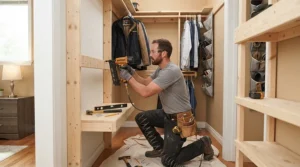
Practical Usage Guide: Setting Up and Maintaining Second Fix Nailers
A little set-up discipline makes second fix nailers feel like extensions of your hand.
- Load matching nails. Use the right gauge and length for your model, and check the magazine window as you go.
- Set depth on an offcut. Fire into scrap of the same timber, then adjust until heads sit just below the surface.
- Fix at sensible spacing. Skirting typically takes nails near the top and bottom edges at regular intervals, angled slightly to lock the board.
- Pre-plan awkward corners. An angled magazine, or a hand-held nail punch, rescues tight spots.
For maintenance, keep pneumatic guns lubricated according to the manual and drain compressor moisture. Cordless guns like the Ryobi R18GN18 reward regular use, since user reports mention sticking after long idleness, so fire a few nails periodically. Store lithium batteries in a cool, dry place, and wipe nose pieces so grit doesn’t scar your paintwork.
Common first-30-day mistakes include forgetting to set depth on scrap, buying the wrong nail gauge and clearing a jam with the battery still connected. Avoid those three and you’ll avoid most of the regrets.
Real-World Scenarios: What DIY Project Cost Really Looks Like
Numbers beat theory, so here are three profiles and a realistic DIY project cost for each. All figures use the price ranges from earlier, plus nails and extras.
The one-bedroom refresher. One room, one weekend. Hiring at roughly £60-£110 for a day is likely cheaper than buying, so the DIY project cost stays low. A Makita AF506 only makes sense if a compressor is already owned.
The spring renovator. Three rooms across three weekends. Hire could reach £180-£330 for three days, while a Ryobi R18GN18 at £100-£190, plus a battery if you don’t own one, comes in lower and stays in the cupboard. That’s the clearest case for buying a budget second fix nailer.
The side-hustle handyman. Jobs most weekends, with solid oak linings and 60mm-plus nails. The DeWalt DCN660 or Milwaukee M18 FN16GA justify their £260-£370 price tags through reach and durability. Over a year, the DIY project cost per job drops sharply, and the 16 gauge angled design saves finishing time.
The pattern is simple: frequency decides whether to hire, buy cheap or buy premium. Add nails, safety glasses and filler to every plan, as they quietly add £20-£40 to many jobs.
Homeowner Tool Kits: Building Around One Battery Platform
The smartest homeowner tool kits are built around a single battery family. A drill, impact driver, sander and nailer sharing one set of packs cost far less than four separate systems. Use this simple framework:
- If you own Ryobi ONE+ batteries, choose the Ryobi R18GN18 bare tool.
- If you own Stanley FatMax V20 batteries, the Stanley FatMax V20 SFMCN616 adds 16 gauge muscle.
- If you own Milwaukee M18 batteries, the Milwaukee M18 FN16GA is the natural step up.
- If you own nothing, a boxed kit such as the Erbauer ERI967NAL, with battery and charger included, avoids compatibility headaches.
Remember the bare versus kit trade-off: a bare gun can look £100 or more cheaper than the kit, but only if the batteries already exist. Before committing, list the other tools you’ll want in the next year. Homeowner tool kits are really battery decisions disguised as tool decisions, so pick the platform for the whole shed, not just the nailer.
Entry-Level Pricing vs Long-Term Cost
Entry-level pricing is the sticker, not the story. Over a few years, total cost of ownership includes nails, batteries, chargers and, for gas guns, fuel cells. The Paslode IM65 F16 quotes around 1,000 fixings per fuel cell, so heavy use means regular replacements. Pneumatic models add compressor upkeep, while cordless guns eventually need new batteries.
Warranty is worth reading. A Stanley listing mentions an extra two years of guarantee when the tool is registered within four weeks, and the DeWalt DCN660 also asks for registration within four weeks. A budget second fix nailer with a short guarantee can cost more than a mid-range gun if it fails after a year.
Finally, check the compliance marking. Machinery sold in Great Britain generally carries a UKCA or CE mark, as gov.uk’s UKCA marking guidance explains. For the buyer, that’s a quick sticker check on the tool or box, and a useful sanity filter for unfamiliar brands.
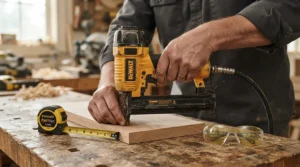
FAQ
❓ Is it cheaper to hire or buy second fix nailers?
❓ Do second fix nailers need a compressor?
❓ Which gauge is best for skirting boards, 16 or 18?
❓ Are bare-tool second fix nailers worth buying?
❓ Can second fix nailers fix hardwood door linings?
Conclusion
The best second fix nailers aren’t the priciest ones, they’re the ones that match your timber, your batteries and your project count. For a tight budget and existing air, the Makita AF506 is hard to beat. If you own Ryobi ONE+ packs, the Ryobi R18GN18 is the easiest on-ramp. The Erbauer ERI967NAL makes sense when you need everything in one box at entry-level pricing. Move up to the DeWalt DCN660 or Milwaukee M18 FN16GA when hardwood and speed matter, and keep the Paslode IM65 F16 for daily professional work.
For most households, a budget second fix nailer or a mid-range cordless gun gives the best balance. A second fix nailer for DIY use pays back quickly once you’ve got two or three projects lined up, and your homeowner tool kits become more valuable with every shared battery. Keep the real DIY project cost in view by counting nails, safety gear and hire alternatives, not just the tool price.
Whatever you choose, prioritise sequential firing, eye protection and the HSE’s advice on disconnecting power before maintenance. The finish on your skirting will thank you.
Recommended for You
- Second Fix Nailer: 7 Best Picks For Flawless Trim (2026)
- First Fix Nail Gun vs Second Fix Nail Gun: 7 Best Picks (2026)
- First Fix Nailers: 7 Best Value Picks For UK Site Work (2026)
Disclaimer: This article contains affiliate links. As an Amazon Associate, I earn from qualifying purchases. If you purchase products through these links, we may earn a small commission at no additional cost to you.
✨ Found this helpful? Share it with your friends! 💬🤗
