
In This Article
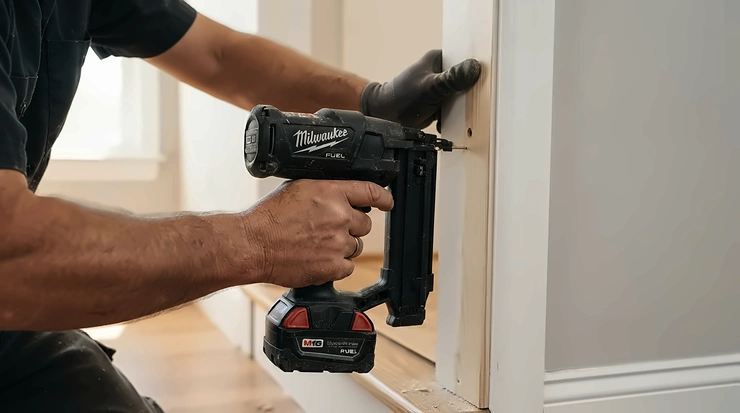
A second fix nailer is a finishing nail gun built for the visible stage of carpentry: skirting boards, architraves, door linings and trim. It fires slim 16 gauge or 18 gauge nails that sink just below the surface. That leaves small holes that are quick to fill and paint, unlike the chunky nails of a first fix tool.
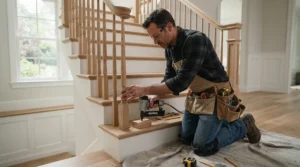
Second fix work is the bit everyone sees. Nobody admires a door frame’s hidden studwork. They judge the mitre gaps and the dimples along the skirting. That’s why the right second fix nail gun matters more than the badge on the side.
The market splits three ways. Gas-and-battery guns like the Paslode IM65A F16 use a tiny combustion engine, the idea described in Wikipedia’s Paslode Impulse entry: a fuel cell, a spark and a piston. Brushless 18V guns like the DeWalt DCN660N-XJ ditch the gas altogether. Pneumatic guns like the Makita AF506 stay featherlight in the hand but tether you to a compressor.
Below you’ll find seven real models, a straight-talking look at angled vs straight magazine designs, and a practical guide to trim nail sizes. You’ll also get the best second fix nailer for door frames, plus the lightest options if your shoulders are already complaining. Every price is a range, every review point is aggregated from published owner feedback, and every spec is translated into what it means on the job.
Second Fix Nailer Quick Comparison Table
| Model | Power | Magazine | Nail range | Weight (bare/quoted) | Price range* | Best For |
|---|---|---|---|---|---|---|
| DeWalt DCN660N-XJ | 18V brushless | Angled 20°, 110 nails | 32-63mm (16g) | ~2.4-2.7kg | ~£260-£310 bare | All-round cordless work |
| Paslode IM65A F16 | Gas + Li-ion | Angled 20°, 100 nails | 32-63mm (16g) | ~2.0kg | ~£400-£500 kit | Tight corners, daily pros |
| Milwaukee M18 FN16GA | 18V brushless | Angled 20° | 32-64mm (16g) | Check spec sheet | Check current price | Hardwood, sub-flush drive |
| Makita DBN601 | 18V brushless | Straight, 110 nails | 19-64mm (16g) | ~2.7kg (3.3kg with 6Ah) | Check current price | Short nails, cabinetry |
| HiKOKI NT65GB | Gas + Li-ion | Angled 20°, 100 nails | 32-65mm (16g) | ~1.8kg | Check current price | Lightest angled gas gun |
| Makita AF506 | Pneumatic | Straight, 100 nails | 15-50mm (18g) | ~1.3-1.4kg | Under £100 (tool only) | Lightweight, fine trim |
| Ryobi R18N18G-0 | 18V AirStrike | Straight | 15-50mm (18g) | ~2.5kg | Budget bracket | DIY on a budget |
*Indicative ranges at the time of research (2026). Prices vary between body-only and kit listings, so check the current price.
Two things jump out of this table. The 16 gauge guns share one nail window, roughly 32-64mm, which is the sweet spot for skirting and door linings. The two 18 gauge tools trade holding power for weight and tiny holes. If you fit heavy skirting daily, the DCN660N-XJ, IM65A and FN16GA are the serious contenders. If you mostly pin beading and light architrave, the AF506 or R18N18G-0 will be kinder to both wrist and wallet.
💬 Just one click — help others make better buying decisions too!😊
Top 7 Second Fix Nailer Picks: Expert Analysis
Each pick below is judged on published specs and aggregated owner feedback, not on hands-on testing. Where reliable reviews for a specific model are thin, the text says so.
1. DeWalt DCN660N-XJ — best cordless all-rounder, no gas
The headline is gas-free 16 gauge power in a brushless 18V body, so there are no fuel cells to buy and no cold-morning warm-up rituals.
It fires 16 gauge angled nails from 32mm to 63mm from a 110-nail, 20° magazine. DeWalt says it drives 63mm nails into softwood and 50mm into hardwood. Retailer listings quote a 48J impact energy and up to four nails a second in bump mode. In practice that means enough punch for chunky MDF skirting, with sequential mode for when precision beats speed. Listed weight varies between roughly 2.4kg and 2.7kg bare, and a 5Ah battery adds noticeably to that.
Based on the spec comparison, this suits anyone already invested in DeWalt’s 18V XR batteries. The mechanical drive keeps running costs low and performance steady in the cold, with a rated operating range of -20°C to 50°C. What it won’t do is disappear into fiddly 18 gauge-style work, because the flywheel mechanism is bulkier than an air gun’s nose.
Forum owners describe the newer generation as dependable. Older flywheel nailers drew complaints about a lag between trigger and firing. Users also remind buyers that any nailer still needs punching, filling and sanding afterwards.
Pros:
- ✅ No gas cartridges or hoses to manage
- ✅ Bump and sequential modes for speed or precision
- ✅ Works in cold conditions down to -20°C
Cons:
- ❌ Heavier than gas or air rivals once battery is fitted
- ❌ Flywheel body is bulky in tight spots
Price: around £260-£310 for the bare unit, with kits costing more. Check current price. It’s strong value if you already own XR batteries.

2. Paslode IM65A F16 — best angled gas gun for tight corners
The standout is the 20° angled magazine, which lets the nose sit square in awkward returns where a straight magazine would foul the wall.
It takes 16 gauge angled brads from 32mm to about 63-64mm and delivers 30J of impact. It manages two to three nails a second from a 100-nail magazine (two strips). Listings quote about 2.0kg, up to 10,000 shots per battery charge (some retailers say 6,000) and roughly 1,000 shots per fuel cell. Sound pressure is listed at 90-92 dB(A), so hearing protection isn’t optional. In practice, at about 2kg it’s one of the lightest options with real power, which is why it suits all-day skirting runs.
Its listed operating range is 5°C to 49°C, so winter site work needs planning. Reviewers on trade forums praise its longevity, with one professional reporting eight years of near-daily use. The recurring gripes are gas costs, servicing, and fuel that needs warming on cold mornings.
Pros:
- ✅ Angled magazine reaches tight corners
- ✅ Around 2kg and well balanced
- ✅ Huge nail and fuel-cell ecosystem
Cons:
- ❌ Cold-weather quirks with gas fuel
- ❌ Ongoing fuel and nail costs
Price: about £400-£500 as a kit with battery, charger and case. Worth it for daily professional use, harder to justify for the odd weekend.
3. Milwaukee M18 FN16GA — best for sub-flush hardwood
Its nitrogen air spring drive is the hook, aimed at sinking nails consistently, even in dense timber, without a ramp-up delay between shots.
It fires 16 gauge angled nails (32-64mm) from a 20° magazine. Zero ramp-up means the first nail fires as fast as the tenth, which matters on repetitive architrave runs. Interchangeable nose pieces are stored on the tool, and the small work contact bracket lets you fire at more acute angles. A dry-fire lockout protects the drive pin and the work surface. Retailers cite up to 1,200 nails per 2.0Ah charge, while Milwaukee’s own US page says 800, so treat the true figure as somewhere in between. Weight isn’t headlined in the UK listings reviewed, so check the spec sheet before buying.
A customer comment on a UK retailer’s page called it strong and rated bump fire best for speed. A US review of the equivalent model praised its versatility. Analytically, it’s the one to weigh if you’re on the M18 platform and fit hardwood door sets.
Pros:
- ✅ Consistent drive with zero ramp-up delay
- ✅ On-board interchangeable noses for finish quality
- ✅ Works with all M18 batteries
Cons:
- ❌ Weight not clearly published in UK listings
- ❌ Premium pricing versus some rivals
Price: check current price, as body-only and kit listings differ widely. Good value if you already own M18 batteries.
4. Makita DBN601 — best straight-magazine cordless with short nails
The differentiator is a 19-64mm nail range in 16 gauge, unusually short for this class, in a straight magazine.
Listings show a 110-nail magazine, three nails a second, a 276mm overall length and a pneumatic spring drive. Weight is 2.7kg bare and 3.3kg with a 6.0Ah battery. It claims 1,000+ shots on a fully charged 6Ah pack, with an LED work light and a lockout when the last 6-9 nails remain. That short-nail capability suits cabinet face frames and beading as well as skirting, so you won’t need a second gun.
Reviews specific to the DBN601 are thin, so I can’t summarise owner sentiment honestly. A forum user described Makita’s straight 16 gauge as decent but not angled, and another criticised a different Makita 18 gauge model for weak power. Don’t conflate the two.
Pros:
- ✅ Wide 19-64mm nail range
- ✅ 110-nail magazine means fewer reloads
- ✅ Fits the huge Makita LXT battery family
Cons:
- ❌ Straight magazine limits access in tight corners
- ❌ Weight climbs to 3.3kg with a big battery
Price: kit listings for the DBN600 family have been cited at around £455-£600; bare units cost less. Check current price.
5. HiKOKI NT65GB — best lightweight angled gas gun
Its hook is weight: about 1.8kg, the lightest angled 16 gauge gun in this roundup.
It takes 32-65mm angled nails at 20° from a 100-nail magazine, with up to 1,200 nails per fuel cell and up to 2,000 per charge. It’s also sequential-only, which suits careful trim work. Retailers note it takes the same nails as the Paslode IM65A F16, so existing stock works. At 1.8kg, overhead architrave fixing is less punishing.
One honest caveat: the listings I found for the NT65GB are dated, so check current availability. HiKOKI’s newer 18V gasless NT1865DMB fires up to 1,500 nails per 3Ah charge across 32-65mm, if the NT65GB proves hard to find. NT65GB-specific owner reviews are thin. One UK forum poster praised HiKOKI’s 18V guns for near-instant firing but called them heavy, which describes a different model.
Pros:
- ✅ Lightest angled option at about 1.8kg
- ✅ Nail-compatible with Paslode angled brads
- ✅ Keyless depth adjustment
Cons:
- ❌ Gas fuel brings cold-weather and cost quirks
- ❌ Older platform with patchy availability
Price: check current price. Value hinges on stock levels.

6. Makita AF506 — lightest option, pneumatic 18 gauge
The hook is a 1.3-1.4kg aluminium body that barely registers in the hand.
It drives 15-50mm, 1.2mm (18 gauge) nails from a 100-nail magazine at 70-120 psi (4.9-8.3 bar). There’s a rubber non-marring nose, tool-free depth adjustment and jam clearing. In practice that slim nose reaches concealed fixings, and the thin nail leaves less indent than a 16 gauge, according to a UK forum user.
It’s less suited to heavy skirting or door linings, where holding power matters. One UK review site called it among the best pneumatic second fix guns for the money. You’ll need a compressor and hose, and small compressors cycle loudly.
Pros:
- ✅ Featherweight 1.3-1.4kg body
- ✅ Smallest nail holes in this list
- ✅ Very low tool-only buy-in
Cons:
- ❌ Compressor and hose add cost and noise
- ❌ 18 gauge holds less on heavy trim
Price: under £100 for the tool alone. Excellent value if you already own a compressor.
7. Ryobi R18N18G-0 — best budget cordless brad nailer
Its hook is AirStrike compressor-free power on the affordable ONE+ battery platform.
It fires 18 gauge (1.2mm) nails from 15mm to 50mm with sequential and contact modes, twin LEDs and a dry-fire lockout. One UK review site cites up to 1,589 nails per charge and a weight of about 2.5kg, and rates it 4.5 out of 5. One review site called it probably the best battery-powered option for second fix in its class, while listing complaints: it’s sold bare, high-capacity batteries add weight, and the straight magazine struggles in corners.
An 18 gauge gun suits beading, light architrave and MDF trim. For chunkier skirting or hanging door linings, step up to 16 gauge.
Pros:
- ✅ Cheap entry to cordless second fix work
- ✅ Shares batteries across ONE+ tools
- ✅ Up to 50mm nails for light trim
Cons:
- ❌ Straight magazine limits corner access
- ❌ 18 gauge lacks holding power for heavy skirting
Price: budget bracket, bare tool. Check current price. Great value for DIYers who already own ONE+ batteries.
How to Choose a Second Fix Nailer
- Match the gauge to the trim. 16 gauge is the general-purpose choice, 18 gauge suits fine beading, and 15 gauge bites harder on heavy skirting at the cost of bigger holes.
- Pick your power source. Gas is light but consumable-hungry, cordless is convenient but heavier, and air is lightest but needs a compressor.
- Decide angled vs straight magazine. Angled reaches corners, straight is simpler and often cheaper to feed.
- Check the nail length range. Make sure the gun handles both your shortest beading and longest lining fixings.
- Weigh the whole tool. Include the battery or hose, because a 2kg spec sheet can feel like 3kg on a ladder.
- Look at firing modes and depth control. Sequential mode aids safety and finish quality, while tool-free depth adjustment saves time.
- Budget for consumables. Nails, fuel cells and batteries can outweigh the tool price over a few years.

Angled vs Straight Magazine: Which Suits Your Work?
The difference in the angled vs straight magazine debate is the collation angle. Angled guns hold nails at about 20°, so the nose fits into corners and reveals where a straight magazine would foul the wall. One trade retailer said around 70% of the second fix nailers it sells are straight, while noting that anyone regularly working in corners should consider angled.
The catch is that nails aren’t interchangeable. A strip of straight 16 gauge nails won’t fit an angled magazine and vice versa. Retailers also flag wrong-angle purchases as a common mistake. Some forum users prefer straight guns because the nails cost less, though that comes from owner comments, not a price survey.
The analysis is simple. If you fit door frames, boxed-in pipework or tight architrave returns, choose angled: the DCN660N-XJ, IM65A, FN16GA and NT65GB all offer it. If you mostly fix flat skirting runs and cabinetry, a straight gun like the DBN601 works fine and is easier to feed. The AF506 and R18N18G-0 are straight-magazine 18 gauge tools, best for fine trim.
Trim Nail Sizes: Gauge, Length and What to Load
Getting trim nail sizes right matters as much as the gun. Too short and the trim lifts. Too long and you split the timber or punch through the back.
| Job | Gauge | Typical nail length | Notes | Best For |
|---|---|---|---|---|
| Beading, quadrant, thin trim | 18g | 15-35mm | Tiny holes, light hold | AF506, R18N18G-0 |
| Architrave (roughly 18-25mm thick) | 16g | 40-50mm | One buying guide favours 40-50mm | DCN660N-XJ, IM65A |
| Door linings and frames | 16g | 50-63mm | Longer nail reaches the frame | FN16GA, NT65GB |
| Heavy skirting (MDF or softwood) | 16g | 50-63mm | 15g if you need more hold | DBN601 |
| Hardwood trim | 16g | 50mm max | DeWalt rates 50mm for hardwood | DCN660N-XJ |
Angled 16 gauge nails are commonly sold in 32, 38, 45, 50 and 63mm lengths, all 1.6mm thick. For hardwood such as oak, one retailer notes stainless steel brads are the safer bet. As a rule of thumb, the nail should pass through the trim and bite well into the timber behind it, but check the manufacturer’s recommendations for your material.
In the table, notice how the nail window drives the gun choice. Beading needs shorter nails than most 16 gauge guns fire, which is why the DBN601‘s 19mm minimum is handy. For anything over 50mm in hardwood, expect resistance, and drop to 50mm or below on dense timber.
Best Second Fix Nailer for Door Frames
Choosing the best second fix nailer for door frames is really about access and holding power. Door linings and architraves sit in reveals, and you’re often nailing through thin timber into a frame or stud. Retailers and buying guides describe door casings, skirting and architrave as core second fix work.
For most fitters, an angled 16 gauge gun is the strongest answer. The IM65A and NT65GB offer the 20° magazine and around 2kg or less, which helps when working at height around a frame head. The DCN660N-XJ and FN16GA suit anyone who wants gas-free operation, and the FN16GA‘s small contact bracket helps at acute angles.
If you’re hanging a full set of doors in MDF linings, the DBN601‘s straight magazine still works, but expect to rotate your body more. For hardwood door frames, stick to 50mm nails or below, and consider stainless brads. Avoid 18 gauge for structural linings: the AF506 and R18N18G-0 are better for beading and architrave than for holding a lining plumb.
Best Lightweight Second Fix Nailer: Does Weight Really Matter?
If you’re hunting the best lightweight second fix nailer, the numbers are clear. The AF506 at 1.3-1.4kg is the winner, though it needs an air line. Among 16 gauge guns, the NT65GB (about 1.8kg) and IM65A (about 2.0kg) lead. The cordless DCN660N-XJ, DBN601 and R18N18G-0 sit between roughly 2.4kg and 3.3kg once batteries are fitted.
Weight isn’t the whole story, though. A forum user noted that a battery gun’s weight is usually well balanced, which can feel less tiring than an air gun with all its mass at one end. Another said the DeWalt flywheel design feels bulky reaching over a bench.
Noise matters too. Listings quote about 81 dB(A) for the DCN660N-XJ, 89 dB(A) for the DBN600 family and 90-92 dB(A) for the IM65A. HSE’s noise at work guidance sets action values that trigger hearing protection, and a compressor cycling nearby adds to exposure. Lightweight and quiet don’t always align.
Finish Quality: How to Get Invisible Nail Holes
Finish quality comes down to four things: gauge, depth setting, nose protection and what you do after firing.
Gauge. Thinner nails mean smaller holes. A forum user reported that an 18 gauge leaves very little indent compared with a 16 gauge, while one retailer notes 16 gauge is usually the better finish for lighter trims and 15 gauge means more filling.
Depth of drive. Test on offcuts and set nails just below the surface. All seven guns offer tool-free depth adjustment, and nose-mounted tips like the no-mar pads on the IM65A reduce marks.
Firing mode. Sequential firing places each nail deliberately. Bump firing is faster but easier to misplace.
Aftercare. Punch heads where needed, then fill, sand and prime before painting. Forum users note a nailer doesn’t remove the need to punch, fill and sand.
A practical routine for the first 30 days is to test every new depth setting on scrap, keep spare nose pads, and replace worn tips before they mark timber. Match nail length to trim thickness, and let paint dry properly before judging the finish.
Second Fix Nail Gun vs Screws, Pins and a Hammer
| Method | Speed | Hole size | Holding power | Best For |
|---|---|---|---|---|
| 16g second fix nail gun | Fast | Small | Strong | Skirting, architrave, linings |
| 18g brad nailer | Fast | Smaller | Moderate | Beading, light trim |
| Pin nailer | Fast | Tiniest | Light | Delicate mouldings |
| Screws and filler | Slow | Larger | Very strong | Awkward substrates |
| Glue and hand-nailing | Slowest | Small | Good | Small, careful jobs |
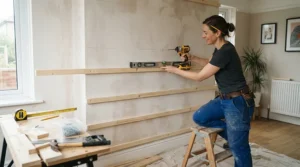
The table tells a clear story. A second fix nail gun beats screws for speed. One renovator on a forum admitted screwing skirting and then filling every hole with two-pack filler was time consuming. A retailer notes pin guns leave the smallest holes but don’t hold like a 16 gauge gun. Screws still win on holding power in difficult substrates, but you’ll pay for it in filling and sanding time.
Real-World Scenarios: Which Second Fix Nailer for Which Job?
The weekend DIYer refurbishing one house. A budget cordless like the R18N18G-0 fits if you already own Ryobi batteries. Just remember its 18 gauge nails suit light trim, and you may want a hired 16 gauge for heavy skirting.
The full-time joiner hanging doors and skirting daily. The IM65A or NT65GB suit long days with their light weight. If you’d rather avoid gas, the DCN660N-XJ or FN16GA are the gas-free alternatives, chosen based on which battery platform you already own.
The cabinetmaker and workshop user. The AF506 on a small compressor keeps weight low and holes tiny. If you need short nails in 16 gauge, the DBN601‘s 19mm minimum earns its place.
Each profile reflects budget, working environment and frequency of use. The daily user should weigh consumables and servicing, while the occasional user should prioritise a low buy-in and shared batteries.
Problem → Solution: Fixing Common Second Fix Nail Gun Headaches
Problem: nails won’t sink flush. Increase depth of drive, check the battery or fuel cell, and confirm you’re using the right length nail for the material. Cold gas guns may need warming, as trade forum users report.
Problem: jams. Every gun here has tool-free jam release. Clear jams with power isolated: remove the battery, disconnect the air line or remove the fuel cell.
Problem: split trim. Use a shorter nail, move further from the edge, or drop to 18 gauge. Pre-drill hardwood ends when needed.
Problem: wrong nails. Straight and angled strips aren’t interchangeable, and 16 gauge won’t fit an 18 gauge gun. Check the collation angle before ordering.
Problem: dust from MDF. Filling and sanding MDF produces fine dust. HSE’s woodworking hazardous substances guidance recommends dust extraction, so pair sanders with an extractor and suitable respiratory protection.
Long-Term Cost and Value: Gas, Battery or Air?
| Power type | Upfront cost | Running cost | Weight feel | Best For |
|---|---|---|---|---|
| Gas + Li-ion (IM65A, NT65GB) | Higher | Fuel cells and nails | Light | Daily professionals |
| 18V cordless (DCN660N-XJ, FN16GA, DBN601, R18N18G-0) | Moderate to high | Batteries only | Heavier | Existing battery owners |
| Pneumatic (AF506) | Low tool, compressor extra | Low | Lightest | Workshops with compressors |
Gas guns often cost more to feed. Kits cite about 1,000 shots per fuel cell, so heavy users buy them constantly. Cordless guns avoid fuel entirely, and if you already own a battery platform, a bare-tool purchase spreads the cost. Air guns are the cheapest tools but need a compressor. Small compressors cycle more often, a forum user notes, and are loud when charging.
Total ownership cost depends on volume. For a joiner firing thousands of nails a month, avoiding fuel cells can pay back quickly. For a homeowner firing a few hundred nails a year, cheaper tool-only pricing wins.
Safety, Noise and Dust: What UK Rules Expect
HSE’s nail gun guidance warns that nails can be deflected, splinters can be ejected, and safety features can be defeated accidentally or intentionally. It stresses that safety features shouldn’t be disconnected, and recommends eye protection. It also warns about accidents during maintenance when the air line, battery, gas canister or nails haven’t been removed first.
Practical rules follow from that:
- Wear eye protection every time.
- Isolate power (battery, air, gas) before clearing jams or servicing.
- Prefer sequential firing when finish quality and control matter.
- Never bypass the nose safety.
For employers, guidance from safety trainers references PUWER and MHSWR, and suggests training and documented maintenance. Noise from air compressors and combustion guns can also trigger hearing protection requirements. Check the manufacturer’s noise data against HSE’s action values before buying for a team.

FAQ
❓ Can you use a second fix nailer without a compressor?
❓ Do second fix nailers need gas cartridges?
❓ Is a second fix nailer worth it for DIY?
❓ Can you nail skirting straight onto plasterboard?
❓ Do I need training to use a second fix nail gun?
Conclusion
Choosing a second fix nailer is really choosing between weight, convenience and running costs. The DeWalt DCN660N-XJ is the best gas-free all-rounder, the Paslode IM65A F16 remains the trade benchmark for angled work, and the Milwaukee M18 FN16GA is worth a look if you fit lots of hardwood. The Makita DBN601 covers short nails in a straight magazine. The HiKOKI NT65GB is the light angled gas option if you can find stock, the Makita AF506 is the featherweight for fine trim, and the Ryobi R18N18G-0 is the budget entry.
Match the gauge to your trim, think hard about angled vs straight magazine, and check trim nail sizes against your typical jobs. Get those right and finish quality follows, with cleaner holes and less filling. Treat safety guidance seriously, because HSE evidence shows nail gun incidents are a real risk.
And if you’re still torn, start with the job that matters most. For door frames, choose angled 16 gauge. For beading, go 18 gauge. For a weekend, keep the spend modest.
Recommended for You
- First Fix Nail Gun vs Second Fix Nail Gun: 7 Best Picks (2026)
- First Fix Nailers: 7 Best Value Picks For UK Site Work (2026)
- First Fix Nail Gun: 7 Best Picks UK Tradesmen Rely On (2026)
Disclaimer: This article contains affiliate links. As an Amazon Associate, I earn from qualifying purchases. If you purchase products through these links, we may earn a small commission at no additional cost to you.
✨ Found this helpful? Share it with your friends! 💬🤗
